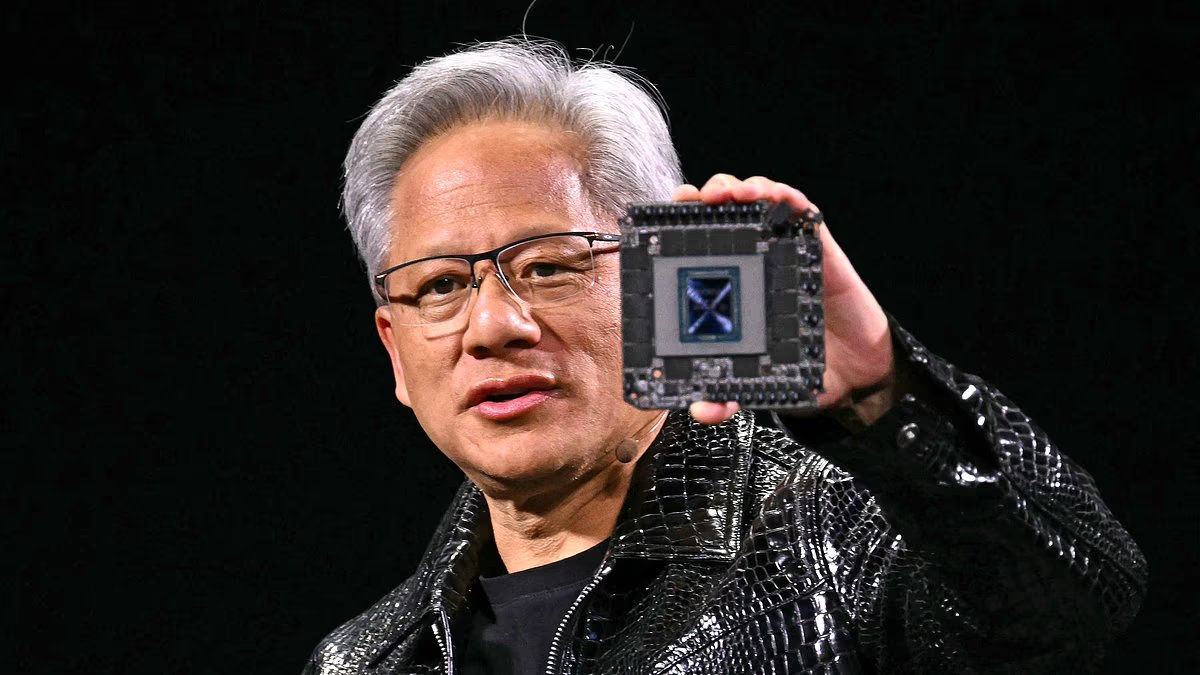

Jensen Huang’s rapid return to the Nvidia chief executive’s seat is as remarkable as it is unsettling.
The reinstatement has received questionable backing from US President Donald Trump and helped establish a floor beneath the recent sell-off in technology and artificial-intelligence shares.
Nvidia’s stock rebounded by roughly a third, lifting other major technology names in its wake. That may offer AI investors a measure of relief, but it does little to address the sector’s deeper governance and debt problems.
Huang’s association with Alice Huang of Singapore-based Megaspeed — who is not related to him — was far more complicated than a straightforward romantic relationship.
Investigations have indicated that China may have gained access to Nvidia’s most advanced chips through a network of companies linked to Megaspeed.
Those ongoing inquiries should have stood in the way of Huang’s reinstatement by a board that appeared indecisive throughout the damaging controversy.

Jensen Huang has returned as Nvidia chief after US President Donald Trump expressed his support
Look beyond Huang’s extraordinary transformation of Nvidia from a maker of gaming hardware into an AI superpower, and serious questions emerge over governance and possible accounting weaknesses.
Nvidia’s flawed corporate structure should make shareholders more cautious about placing unquestioning faith in technology and AI visionaries.
A leading adviser to hedge funds told me yesterday that many such entrepreneurs — including the seven newly minted billionaires at Anthropic — are not executives in whom shareholders can confidently place their trust.
Anthropic founder and chief executive Dario Amodei created the company as a ‘public benefit corporation’. Yet that structure has not prevented him and fellow founders from retaining control of more than half the stock or from exceeding safeguards they imposed on themselves.
The combination of Huang’s personal scandal and Anthropic’s rapid progress towards the public markets suggests that AI and data-centre investment may have reached its peak.
Excessive borrowing, circular fundraising and limited transparency lie at the heart of the sector’s inflated valuations.
The midterm elections also highlighted the vulnerability of data-centre projects to opposition from local communities.
Investment banks chasing lucrative fees, arranging complex financing and taking multibillion-dollar companies public with weak governance appear to have learnt little from Enron, the ill-fated AOL-Time Warner merger or the global financial crisis.
Their pursuit of outsized fees and bonuses ultimately comes at the expense of individual investors and pension savers.
Wrong direction
Compass is assembling a strong case for why the Wimbledon hospitality group wants to move its primary listing from London to Wall Street.
As much as 70 per cent of its revenue comes from the US, where it is the sixth-largest employer, and the company continues to secure new contracts.
There are also signs of a gradual shift in direction, including reporting in dollars and securing a secondary New York listing earlier this year.
Yet chairman Ian Meakins — already under pressure over the sale of Unilever’s food business, where he also serves as chairman — appears not to have considered whether Compass, with its substantial British heritage, has a responsibility to remain a UK plc.
Nor does chief executive Dominic Blakemore appear to have done so. It is difficult to avoid the suspicion that Blakemore and his leadership team are attracted by the far larger personal rewards available to executives running US-listed companies.
Long-term UK investors, including Invesco, should not be bullied into accepting the board’s plans by corporate pressure or the weight of American shareholders.
The track record of British and European companies crossing the Atlantic in pursuit of higher valuations is poor: about 70 per cent of those departures now trade below their initial US listing price.
London remains a perfectly suitable base for companies generating most of their income overseas, as demonstrated by natural-resources groups Rio Tinto and Shell, as well as information and AI specialist Relx.
Compass is turning its back on UK plc.
Uncivil behaviour
Generous public-sector pensions are increasingly difficult to defend at a time when average civil-service pay often exceeds that in the wealth-producing private sector.
No retirement saver can take satisfaction from the collapse at Capita, which assumed responsibility for administering the Civil Service Pension Scheme a year ago.
A £190million cash injection and the departure of chief executive Adolfo Hernandez are intended to stabilise the business. But with the share price down 74 per cent, Capita’s survival may still be at stake.
DIY INVESTING PLATFORMS

AJ Bell
AJ Bell
Simple investing with ready-made portfolios

Hargreaves Lansdown
Hargreaves Lansdown
Free fund dealing plus investment ideas

interactive investor
interactive investor
Flat-fee investing from £4.99 a month

Freetrade
Freetrade
Free investing Isa on the basic plan

Trading 212
Trading 212
Commission-free dealing with no account fee
Affiliate links: If you take out a product This is Money may earn a commission. These deals are selected by our editorial team because we believe they are worth highlighting. This does not affect our editorial independence.
Compare the best investing account for you


