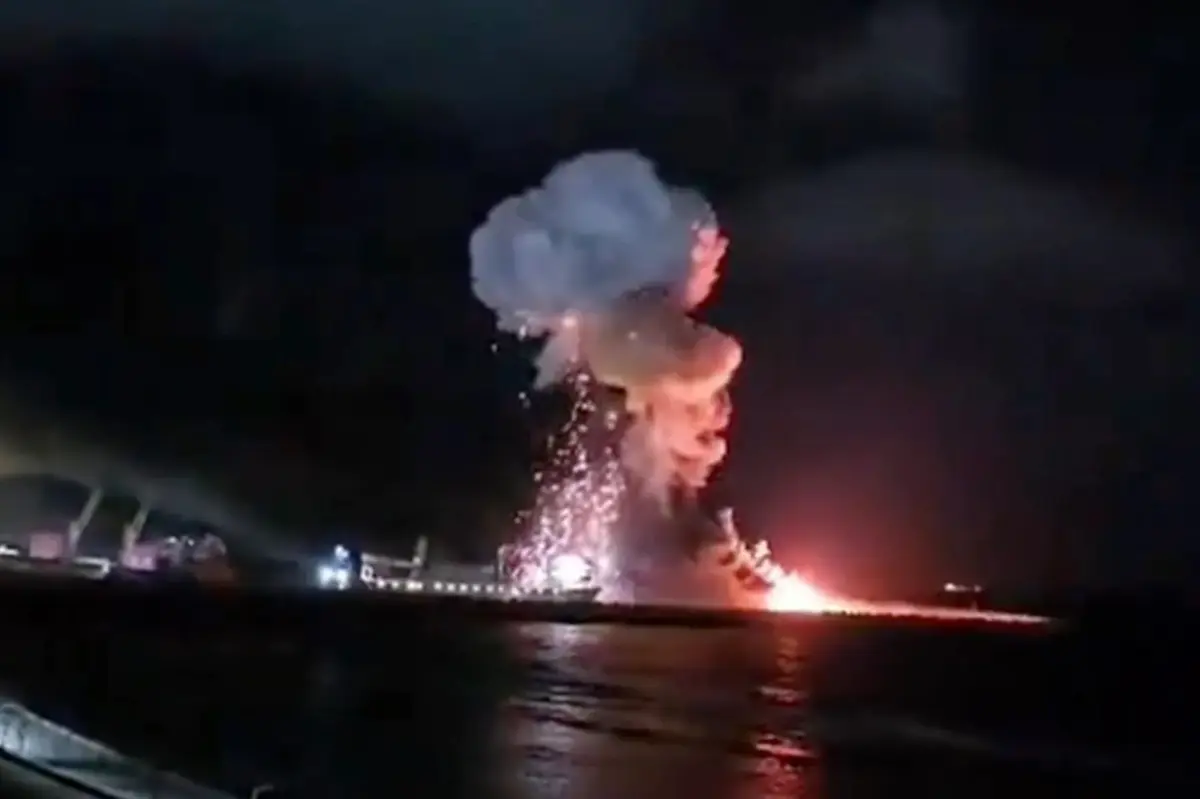

Two Libyan naval officers have died from injuries suffered in a Ukrainian drone strike on a Russian warship docked in eastern Libya over the weekend, Libyan authorities said.
The officers were pronounced dead on Tuesday evening.
According to a statement issued late Tuesday by the self-styled Libyan National Army, the men were wounded during Sunday’s attack at the Benghazi Naval Base.
The LNA vows reprisal
The LNA’s General Command promised to respond “at the appropriate time and place, and by the appropriate means.”
Led by strongman Gen. Khalifa Hifter, the LNA is Libya’s most powerful military force. The country has remained divided after years of civil war and political turmoil, with the LNA controlling much of the east and south and maintaining close ties with Russia.
Ukrainian President Volodymyr Zelensky said Ukrainian forces used seven drones in the operation targeting the Russian navy corvette on Sunday. Libyan officials said the vessel had stopped at the base to refuel and replenish supplies.
An initial inquiry determined that several Ukrainian sea drones were launched at the warship from a Ukrainian-operated base in western Libya, according to two officials briefed on the investigation.
The officials said at least four drones were intercepted and destroyed, while two struck the corvette, a relatively small warship typically used for coastal patrols and escort missions.
One of the officials said at least 10 people, including Libyan and Russian nationals, were injured.
The officials, who are affiliated with the self-styled Libyan National Army, spoke anonymously because they were not authorized to brief reporters.
Strike pushes Russia-Ukraine war into a new combat zone
The attack has extended the Russia-Ukraine war into a new theater of conflict thousands of miles from Europe.
It also highlighted how Moscow and Kyiv are using Libya’s political and military divisions as part of their broader confrontation.
Rich in oil and strategically positioned along the Mediterranean, Libya shares borders with six countries and has endured more than a decade of political fragmentation. Its two rival administrations receive support from competing foreign powers.
The internationally recognized administration in Tripoli has strengthened relations with Ukraine and its Western partners, in part to bolster its hold on power and help limit the movement of migrants seeking to reach Europe. The government relies on a loose coalition of armed groups and militias.
Eastern Libya is governed by Prime Minister Ossama Hammad, whose most influential ally is Hifter.