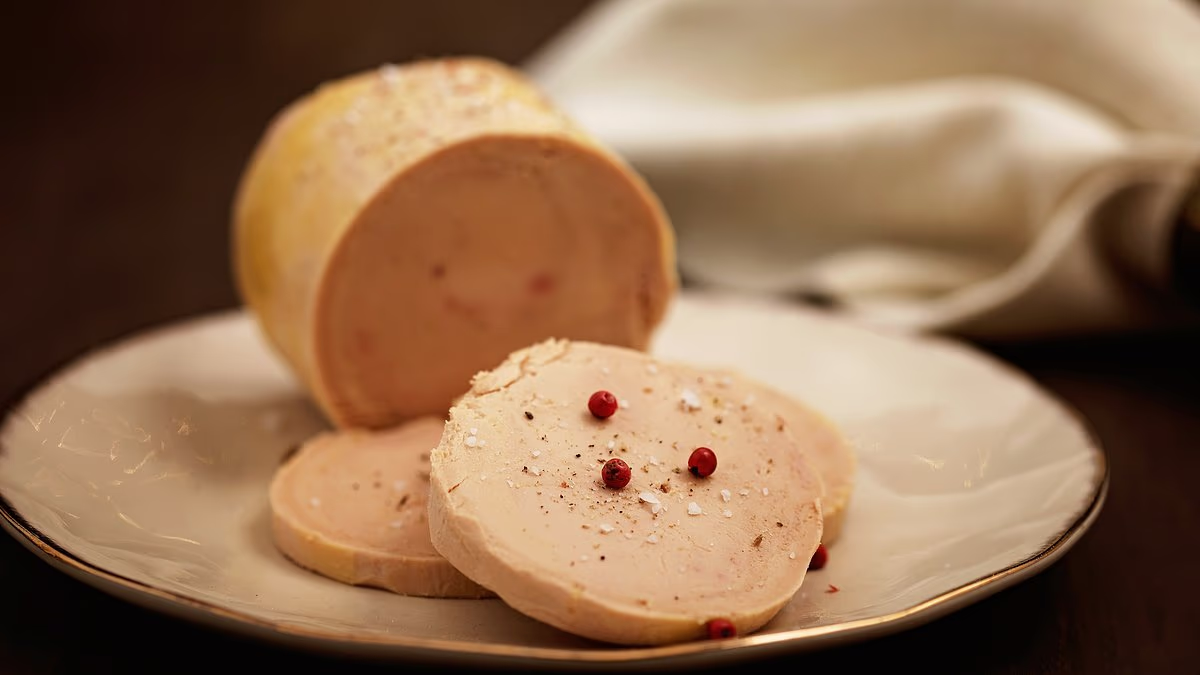

Labour has abandoned its election pledge to ban foie gras imports as part of Andy Burnham’s controversial Brexit reset.
In a striking illustration of Britain’s new role as a rule-taker, Downing Street acknowledged that aligning with EU farming regulations means the Government can no longer prohibit the sale of food products made within the bloc.
The admission came as fresh analysis suggested Mr Burnham’s “reset” could be worth less than half the £17billion claimed, with the food and farming element of the three-part agreement potentially delivering only £200million.
Labour went into the 2024 election promising to outlaw foie gras imports, describing the force-feeding of ducks and geese to enlarge their livers as “absolutely disgusting”.
However, diplomatic sources said the proposed ban had been dropped after “implacable” opposition from Paris, which refused to accept any restriction on the controversial French delicacy.
Animal welfare groups reacted furiously on Thursday night, branding the move “shameful” and accusing ministers of allowing “pressure from across the Channel to dictate policy here at home”.
The decision underlines the extent to which the UK will no longer be able to set its own food and farming rules.
An EU Partnerships Bill published on Thursday would give ministers broad powers to fast-track European regulations into British law, with only limited scrutiny from Parliament.

Downing Street has acknowledged that adopting EU farming rules means the Government can no longer prohibit the sale of food products made in the bloc, including foie gras

Andy Burnham’s EU “reset” could also be worth less than half the claimed £17billion, with the food and farming element potentially valued at only £200million
Downing Street said the UK would be “consulted” on proposed laws that apply here, but Britain would have no vote on the final measures.
The agreement reached with Brussels last week is intended to reduce EU red tape affecting British food exports, including shellfish, cheese and sausages.
Mr Burnham has called the arrangement a “win-win” and said the wider package—which also covers emissions trading and youth mobility—could be worth up to £17bn.
Yet an official assessment published alongside the legislation found that, even by 2040, the food and farming component could be worth as little as £200m a year, with a maximum estimated benefit of £5.1bn.
In exchange, the UK will be required to accept a large volume of EU legislation. A parliamentary report published this month warned that Brussels produces an average of two new regulations every day, many of which Britain will now have to adopt.
Ministers faced mounting criticism from animal welfare campaigners after dropping the foie gras ban to secure closer ties with Europe. The production of the pâté has long been controversial, with campaigners describing it as “torture in a tin”.
Foie gras production has been banned in the UK for almost two decades. Campaigners have nevertheless pushed for an import ban to remove the product from British shelves; hundreds of tons are currently imported each year, mainly from France.
Labour’s then shadow environment secretary, Steve Reed, pledged to outlaw the practice in June 2024, a month before the election, calling it “absolutely disgusting”.
MORE STORY: Gainesville Woman Charged With Child Abuse After Allegedly Disciplining 5-Year-Old With Belt

Animal welfare campaigners said they were “disappointed” by plans to shelve a ban on foie gras imports
Mr Reed said Labour would “end cruelty toward animals”, adding: “We will ban the commercial import of foie gras, where ducks and geese are aggressively force-fed.”
But Downing Street confirmed that Mr Burnham’s Brexit agreement meant such a ban could not be introduced.
A No10 spokesman said: “The deal does mean we cannot introduce measures to stop EU goods such as foie gras from being sold in Great Britain.
“But we will use our ability to shape EU rules and continue sharing the UK’s views and experience as we work with the EU to protect and improve animal welfare.”
David Bowles, of the RSPCA, told the Mail: “We are extremely disappointed. Any suggestion that plans to act on foie gras are being shelved to facilitate EU realignment is deeply concerning for animals and would represent a clear step backwards.”
Abigail Penny, of Animal Equality UK, accused ministers of “a colossal failure to follow through on a clear promise”.
She said India and Brazil had both “found the backbone” to impose bans recently, adding: “Why is our own Government so unwilling to stand up for what its citizens want? It has allowed pressure from across the Channel to dictate policy here at home.”
Oliver Lewis, of the pro-Brexit group Stay Out, said the decision demonstrated how “powerless” the agreement would leave the UK.
Mr Lewis, who served as deputy chief negotiator on Boris Johnson’s Brexit deal, said: “Keeping foie gras out of our shops is about as small a legislative step as a country can take—a simple decision that force-feeding ducks and geese is a cruelty we want no part in.
“But under the Prime Minister’s deal, Britain is now utterly powerless to take it.”
Separate official analysis suggested that joining the EU’s emissions trading scheme could be worth £3.8bn.
A “youth experience scheme”, allowing 100,000 young Europeans to work in the UK for up to three years, could generate a further £4bn to £8bn. However, it would not affect GDP per head because it would also increase the UK’s population.
If every element delivers its maximum benefit, the package could be worth £17bn by 2040. At the lower end, however, its value could be as little as £8bn.
Kemi Badenoch accused the Prime Minister of asking Parliament to sign a “blank cheque” to push Brussels’ future laws through without proper scrutiny.
The Conservative leader said: “The Prime Minister is telling MPs to hand him extraordinary powers while having no idea what the EU will actually agree to.
“He is changing our relationship with the EU without proper scrutiny. The Conservatives will oppose his EU Partnership Bill every step of the way.”
Further details show that the Government has agreed to a “Farage clause”, requiring Britain to pay tens of millions of pounds to the EU if an incoming government cancels the agreement.