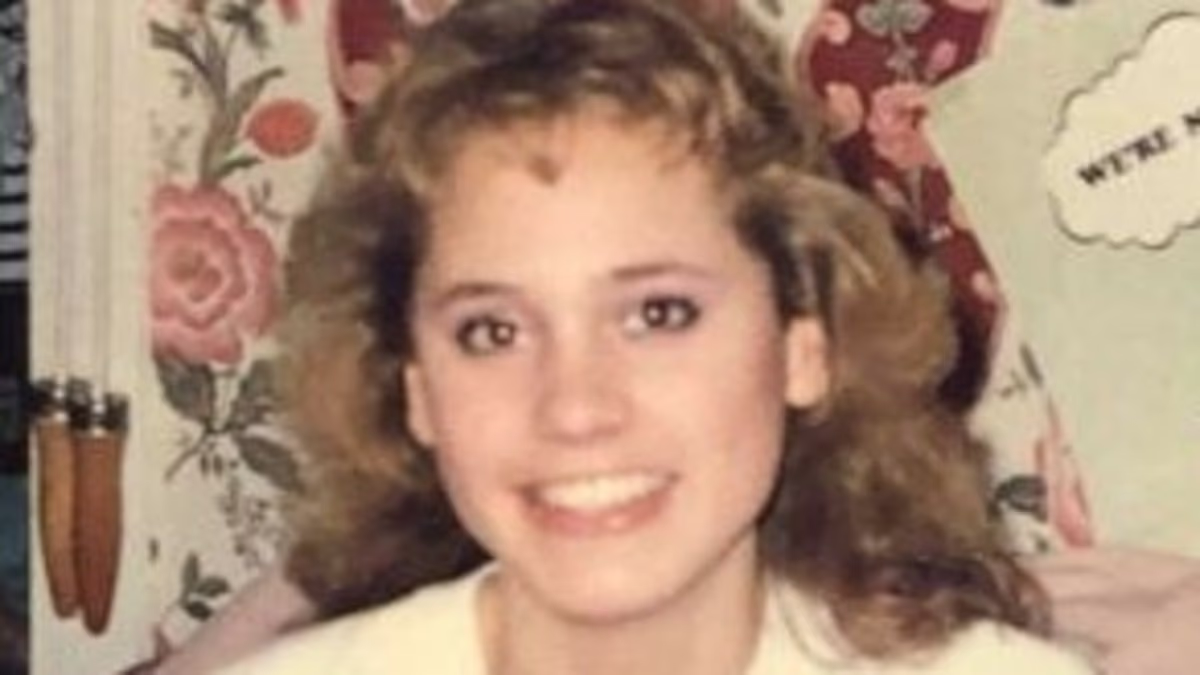

The day after Thanksgiving in 1989, Mandy Stavik was looking forward to a double date at the movie theater.
Mandy, an 18-year-old freshman at Central Washington University, had returned to her hometown of Acme, Washington, for the holiday and brought her roommate, Yoko, with her. She spent the afternoon catching up with friends before enjoying Thanksgiving with her family.
With several hours remaining before her 5 p.m. date, Mandy decided to take the family’s German shepherd, Kyra, for a run along her usual route.
Her family soon realized something was terribly wrong when Kyra returned home alone, visibly distressed.
The search for Mandy continued through the night and into the weekend. Three days after she disappeared, her naked body was discovered floating in the South Fork of the Nooksack River.
Mandy’s murder sent shock waves through the close-knit Washington community, where neighbors knew one another and violent crime was uncommon. “This was just shocking to everybody here,” former Whatcom County Prosecutor Dave McEachran told Our News Outlet.
The case remained unsolved for 28 years. Then, in 2017, new DNA evidence connected Mandy’s former neighbor, Timothy Bass, to the killing, leading to his arrest.
McEachran came out of retirement to prosecute Bass. In an exclusive interview marking the 37th anniversary of Mandy’s murder, he explained why evidence gathered during the investigation’s first days would become so important nearly three decades later.

Mandy Stavik, 18, disappeared after taking her dog for a jog the day after Thanksgiving in 1989
McEachran remembered Mandy as “a very gifted kid” who excelled both in the classroom and on the basketball court. Just as notable, he said, was how naturally she connected with other students.
“She was just well-liked by all of the kids at school,” he said.
Mandy was only a few months into her freshman year at Central Washington University. She was beginning to experience the independence of college life, McEachran said, while remaining closely connected to the friends she had grown up with.
One of those friends was Brad Gorum, the young man she planned to meet that evening. The two had attended high school together and were supposed to see a movie with Yoko and Tom Bass, Timothy Bass’s brother.
Gorum told McEachran that he saw Mandy jogging that afternoon before stopping at the Bass home to visit Tom.
But when he called the Stavik family around 4 p.m. to find out where she was, Mandy had still not returned.
When Kyra eventually came back, the dog was alone and appeared to have “really been beaten around,” McEachran recalled. Her hindquarters were also covered in a significant amount of silt.
As the nighttime search began, a tracker attempted to take Kyra back outside, hoping the dog would lead him along Mandy’s route.

Three days after Stavik vanished, her naked body was found in a nearby river; investigators determined she had been sexually assaulted and murdered

The investigation remained unsolved for nearly three decades, devastating the northwestern Washington town of Acme
“The dog just wouldn’t leave the porch,” McEachran said. The tracker then followed the path himself.
Near a bend not far from the Stavik home, he found indications that a car had stopped and that two people had stood on opposite sides of it. A ditch beside the road contained mud that appeared to match the material found on Kyra’s fur.
According to McEachran, the tracker believed Mandy “had been abducted from that place.”
Mandy’s mother later testified that her daughter usually ran to the South Fork of the Nooksack River before turning back. Investigators organized a boat search upriver.
After three exhausting days, searchers found Mandy’s body floating in a narrow section of the river. She was wearing only her shoes and socks.
One investigator assigned to the case had recently worked on a rape investigation and understood how to preserve evidence indicating a possible sexual assault, McEachran said.
That experience would prove critical 28 years later.
DNA collected from Mandy’s body would ultimately point investigators toward a man who had lived only a short distance away. But in 1989, detectives had just one major lead: a semen sample they recovered.

Mandy Stavik’s former neighbor, Timothy Bass, was convicted after a coworker provided his DNA, which matched evidence recovered from her body

Former Whatcom County Prosecutor Dave McEachran returned from retirement to prosecute Bass
“We did get a positive sample for semen,” McEachran said. “We ran that through our local database and could not find a hit.”
Investigators later collected DNA from three or four other men they considered suspects, but none matched the evidence.
By 2013, detectives had begun gathering DNA from men who lived near Mandy at the time of her disappearance, according to court records.
That summer, two local mothers compared accounts of unwelcome advances they said Timothy Bass had made toward them. One of the women, Merrilee Anderson, brought their concerns to a sheriff’s detective, she later told CBS’s 48 Hours.
“I wonder if they’ve looked at this guy,” McEachran recalled the women asking.
Bass had lived along Mandy’s jogging route. By then, however, he had married his high school sweetheart and moved to another town in the county, McEachran said.
“And so, we decided to try to get DNA from him.”
The first effort failed. Bass refused to provide Detective Kevin Bowhay with a sample without a warrant, according to court records.
Detectives began monitoring Bass during his bakery delivery route, hoping he might discard an item that could be tested. But he left nothing behind, McEachran recalled.
Their breakthrough came when investigators visited the bakery to ask about his delivery schedule.

Bass, 22 when Mandy was killed, maintained his innocence and claimed he had been in a consensual sexual relationship with her

Mandy had planned to go to the movies that evening, but her failure to appear prompted her family to call police
Kim Wagner, who managed the bakery’s outlet store, had worked a delivery route herself when Mandy was murdered. McEachran said she immediately understood why investigators had come to speak with her.
“They didn’t ask her to do anything for them,” he recalled. “She took it upon herself to watch him.”
In August 2017, Wagner recovered a plastic cup Bass had thrown into the bakery break-room trash. Two days later, she retrieved a soda can he had used and gave both items to detectives, according to court records.
That December, McEachran received the call he had been waiting nearly 28 years to receive. DNA from Bass’s can matched the semen recovered from Mandy’s body.
After his arrest, Bass claimed he and Mandy had been involved in a secret affair. McEachran rejected the explanation as “absolutely a bunch of bunk.”
Court records show that none of the witnesses at trial—including Mandy’s mother, friends and neighbors—had ever seen the two together.
Bass also asked his younger brother, Tom, to tell police that he had slept with Mandy, according to court records.
“His brother wouldn’t do it,” McEachran said.
Bass’s former wife, Gina Malone, initially provided him with an alibi. She later testified that she had been frightened and that the alibi was untrue, the prosecutor recalled.
In May 2019, a jury found Bass guilty of first-degree murder. He was sentenced to 26 years and eight months in prison. Bass continues to maintain his innocence. Our News Outlet has contacted Mandy’s family and Bass’s attorney for comment.

Mandy’s mother, friends and neighbors all testified that they had never seen her with Bass

Bass’s coworker collected his discarded DNA and turned it over to police, helping investigators finally solve the case
In the 2025 documentary series Murdered at First Sight, Mandy’s sister, Molly Brighton, said the family learned of Bass’s arrest on their mother’s 81st birthday.
Asked what she would tell Mandy if she had the chance, Brighton replied: “It’d be nice to be able to tell her that I loved her.”
McEachran recalled how “very grateful” Mandy’s family remained to the deputies who continued pursuing her killer.
Even after Bass was imprisoned, McEachran said, “You never can put Humpty Dumpty together again.”
Thanksgiving, once associated with family and celebration, would never feel the same.
“It was an empty place in the family.”