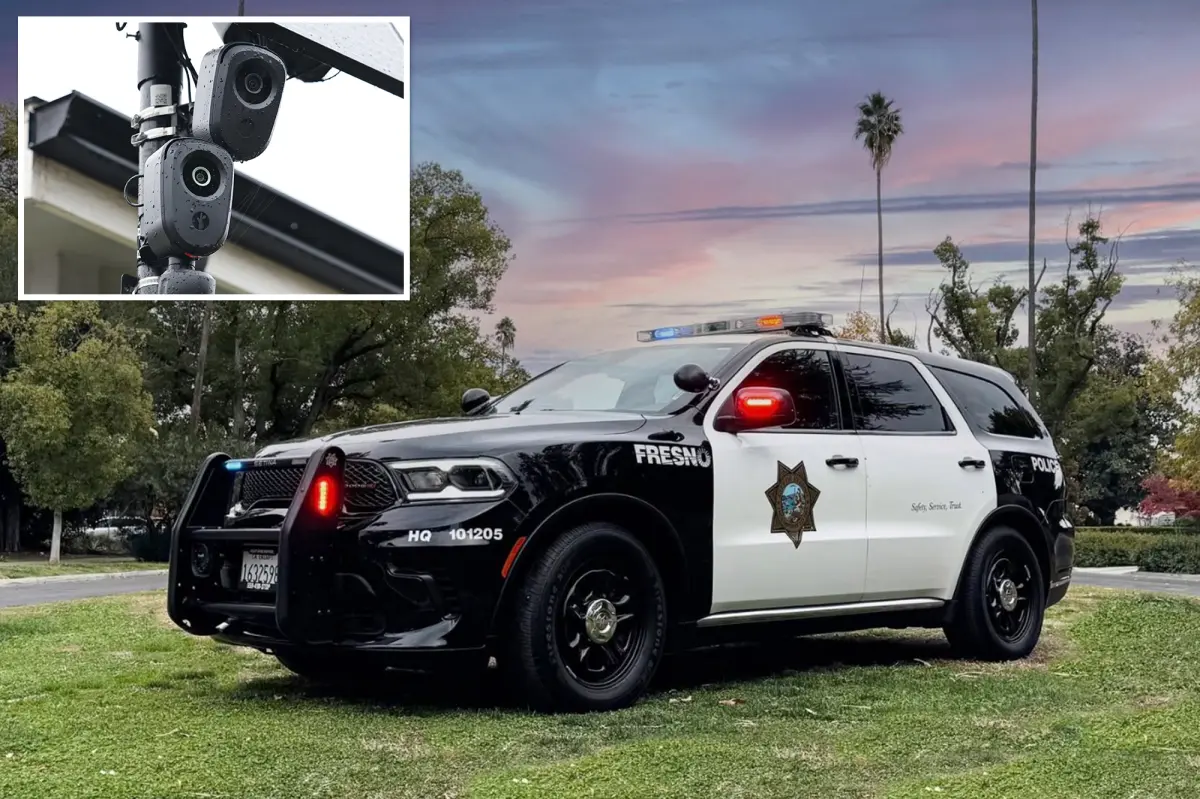

Fresno plans to end its use of controversial Flock surveillance cameras amid growing privacy concerns, but police are seeking a new vendor to keep the city’s automated license plate reader network operating.
The Fresno Police Department is asking the City Council to approve a contract with Axon, the law enforcement technology company best known for body cameras and Tasers. Under the proposal, Axon would take over the city’s license plate-reading system.
“Axon’s a company we’ve worked with for a long time without really any issues. The council’s repeatedly approved contracts with Axon. They have a much better reputation than the other company,” Council Member Mike Karbassi said, according to ABC 30.
The proposed agreement would cover 88 cameras: 80 already operated by the city and eight additional readers that Axon would provide at no cost for five years. The new cameras would be placed at malls, shopping centers and other locations.
Police said the first-year price would be $1,994.71 per camera, below the $2,500 to $3,000 Fresno paid annually for each Flock reader.
The potential change follows Mayor Jerry Dyer’s announcement earlier this month that Fresno would allow its Flock contract to expire in February.
Police Chief Mindy Casto said a review of system records showed that Fresno’s Flock data had been accessible to agencies the department had never authorized to receive it. California Democrats have expressed particular concern about possible access by US Immigration and Customs Enforcement, although Casto said ICE had not conducted any searches.
A Fresno police officer is also facing an internal investigation over allegations of improperly using Flock data.
Casto said eight police employees had been fired or forced out because of inappropriate database access, while additional employees had received disciplinary action.
CHECK THIS OUT: EPA Says Iowa Detonation Caused No Increase in Water Lead Levels, Latest Tests Show
“This is data that should not be misused. We take it seriously, and we will continue to investigate that case until we come to a preponderance of evidence of whether something was misconduct or not,” Casto said.
Some residents, however, question whether replacing the surveillance technology provider would address the deeper concerns surrounding how police use the data.
“So switching the conversation to which type of company we’re going to use, and acting like Flock was the bad actor, when it was actually how the police were able to use that data. Axon doesn’t fix that,” resident Farah Karipineni told ABC 30.
Karipineni said she wants the City Council to postpone consideration of the Axon contract, which appears on its Dec. 3 agenda, until stronger safeguards governing surveillance are established.
Police officials, meanwhile, maintain that automated license plate readers are an important crime-fighting resource.
Casto said the cameras helped investigators solve 42 of 128 shootings and 16 of 25 murders reported between January and October.
Karbassi said he recognizes residents’ concerns and plans to host a town hall before the council decides whether to approve the contract.
“I think the big concern is what we do with the data, and who can access the data and what safeguards are in place,” Karbassi said.
“So I think that we’re going to put conditions if it’s approved, otherwise we’ll delay it and approve it once there’s a policy in place that’s in flux right now.”