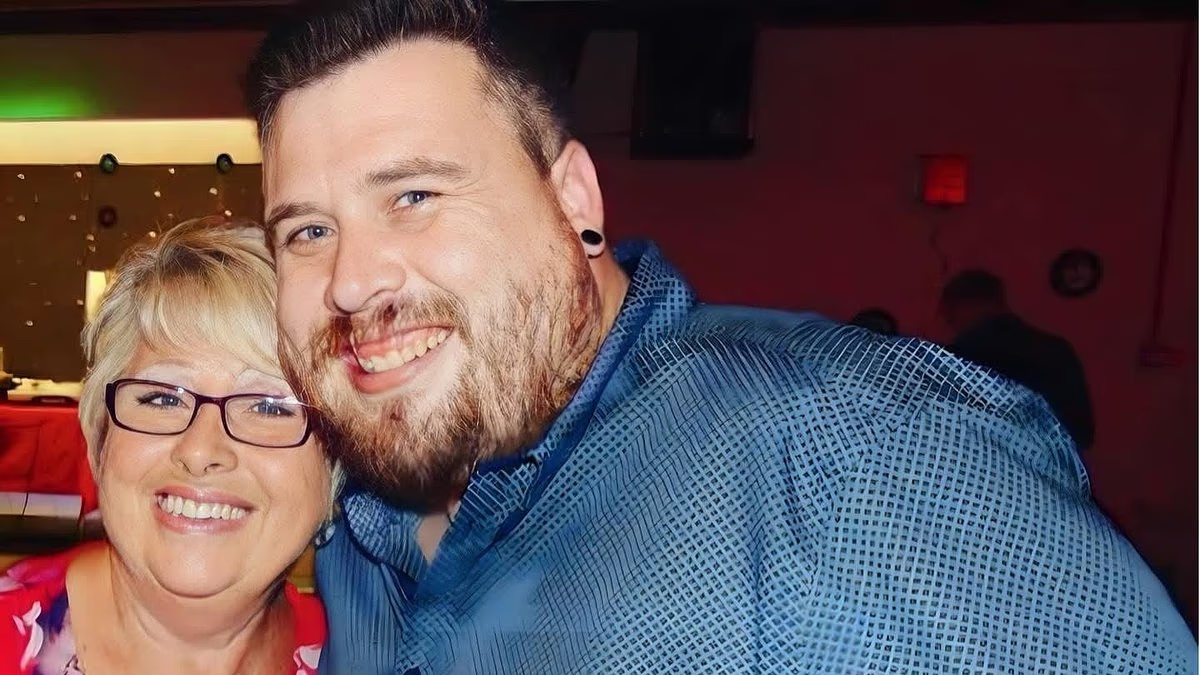

Long shifts at a betting shop left Matt Symons with little time or energy to prepare fresh meals, so convenience food became a regular part of his diet.
“I would usually finish a 12-hour shift, sit in the pub for most of the evening and then pick up a takeaway on the way home,” recalls Matt, now 44 and living in Norwich.
“We didn’t have anywhere to cook at work, so my lunches weren’t much better. They were usually ready meals, crisps and chocolate.”
At his heaviest, Matt weighed 22st 5.5lb and had a body mass index (BMI) of 41, placing him in the obese range.
“I was completely blind to how large I was,” he says. “I think I was in denial about it all.”
Determined to turn his life around, Matt now weighs a healthy 13st 12lb. He has lost more than eight stone and gone on to become a marathon runner.
Remarkably, Matt achieved the transformation without weight-loss injections or surgery.
Instead, he credits a series of straightforward changes to his diet and daily routine, including cooking from scratch, walking regularly and attending weight-loss group meetings.

Matt Symons – pictured with his mother Wendy – reached his heaviest weight of 22st 5.5lbs around 2016

Matt now weighs a healthy 13st 12lb, having lost more than eight stone
“I think I can pinpoint when things became really bad to around 2016,” says Matt, who now works as a hearing aid technician.
“A lifelong friend of mine died the year before at the age of 34, and it affected me deeply.
“After that, I started seriously neglecting my own health. I wasn’t exercising, I would take taxis instead of walking and I would get out of breath just walking upstairs.
“I wasn’t living; I was just existing.
“The turning point came at a Christmas party when a chair collapsed beneath me as I was sitting on it. I was mortified. That is when I remember thinking, ‘Things have got to change.’”
That evening, Matt began looking into ways to lose weight.
While flicking through a newspaper, he came across an article about Slimming World, the commercial weight-loss programme founded in 1969. It combines dietary guidance with regular group meetings, weigh-ins and support from fellow members.
Its Food Optimising plan encourages members to eat filling, relatively low-calorie foods such as vegetables, fruit, lean meat, eggs, potatoes and pasta.
Members can enjoy these so-called “Free Foods” without weighing or counting every portion. More calorie-dense choices, including chocolate, biscuits and other treats, are instead covered by a daily allowance.
The aim is to lower overall calorie intake while helping people avoid feeling constantly hungry.
Slimming World is one of several commercial programmes based on this kind of approach. Weight Watchers, for example, uses a points system to guide food choices, while digital services such as Noom combine food tracking with behavioural coaching to support changes in eating habits.
Encouraged by the story he had read, Matt attended a weekly group session near his home with a friend.
“I reached the front door and very nearly turned around and walked away,” he says.

“I was completely blind to how large I was,” says Matt. “I think I was in denial about it all”
“My friend had to drag me through the door because I thought it would be full of women and I didn’t really know what to expect.”
For Matt, the most difficult moment was facing the number on the scales.
“I hadn’t weighed myself for years,” he says.
“When I finally stepped on the scales, I was nearly five stone heavier than I had expected. I left the meeting feeling deflated and almost gave up.”
Support from the group, combined with his own determination, persuaded him to continue. Before long, he began seeing results.
“The first major change I made was cooking for myself using Slimming World recipes. I started batch-cooking meals for work, which was something I had never done before.”
He also made a substantial reduction in the amount of alcohol he drank.
“I stayed away from the pub and replaced pub trips with other activities, such as going to the cinema and bowling,” he says.
Matt lost six pounds in his first week. “It felt amazing,” he says. “Because I had lost weight, I had more energy.”
His weight loss continued at roughly four pounds a week. He also began Couch to 5K, a nine-week beginner running programme that uses alternating walking and running to build participants up to five kilometres, or 30 minutes, without stopping.
“By the end of the programme, I realised I loved running,” says Matt, who still runs three times a week.
“I kept training and my first major run was a charity 10K, which I completed in memory of my friend. From there, I ran a half-marathon and eventually two full marathons.”
After 44 weeks—around 10 months—Matt had lost a total of nine stone.
“Losing weight completely changed my outlook on life,” he says.
“Alongside the change on the scales, I have seen a huge improvement in my self-confidence.
“Without losing weight, I would not have had the confidence to retrain for a career I love or enter a relationship.”

Matt says losing weight gave him an entirely new outlook on life – and helped him discover his passion for running
Matt’s experience comes as Slimming World’s latest research into men’s attitudes towards weight management found that 90 per cent are concerned about their health. However, almost half still believe society views handling such issues alone as more masculine.
Research indicates that structured weight-loss programmes can be effective, particularly when they offer regular support and accountability.
Such programmes also have potential drawbacks. Membership fees can be expensive, while rules and tracking systems may feel restrictive. Some people also struggle to maintain new habits after they stop attending meetings or following the plan.
And losing weight is not necessarily the hardest challenge. Research has repeatedly shown that regaining weight is common after dieting, especially when ongoing support is not available.
“Maintaining the weight loss can be difficult, but I always tell myself, ‘I don’t want to go back to the way I was,’” says Matt. “I hold myself accountable.”
“I still enjoy myself and have the occasional takeaway, but after following the programme for so long, you learn to adapt your lifestyle around it,” he says.
“My only regret is that I waited so long to lose weight. If anyone is thinking about doing it, I would say: don’t think twice.”


