
Share this @internewscast.com
A YouTuber residing in the UK has been awarded a £3 million settlement from Saudi Arabia after a High Court judge determined the nation was responsible for an attack on him outside Harrods.
Ghanem Al-Masarir, aged 45, sustained eye injuries when he was trailed and assaulted by two individuals in Knightsbridge in August 2018. The attackers allegedly accused him of being a “slave to Qatar.”
The incident prompted Al-Masarir, a prominent human rights advocate, to take legal action, asserting that the Kingdom of Saudi Arabia, or its representatives, orchestrated the assault.
He argued that the kingdom could not invoke “state immunity” in this case, nor could they for the alleged hacking of his phone with surreptitiously installed spyware.
Al-Masarir, whose YouTube content has amassed nearly 350 million views, is known for his satirical videos critiquing the Saudi royal family and uncovering corruption within the nation.
In a recent development, Mr. Justice Saini of the High Court issued a summary judgment in Al-Masarir’s favor after Saudi Arabia did not present a defense against the claims during a hearing last week.
Giving judgment, the judge said the Saudi Kingdom (KSA) stood no realistic prospect of defending the case and ordered a compensation payout of over £3million to Mr Al-Masarir.
‘The KSA had a clear interest in and motivation to shut down the claimant’s public criticism of the Saudi government,’ he said in his ruling.

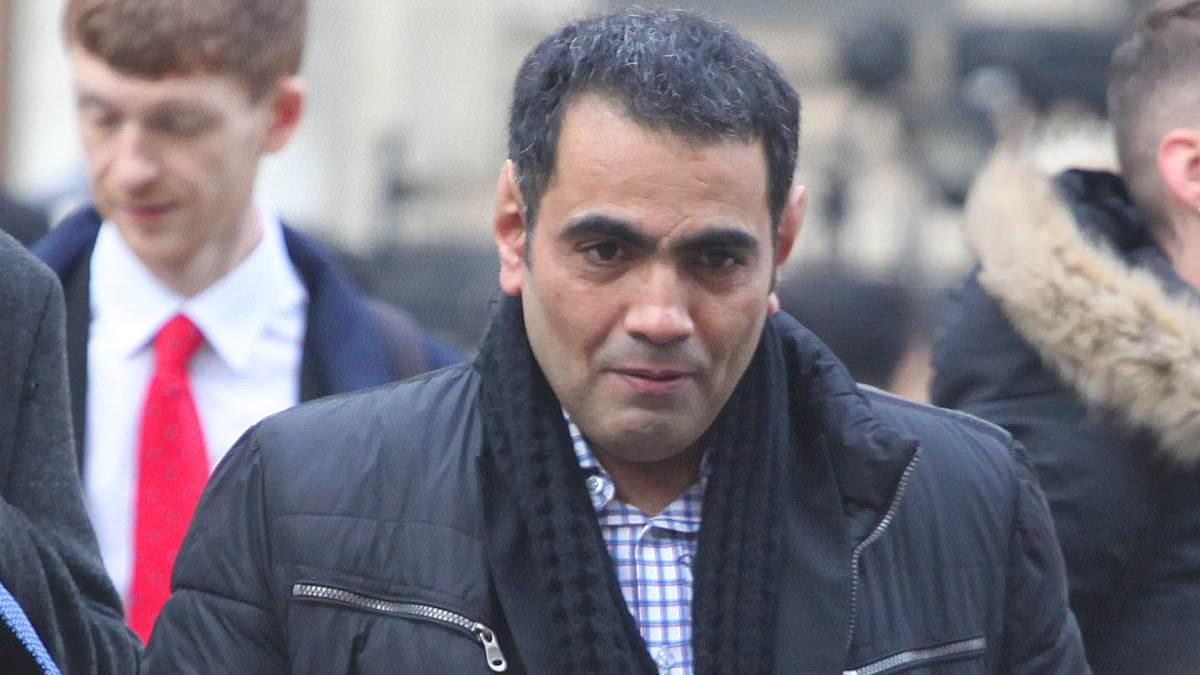
YouTuber Ghanem Al-Masarir who was assaulted outside Harrods has been awarded £3m compensation from the Kingdom of Saudi Arabia after a judge ruled it was behind the attack
The High Court heard that Mr Al-Masarir was born in Saudi Arabia, but moved to England in 2003 and was subsequently granted asylum in 2018.
As a satirist, critic and human rights activist, he built a huge following online, with his videos.
In his compensation claim, Mr Al-Masarir said he had been the subject of a campaign of harassment and intrusive behaviour by the KSA, including the use of infected links to use malicious spyware – known as ‘Pegasus’ – to hack his phone.
‘It is his case that as a result of the covert deployment of that spyware on two of his mobile phones, the KSA – or its agents – gained ongoing access to all of the data communicated via and stored on them,’ said the judge.
‘He says that they were also able to track his location, intercept and record his calls, to use the phones’ microphones to record him and to use the phones’ cameras.
‘The claimant says that this intrusive secret surveillance by the KSA or its agents, touched on every aspect of his private life.
‘The claimant’s evidence is that the discovery of his targeting by the KSA has had catastrophic personal consequences for him.
‘These include severe depression in consequence of that discovery, such that his once thriving and lucrative online YouTube content career has effectively ended, and that he is unable to work at all or to perform many basic day-to-day activities, and rarely leaves the house.’
But Mr Al-Masarir said his ordeal became physical in 2018 when he was followed from a cafe meeting with a friend and then attacked on British soil, near Harrods.
In a witness statement, he said one of the men began to shout at him, accusing him of talking about the al-Saud family.
‘One of the men punched me in the face and continued to physically attack me,’ he said.
‘I tried to get away from the men. Both men followed me. The man who had not punched me was wearing a grey suit and a wire, either from headphones or from a headpiece.
‘Passers-by intervened and attempted to restrain the second man preventing him from attacking me.

Mr Al-Masarir, 45, suffered eye injuries after he was followed in Knightsbridge and attacked in August 2018 by two men, who accused him of being a ‘slave to Qatar’
‘During the assault, the men were calling me a “slave of Qatar” and said that they were going to teach me a lesson.
‘If it were not for the people restraining the men, I know my injuries would have been a lot more serious. I remember the punches being very vicious and with intent.’
The case reached court last week on an application by Mr Al-Masarir for summary judgment on the basis that the KSA had not submitted a defence and so could not realistically hope to defeat his claim.
Giving judgment today, Mr Justice Saini said: ‘In my judgment, there is a compelling basis for concluding that the claimant’s iPhones were hacked by Pegasus spyware which resulted in the exfiltration of data from those mobile phones and that this conduct was directed or authorised by the KSA or agents acting on its behalf.
‘In the absence of any pleaded case by the KSA in response to these facts and conclusions, and any evidence in response to this application, I conclude that the KSA has no real prospect of defending the allegation of hacking.
‘The covert accessing of that information, together with the tracking of his location, the interception of his calls, and use of the phones’ microphones and cameras to monitor the claimant, constituted in my judgment exceptionally grave invasions of his privacy.
‘It effectively converted these smartphones into ‘bugging’ devices which secretly transmitted huge amounts of his data and information on every aspect of his life to a hostile state.’
‘No justification has been advanced for this grossly intrusive conduct, nor could there be. The claimant’s activities as an online activist in support of human rights in Saudi Arabia and in opposition to the Saudi government represented a proper exercise of his free speech rights. They could not possibly justify the hacking and surveillance.
‘In my judgment, the KSA’s alleged acts of surveillance, which I have found it has no reasonable prospect of contesting, constituted a course of conduct which amounted to, and which it knew or ought to have known amounted to, harassment of the claimant.
‘The obvious inference is that the KSA used Pegasus to monitor him over an extended period and by multiple acts.’
He also said there was ‘no real prospect that the KSA will successfully defend the allegation that it was responsible for the physical attack on the claimant.’
‘The KSA had a clear interest in and motivation to shut down the claimant’s public criticism of the Saudi government,’ he said.
‘The attack was unprovoked: the claimant had not, contrary to what the attackers said, been discussing the Saudi royal family or government.
‘This accusation therefore appeared to be a pretext for a premeditated attack on him. I have already referred to the fact that one of the attackers was wearing an earpiece, which also suggests a level of planning in the operation.’
He continued: ‘In my judgment, there is no reason – and certainly no compelling reason – why this claim should go to trial.

Mr Al-Masarir said his ordeal became physical in 2018 when he was followed from a cafe meeting with a friend and then attacked on British soil, near Harrods
‘The KSA has failed to serve a defence or to respond to this application and has breached multiple further orders. It appears unlikely to participate in the claim.
‘Proceeding to trial would result in a wholly unnecessary use of court time and resources, and the unnecessary incurring of significant further costs.
‘Entering summary judgment at this stage is the only course consistent with the overriding objective when a trial would simply be a rehearsal of all the evidence before me without challenge from the KSA.’
Having granted summary judgment, the judge awarded Mr Al-Masarir a total of £3,025,662 in damages, including more than £2.5m for the loss of his YouTube income stream.