Share this @internewscast.com
BP has decided to shelve its plans for a hydrogen and carbon capture initiative at Teesside in north-east England, opting instead to make way for a large-scale artificial intelligence data centre. This significant shift marks a new chapter for the site, which was previously earmarked for green energy development.
In a statement to the Financial Times on Monday, BP confirmed, “We have taken the decision not to progress the development of H2Teesside and have withdrawn our development consent order application for the project.” Despite this change of course, BP emphasized its ongoing commitment to the region through other ventures, stating, “We continue to move forward with other projects on Teesside, including our investments in Net Zero Teesside Power and the Northern Endurance Partnership, and remain an active partner in the region.”
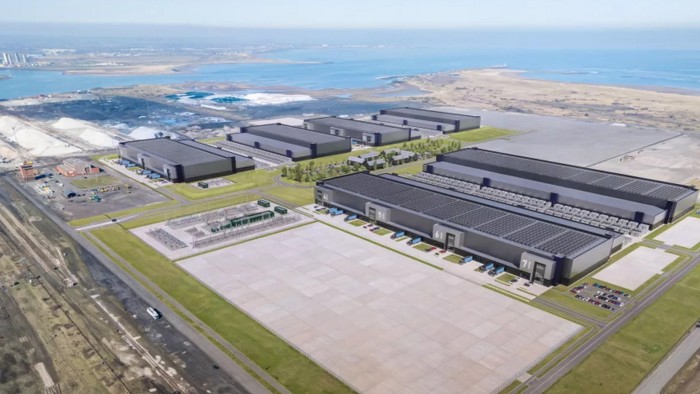
This decision follows the government’s recent selection of the former steel site in Teesside as a prime location for one of its AI growth zones. The plan is to establish Europe’s largest data centre, a project that has garnered support from the Department for Science, Innovation and Technology.
The envisioned data centre will span nearly 500,000 square metres, marking a significant investment in the future of AI and digital infrastructure in the UK. This development underscores a strategic pivot in the region’s industrial landscape, shifting from traditional energy projects to cutting-edge technology solutions.
The move comes after ministers recently selected the former steel site in Teesside as the location for one of their so-called AI growth zones, with plans to build the largest data centre in Europe.
The vision includes a data centre project of nearly 500,000 square metres, which has been supported by the Department for Science, Innovation and Technology.
The land has been the subject of a tussle inside the government, with energy secretary Ed Miliband viewed as supporting BP’s proposal.
Miliband had until Thursday to take a decision on whether to grant a “development consent order” to BP for the H2T project. DCOs are a type of planning permission decided at government level for nationally significant projects.
Teesworks Ltd, the site’s development vehicle, and the local public body overseeing its activities, the South Tees Development Corporation, have formally objected to the hydrogen proposal, saying it would make their planned data centre unviable.
AI growth zones were introduced as part of the government’s AI opportunities action plan, published in January.
The zones offer areas where companies can receive streamlined planning approvals and preferential energy arrangements, since data centres tend to require generous amounts of water in order to prevent computers from overheating.
But the first such zone, under development in Culham, Oxfordshire, has sparked concerns about water scarcity in the area, given that the south-east of England is severely water-stressed.
The government did not immediately respond to a request for comment.
This is a developing story