
Share this @internewscast.com
Health officials have revealed the key early warning signs of the ‘silent killer’ disease spread by bugs that is now ‘endemic’ to the US.
Chagas disease is a serious and potentially fatal ailment caused by the parasite Trypanosoma cruzi, typically transmitted through the waste of triatomine insects.
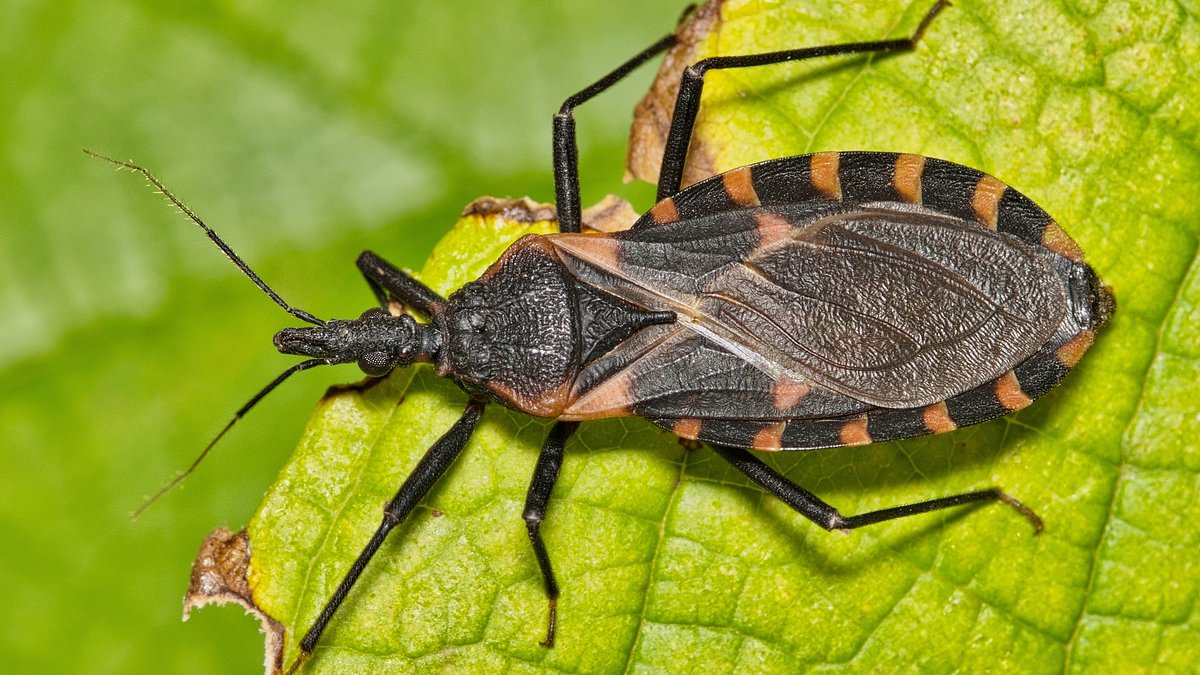
Also nicknamed ‘kissing bugs,’ triatomines are known to bite humans and animals and spread Chagas disease.
First identified in Texas in 1955, the disease has since affected 300,000 people across eight states in the U.S., with many unaware of their condition. The number of fatalities remains uncertain, but the CDC indicates it is likely very low.
And because up to 80 percent of patients never develop symptoms, the CDC has warned the actual case count is likely much higher.
In fact, Chagas disease is now considered ‘endemic’ to the US, which means it has a ‘constant presence/unusual prevalence’ in the population.
In 20 to 30 percent of those infected who do display symptoms, signs can range from minor issues like fever and fatigue to severe long-term problems, including heart failure, and even stroke or death.
If caught early, Chagas disease can be treated with anti-parasitic drugs, making swift detection crucial for preventing lifelong consequences.

Triatomine bugs, nicknamed ‘kissing bugs,’ carry the parasite Trypanosoma cruzi, which causes Chagas disease
Kissing bugs, measuring between 0.5 to 1.25 inches long, are blood-sucking insects that often hide during daylight in dark house crevices, such as ceilings and wall cracks.
They then come out to feed at night by sucking human or animal blood.
Trypanosoma cruzi then spreads when humans or animals absorb or accidentally eat the bugs’ infected feces.
Though human cases have been confirmed in eight states, the insects have been found in 32 states. Chagas is not closely monitored in the U.S. However, it has gained notoriety as a ‘silent killer’ because it can reside in the body for years without detection.
Originally occurring in tropical regions of Latin America, deforestation and migration have facilitated its spread worldwide, including to the U.S.
Experts have also suggested warmer temperatures and increased rainfall from climate change may have expanded the bugs’ breeding grounds.
Though most patients are asymptomatic, the disease may cause mild issues that could also be attributed to more common conditions like the flu or common cold.
These include fever, fatigue, body aches, rash, loss of appetite, diarrhea and vomiting.
Another tell-tale clue is Romaña’s sign, or swelling of the eyelid, usually on the same side as the bite wound. The eyelid also becomes red and inflamed.
Romaña’s sign occurs when the parasite enters the eye through the bug bite and then multiply within the eye.
These signs are part of the acute phase of the disease, which occurs in the first weeks or months after infection.
Chagas disease then enters the chronic phase, which can last for years or a lifetime. Most people have no symptoms, but those who do may severe issues like develop heart damage, including an enlarged heart, heart failure or irregular heart rhythm.

The above map shows states where triatomine bugs have been detected
Chagas is thought to induce an inflammatory within heart tissues, which damages cardiac muscle cells called myocytes, impairing function. Damaged tissue is also replaced by scar tissue, which makes it harder for the heart to pump and disrupts electrical signals.
Inflammation in the heart can also lead to the formation of blood clots that travel to the brain, causing a stroke.
Severe chronic Chagas disease also has been shown to enlarge the esophagus or colon through inflammation that destroys nerve cells in the enteric nervous system, which encompasses the entire gastrointestinal tract, from the esophagus to the rectum.
This could make it more difficult to swallow or pass stool, leading to malnutrition and potential intestinal blockages.
The antiparasitic drugs benzindazole and nifurtimox (Lampit) are FDA approved to treat the parasite, though they work best in the early stages of Chagas disease.
There are no vaccines or treatments available to treat Chagas disease.
Researchers from the University of Florida say that California, Texas and Florida are home to the most people suffering from chronic cases of Chagas.
An estimated 70,000 to 100,000 people in California have Chagas disease, making it the state with the most cases in the US.
Experts from the Center of Excellence for Chagas Disease (CECD) say this is because Los Angeles is home to a large population of people born in Latin America.