
Share this @internewscast.com
As tensions in Iran escalate into the sixth day, concerns are mounting over the potential ripple effects this conflict could have on the global stage.
Iran has significantly reduced its oil and gas exports through the Strait of Hormuz, a vital maritime corridor, causing a surge in global energy prices.
In the UK, any further increase in gas prices could translate to higher energy bills by summer, compounding inflationary pressures and affecting interest rates. Additionally, supply chain disruptions are expected to intensify.
President Trump has pledged to explore insurance guarantees for vessels navigating the Strait, as rising premiums deter ships from passing through.
This development adds strain to insurance companies in London, marking another point of contention with Trump following the UK’s decision not to participate in the initial US and Israeli strikes last week.
What are the implications of these events, and could British insurers face significant challenges due to Trump’s strategy?

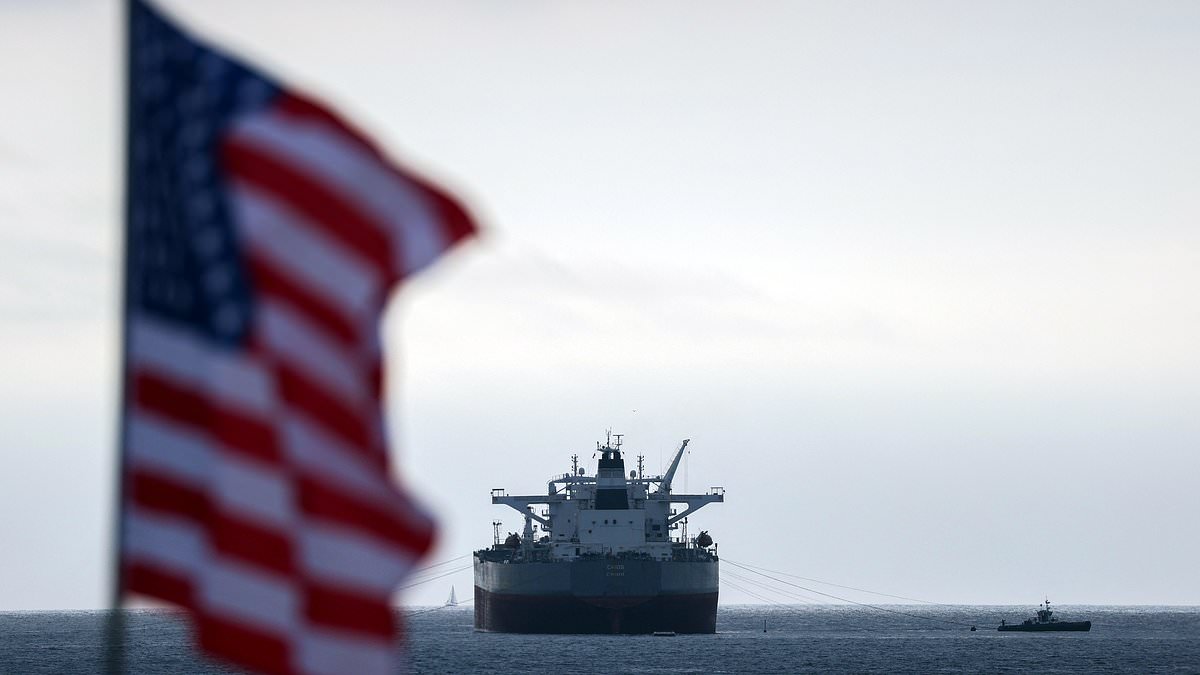
Shippers are facing higher insurance premiums amid heightened risk in the Strait of Hormuz
What has Trump promised?
The Strait of Hormuz is a crucial waterway in the Persian Gulf, and around a fifth of the world’s oil passes through it.
Iran has warned it will attack any vessel that attempts to pass through the Strait as it looks to take complete control of the shipping route.
That has pushed maritime insurance companies to hike premiums and even pull coverage in the face of the heightened risk.
Just two days into the attack, maritime traffic had dropped by 80 per cent, according to Lloyd’s List Intelligence.
The US President is trying to get a handle on the situation, after the price of oil soared to over $84 barrel – up from an average of $60-65 for most of the year – by promising to escort oil tankers and provide cover ‘at a very reasonable price’.
In a Truth Social post he said: ‘Effective IMMEDIATELY, I have ordered the United States Development Finance Corporation (DFC) to provide, at a very reasonable price, political risk insurance and guarantees for the Financial Security of ALL Maritime Trade, especially Energy, traveling through the Gulf.
‘This will be available to all Shipping Lines. If necessary, the United States Navy will begin escorting tankers through the Strait of Hormuz, as soon as possible.’
However, there has been little detail on how it would work.
Marcus Baker, global head of marine and cargo at insurers Marsh, said the firm had ‘some experience in using government-funded money to support war-risk insurance, which we did in Ukraine.’
He told the BBC: ‘There’s definitely a possibility here that something could happen here. Clearly, speed is of the essence.’
How will it affect Britain’s insurance market?
Insurance underwriters have had to reprice war-risk insurance for tankers to reflect the heightened risk across the Gulf.
Vessel owners have reportedly faced premiums as high as 3 per cent of the cost of a ship, up from 0.25 per cent before the war.
Other insurers have cancelled policies to hike prices, or exited the market entirely.
War risk cover is usually required under loan covenants and cargo contracts, and without it tankers may be unable to load or discharge through designated high-risk zones.
On Tuesday, the Joint War Committee (JWC) of the Lloyd’s Markets Association, representing participants in the insurance market, expanded its high-risk area to cover the entire Persian Gulf.
This guidance is watched closely by the market and influences decisions made over insurance premiums.
Trump’s offer to cover political risk insurance has caused ructions in Britain’s oldest insurance market, Lloyd’s of London, which covers over 50 insurers grouped in syndicates, which pool and spread risk.

Lloyd’s of London convened its war committee to designate the entire Gulf as high-risk
Lloyd’s insurers underwrite around £55billion in insurance policies a year, specialising in complex specialities like marine and energy, with war risk insurance another key line of business.
Trump’s plan, therefore, upends how it tends to do business, and insurers are rushing to understand how the plan might work, which vessels would be covered and whether the plans could bring prices down.
Some insurers have already made their disapproval known.
JWC secretary Neil Roberts told Sky News that Trump’s intervention was largely unnecessary and the market was working as planned.
‘I don’t think the details of such a scheme have been given to anyone, so far as we know, and it will take time to work it out, and the appetite is unknown,’ he said.
‘Essentially our market is still writing risks and there isn’t a perception here that there’s a need for intervention at this time.’
But there is some divergence among insurers in the market.
Marsh’s Baker says Trump’s plans would ‘add both a degree of confidence to the insurance market, and I think it would also reduce the price of the war risk premiums’.
Markets are all too familiar with the Taco – Trump always chickens out – trade though, and with details scarce, the insurance market is unlikely to feel threatened for now.
Meanwhile, stock markets also remain unconvinced by the plan.
Neil Wilson, UK investor strategist at Saxo said: ‘The fact is it’s just not feasible to reasonably protect all ships in the region – think about what the Houthis managed, let alone what Tehran is capable of mounting in terms of strikes and sabotage.’
Finally, the key issue will be whether tankers and their crews covered by any possible Trump-backed policy will even want to make the journey.
DIY INVESTING PLATFORMS
AJ Bell
AJ Bell
Easy investing and ready-made portfolios
Hargreaves Lansdown

Hargreaves Lansdown
Free fund dealing and investment ideas
interactive investor

interactive investor
Flat-fee investing from £4.99 per month
Freetrade

Freetrade
Investing Isa now free on basic plan
Trading 212

Trading 212
Free share dealing and no account fee
Affiliate links: If you take out a product This is Money may earn a commission. These deals are chosen by our editorial team, as we think they are worth highlighting. This does not affect our editorial independence.
Compare the best investing account for you