
Share this @internewscast.com

In a move that has captured the attention of the entertainment industry, Warner Bros. Discovery has opted to accept Netflix’s acquisition proposal over competing bids from Paramount Global and Comcast. This decision was influenced by a combination of financial stability, strategic alignment, and promising future potential. While all three contenders put forth enticing offers, each at a significant premium above Warner Bros. Discovery’s current stock price, it was Netflix’s bid that ultimately won over the company due to its perceived comprehensive value.
Netflix’s offer appraised Warner Bros. Discovery at $27.75 per share, culminating in an enterprise valuation of roughly $82.7 billion, utilizing a blend of cash and stock. Under this proposal, Netflix plans to take over Warner Bros. Discovery’s studio and streaming divisions, while the linear cable assets would be spun off. On the other hand, Paramount had expressed interest in acquiring the entirety of Warner Bros. Discovery, including studios, streaming, and cable assets, with a final all-cash proposition of $30 per share. At face value, Paramount’s offer seemed financially more attractive.
Nevertheless, insiders reveal that Warner Bros. Discovery’s Board of Directors saw Netflix’s proposal as more advantageous. The board anticipated that the Netflix deal would effectively yield a higher valuation than Paramount’s $30 per share offer due to the potential for Warner Bros. Discovery shareholders to hold stakes in both Netflix and the newly spun-off cable-focused entity. Moreover, the equity component in Netflix’s offer presents an opportunity for Warner Bros. Discovery investors to benefit from the growth of what is poised to become the world’s largest entertainment platform.
Despite the announcement of the agreement with Netflix, the acquisition is expected to undergo intense regulatory examination and face various political challenges, meaning Paramount’s involvement might not yet be off the table.
Should Netflix triumph in acquiring Warner Bros. Discovery, it would forge an entertainment behemoth unparalleled in the current media landscape. This merger would revolutionize the industry, establishing a streaming giant with unrivaled subscriber numbers, expansive studio capabilities, and sprawling global distribution. By integrating Netflix’s streaming prowess with Warner Bros. Discovery’s extensive and historic content library—which includes HBO, Warner Bros. Pictures, DC Studios, and an array of iconic film and TV franchises—the partnership would significantly alter Hollywood’s power dynamics.
How Would a Netflix–WBD Merger Reshape the Entertainment Industry?
Netflix already commands the largest streaming subscriber base worldwide, and the addition of Warner Bros. Discovery’s premium content and HBO Max subscribers would amplify its market share in the United States and bolster its global clout. The acquisition would further solidify Netflix’s position in the premium content arena, incorporating a treasure trove of well-known intellectual properties such as Harry Potter, Game of Thrones, The Lord of the Rings, The Matrix, along with DC fixtures like Batman and Superman.
Getty Images
If Netflix does ultimately succeed in acquiring Warner Bros. Discovery (WBD), the deal would undoubtedly create the most powerful entertainment conglomerate in modern media history. In fact, a combined Netflix–WBD would reshape the entertainment landscape, creating a streaming powerhouse with unmatched subscriber scale, studio assets, and global distribution. Combining Netflix’s global streaming dominance with WBD’s deep historical content library — spanning HBO, Warner Bros. Pictures, DC Studios, Discovery, and a century of major film and TV franchises — would give the merged entity a market share that would fundamentally reorder Hollywood’s balance of power.
It is widely reported that Netflix currently holds the largest subscriber base in streaming. Adding WBD’s premium catalog and HBO Max subscribers would increase Netflix’s United States market share and its overall global influence. In addition, the acquisition of WBD would enhance Netflix’s standing in the premium content category and add a library of highly recognizable franchises and IP, such as Harry Potter, Game of Thrones, The Lord of the Rings, The Matrix, and DC Studios staples such as Batman and Superman.
The combination of Netflix and WBD would send shockwaves across the entertainment industry. Rivals such as Disney, Amazon, Apple, Comcast/NBCUniversal, and Paramount would face a competitor with unmatched scale, data insights, and bargaining leverage. Netflix would no longer need to rely primarily on original programming; it would control a legacy library on par with Disney’s — one capable of feeding streaming slates for decades.
Traditional studios, independent producers, and even theaters could feel the pressure. With a larger share of must-have franchises under one roof, Netflix could dictate licensing terms, shrink theatrical windows, and command premium deals for talent and distribution. Independent creators worry it could squeeze out diverse voices, while competitors fear subscriber churn and higher content-acquisition costs.
In effect, the merger would create a vertically integrated entertainment giant — part tech platform, part century-old studio — whose decisions would shape not only what audiences watch, but how the industry produces, finances, and distributes content in the years ahead.
At the same time, the primary attributes of the potential combination of Netflix and WBD – additional scale, market share and control over high-value intellectual property – are the same attributes that could ultimately derail the deal to the extent it does not successfully navigate a choppy regulatory landscape.
The key question from a regulatory perspective will be whether the combination of Netflix and WBD would simply be a streaming superpower, or a streaming monopoly.
Regulatory Hurdles at the Federal, State and European Levels
Federal Level Regulatory Scrutiny
According to analysts, a merged Netflix–WBD could control between 30–40% of the U.S. streaming market at closing. For this reason, the proposed transaction will certainly be subject to review by the Anti-Trust Division of the United States Department of Justice (DOJ) and possibly also the Federal Trade Commission (FTC). Any such federal level regulatory review will focus on the following factors:
- Reduced competition — Rivals, both large and small, may find it harder to acquire highly attractive content, produce desirable film and television projects and, ultimately, remain competitive in the overall entertainment marketplace. The question, from a regulatory perspective, would be whether such a reduction in competition would position Netflix as a streaming monopoly.
- Monopolistic Pricing Power – Based upon its subscriber base, market share and content library, the combined Netflix-WBD will have an unprecedented ability to dictate pricing power on everything from content acquisition costs to driving favorable terms with exhibitors (i.e. national movie theatre chains) for showing blockbuster theatrical releases. Any such outsized control over entertainment industry pricing power may underscore concerns that the combination of Netflix and WBD would result in an illegal monopoly.
- Risk to theatrical releases and content diversity — Speaking of theatrical releases, many within the entertainment industry fear that Netflix’s streaming-first model could shutter the wide theatrical distribution that WBD films have traditionally enjoyed. To the end, Netflix CEO Ted Serandos once famously stated that the movie theatre model is “outdated,” calling into question Netflix’s commitment to the theatrical distribution of legacy-WBD titles.
- Potential harm to creators and consumers — From the standpoint of creatives, the Netflix-WBD deal could result in fewer alternatives for creators shopping projects and also possibly a drop in the purchase prices paid for IP acquisition. From a consumer perspective, the overwhelming market share held by Netflix could result in an increase in the price that Netflix charges consumers for its streaming service.
State Level Regulatory Scrutiny
Federal regulators have a long history of scrutinizing media mergers, and lawmakers in both political parties have already weighed in urging the DOJ and FTC to review the proposed transaction.
Though antitrust enforcement is largely federal, state attorneys general may join the fray — especially in states with strong consumer-protection traditions. State-level concerns would likely echo federal ones: diminished competition in media markets, fewer local or regional content providers, and threats to independent production houses — potentially reducing jobs and creative output in their jurisdictions.
In fact, state level review in the context of the proposed Netflix-WBD transaction may result in an alignment of interests on the part of State Attorneys General from polar opposite sides of the political spectrum: Democrat Rob Bonta of California and Republican Christopher Carr of Geogia. Both Bonta and Carr have publicly prioritized consumer protection in their respective states, and the film and television production industries in both California and Georgia have suffered from the recent downturn in domestic production – a trend that could accelerate in the wake of a Netflix-WBD transaction.
Scrutiny from European Regulators
The proposed Netflix-WBD transaction could also attract attention overseas, notably from the European Commission (EC), which is charged with enforcing the EU’s competition laws. Traditionally, European regulators have been wary of media consolidation that could reduce content diversity or threaten local theatrical and production ecosystems. It has been reported that any such review by the EC will involve a “merger review” but would not necessarily entail an effort to block the transaction altogether. Any input from the EC would likely be limited to requests to impose certain structural or behavioral remedies, such as mandatory licensing of key content to rival services and limits on exclusivity windows, in advance of EC regulatory approval.
The combined weight of U.S. federal, state-level, and European regulatory pressure turns the Netflix–WBD deal into a high-stakes, multi-jurisdictional test of modern antitrust enforcement.
Outside of Regulatory Challenges, a Political Firestorm Could Be Brewing
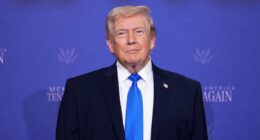
The merger could face challenges from the Trump Administration, as the President is thought to favor Paramount as the buyer.
Getty Images
The proposed merger between Netflix-WBD is expected to run into significant political turbulence from the Trump Administration. Any such political headwinds may prove as formidable as the antitrust scrutiny itself.
In fact, within hours of the announcement of the accepted Netflix bid, reports indicated that White House officials have expressed concerns about the deal. In addition, President Trump himself is believed to favor a Paramount deal for WBD, given his close personal relationship with Paramount Chief David Ellison and his father Larry Ellison. With Trump-designated political appointees controlling key levers at the DOJ and FTC, to the extent the President were to wade in to this matter and “put his finger on the scale,” the Netflix-WBD transaction may face prolonged investigation, heightened remedies, or even outright opposition — making the Trump administration itself a central potential obstacle to Netflix’s ambitions to build a streaming powerhouse.
Individual members of Congress from both political parties, such as Senator Elizabeth Warren (D-MA) and Senator Mike Lee (R-UT), have also swiftly chimed in at the news of the announcement of the accepted Netflix bid, expressing concerns that, as a result of the acquisition of WBD, Netflix could ultimately control nearly half the U.S. streaming market, an outcome that would limit choices for consumers, increase subscription prices and diminish competition in the entertainment industry.
Is Paramount’s Pursuit of WBD Over? Could They Launch a Hostile Takeover Bid?
Despite submitting a final bid at a higher price-per-share than Netflix ($30 per share vs. $27.75 per share), Paramount’s offer was rejected by the Warner Bros. Discovery Board of Directors, who reportedly believe that the Netflix offer represented greater upside to the WBD shareholders, both in the near term and the long term. While this particular chapter in Paramount’s quest for WBD is over, the announcement of the accepted Netflix bid may represent the beginning of a new chapter in its pursuit.
Paramount’s remaining options could range from a regulatory pressure campaign, or even hostile takeover bid for WBD.
Paramount’s first and most accessible path would be to push aggressively for antitrust scrutiny. As mentioned above, a Netflix acquisition of WBD would combine the world’s largest streaming platform with one of Hollywood’s most influential studios, potentially raising concerns at the Federal Trade Commission and the Department of Justice. Paramount could submit formal objections arguing that the transaction concentrates too much market power in a single platform—affecting content licensing, production costs, and the bargaining power of talent and distributors. Regulators in recent years have already tightened their stance on large media and tech combinations, giving Paramount a strategic opening.
Politically, Paramount could engage lawmakers who have voiced concerns about media consolidation and Big Tech dominance. By framing the deal as a threat to consumer choice, and independent creators, Paramount could help fuel bipartisan skepticism. There has been evidence in the past of the effect that political opposition can have in slowing or complicating high-profile mergers. To that end, David and Larry Ellison may (privately) also seek to leverage their positive personal relationship with President Trump in an effort to influence the regulatory scrutiny of Netflix-WBD transaction.
Finally, the nuclear option would entail a hostile takeover bid for Warner Bros. Discovery. Such a bid would involve Paramount bypassing the Warner Bros. Discovery Board of Directors and appealing directly to the WBD shareholders, typically through a tender offer at a premium price. Paramount could also seek to replace Warner Bros. Discovery executive leadership and/or Board of Directors via a proxy fight. Such a move would require massive financing, likely through debt markets and outside partners, and could strain Paramount’s already pressured balance sheet. At the same time, even signaling an interest in a hostile takeover bid could disrupt negotiations or drive WBD’s valuation higher, complicating Netflix’s pursuit.
Whether Paramount adopts any of these strategies remains unclear. Yet with Hollywood’s future increasingly likely to be defined by scale, and the unprecedented scale that Netflix would acquire by buying WBD, sitting out the fight may be the least attractive option for Paramount.
Though this marks a major step forward for Netflix, and WBD, the ultimate outcome will hinge on the regulatory, political, and competitive challenges ahead.
getty
What Does the Future Hold for the Netflix-Warner Bros. Discovery Transaction?
In light of the potential regulatory, political and competitive challenges to come for Netflix and Warner Bros. Discovery, while December 5, 2025 marks the official end of the WBD auction process, that date also likely marks the unofficial beginning of the real fight.