
Share this @internewscast.com
Unlock the Editor’s Digest for Free
For nearly 20 years, Brigitte Bardot was the epitome of cinematic allure. Her influence extended even further, as she captivated gossip columns worldwide for over half a century. Bardot, who has passed away at the age of 91, was both cherished and controversial in the public eye.
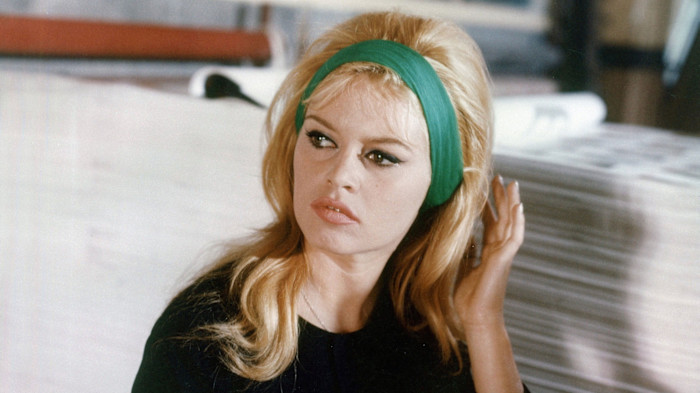
Her rise to fame began with her breakout role in Roger Vadim’s 1956 film, And God Created Woman. Bardot’s alluring curves, youthful beauty, and signature “choucroute” hairstyle—a blonde beehive cascading with curls—propelled her to international sex symbol status. After retiring from acting in 1973, Bardot continued to make headlines, both as a vocal supporter of the right-wing Front National party and as a fervent animal rights advocate. Notably, she once criticized Sarah Palin, the U.S. vice-presidential candidate, as “a disgrace to women” due to Palin’s hunting and shooting practices.
During her peak fame, Bardot was celebrated and esteemed in France. President Charles de Gaulle even compared her impact on French exports to that of Renault. From 1969 to 1972, she became the model for Marianne, the emblem of French liberty and republicanism. In recognition of her influence, she was awarded the Legion of Honour in 1985.

Bardot’s influence sparked discussions on gender politics and the role of sex appeal. Renowned intellectuals like Simone de Beauvoir and Françoise Sagan penned extensive essays about her. De Beauvoir’s work, The Lolita Syndrome, hailed her as “the locomotive of women’s history.” Bardot’s fame extended to Hollywood, where she starred alongside Sean Connery in the 1968 Western Shalako. Her celebrity status also inspired films like Louis Malle’s Vie Privée (A Very Private Affair, 1962) and Jean-Luc Godard’s Le Mépris (Contempt, 1963), both of which explored the nature of pop-culture fame.
Born in Paris on September 28, 1934, Bardot was raised in a middle-class Roman Catholic family. Her father was an industrialist in the business of manufacturing liquid air and acetylene. As a child, Bardot’s mother enrolled her in dance classes, and by 1947, she was part of the National Superior Conservatory for Music and Dance. As a teenager, Bardot began modeling for fashion magazines, and her appearance on the cover of Elle caught the eye of filmmaker Roger Vadim. In 1952, the same year she debuted in Jean Boyer’s Le Trou Normand, Bardot and Vadim tied the knot.
Attention-catching supporting roles, including nubile appearances in British comedy Doctor at Sea (1955) and as the heroine’s handmaid in the Euro-Hollywood epic Helen of Troy (1956), led to the role that launched her own fleet of fans. In And God Created Woman Vadim cast her as a small-town teenage misfit, liberating Bardot’s sex appeal and her willingness to display it. Raunchy imagery was picked out for the poster and preview trailers. The religious and censorship lobbies rose up in arms, especially in America.
By 1957, Bardot was romancing the film’s star, Jean-Louis Trintignant, earning the actress her first gossip-column notices as a siren and potential homewrecker (Trintingant was married). She divorced Vadim that year. Two years later, she married actor Jacques Charrier, with whom she had her only child (Nicolas-Jacques, born 1960).

By the 1960s, the Bardot phenomenon had become a virtual Bardot industry. As an actress she attracted top directors (Malle, Godard and Henri-Georges Clouzot, for whom she made another controversy-stirring film, La Vérité, in 1960) and top co-stars (Alain Delon, Jean Gabin, Jeanne Moreau). As a singer she recorded albums. In 1967, with her then lover Serge Gainsbourg she sang the first recorded — but at her request unreleased — version of the heavy-breathing “Je t’aime . . . moi non plus”. It was finally made available in 1986.
Bardot seldom spoke admiringly of her screen career: “I started out as a lousy actress and have remained one.” The conviction she sometimes failed to bring to film performances she brought to subsequent roles and missions. She campaigned for animal wellbeing, establishing the Brigitte Bardot Foundation for the Welfare and Protection of Animals in 1986. (In 1987 she raised half a million dollars for the Foundation by auctioning her jewels.) A vegetarian, she inveighed against cruel or needless (in her view) slaughter. Her targets included seal-culling, the horsemeat trade and the Muslim tradition of cutting animal’s throats without stunning or anaesthetising. She wrote protest letters about animal cruelty to world leaders, including China’s Jiang Zemin and Denmark’s Queen Margrethe II.

Even more controversial were Bardot’s political opinions. Her last husband, after a three-year marriage to the German playboy millionaire Gunter Sachs (1966-69), was Bernard d’Ormale, a one-time adviser to Jean-Marie Le Pen, former leader of France’s Front National party. Bardot went to print, more than once, to excoriate her country’s immigration policy, especially its tolerance of Muslims. She was fined several times by courts for her xenophobic comments, including anti-Islamic statements.
It was a prodigious life and an enduringly provocative one. The early Bardot was a self-willed, independent-minded woman, more influential than any other single screen star in inaugurating the age of sexual liberation. The older Bardot showed, whatever the acceptability or unacceptability of her views, that a woman could be listened to: the reward not just of celebrity but also of the strength of ego and self-belief that made that celebrity possible.