
Share this @internewscast.com
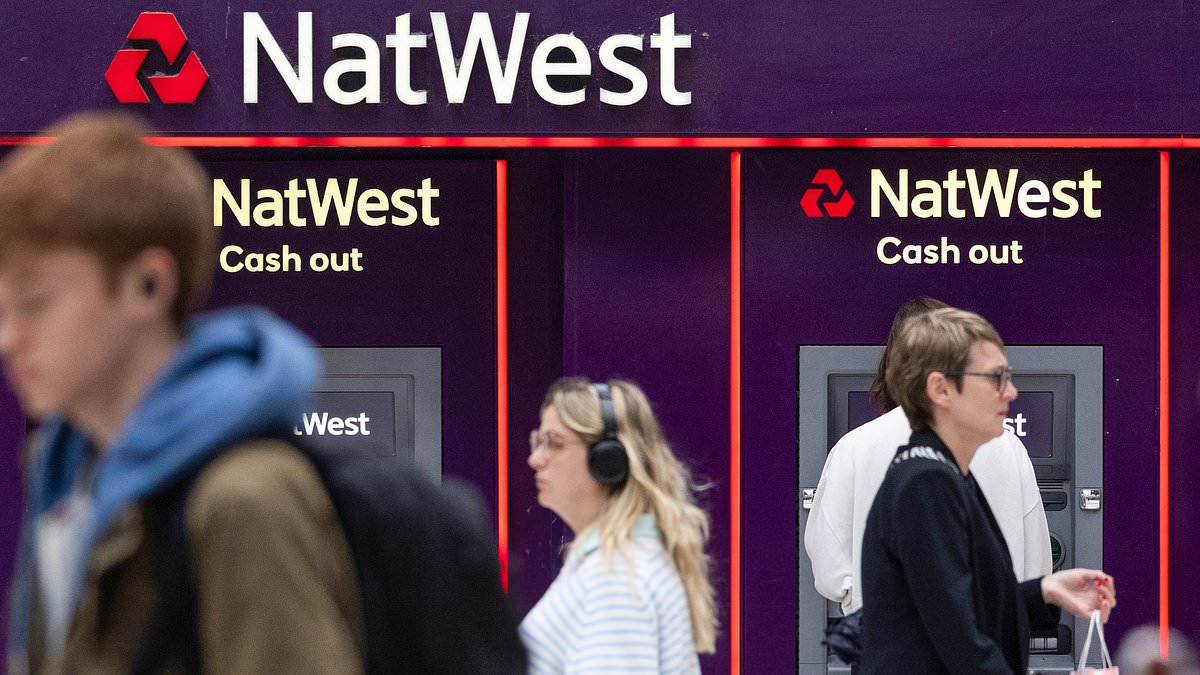
Earlier this year, NatWest shares soared to unprecedented heights, only to experience a steep decline following the announcement of its acquisition of wealth management firm Evelyn Partners.
Despite shares being up by 40% compared to the previous year, some investors have expressed concerns about NatWest’s expansion into wealth management. However, additional underlying issues have also contributed to the decline in share prices.
NatWest’s financial results for 2025 have somewhat alleviated these worries. The bank reported impressive profits last week, prompting some investors to take advantage of the dip and reinvest. Nonetheless, share prices remain below their peak, which hovered around £7.
Yesterday, NatWest shares rose by 20p, currently trading at 605p. This marks a 13% drop from their peak, although they still provide investors with a substantial 5.3% dividend yield.
So, what factors are driving the recent decline in NatWest’s share value, and is this an opportune moment to invest in the bank?

Surge: Shares in NatWest have risen by more than 200% in five years
What caused the NatWest share price wobble?
Following the announcement of the Evelyn Partners deal, NatWest’s share price saw a 6% decrease. After reaching a high of 694.2p on February 3, the shares dropped by 16.4%, reaching a monthly low of 580.2p by last Friday’s close.
The Evelyn purchase marks the biggest acquisition for NatWest since the financial crisis, when the Government took a large stake after its bailout.
It expects the deal to generate £100million in cost savings as it looks to diversify into wealth management to help offset an anticipated decline in interest income as rates fall.
But some investors are concerned that NatWest has paid too much for Evelyn Partners and that there is a possible reliance on cost synergies as a strategy.
Will Howlett, financials analyst at Quilter Cheviot, said: ‘NatWest paid a high price in the wealth space for the acquisition of Evelyn Partners last week and goes to show that the tailwind the big banks have been getting from higher interest rates is likely coming to an end.’
Some investors are also fretting whether chief executive Paul Thwaite’s bumper pay packet is justifiable.
Last week, Natwest handed the top boss a pay packet, including bonuses, of £6.6million, a third higher than the previous year. It makes him the highest-earning chief executive since 2006 – when Fred ‘the Shred’ Goodwin led the company.
Meanwhile, there are jitters among investors that, with UK interest rates set to fall this year, the bank’s net interest margin, or the difference in what it pays savers and charges borrowers, will suffer.
In the past year, the bank’s net interest margin stood at 2.34 per cent, up 21 basis points year-on-year.
NatWest is far from alone in facing the threat of lower net interest margins, though. If interest rates drop as they are expected to, all of the UK’s banks will feel the sting.

NatWest chief executive Paul Thwaite saw his pay rise by a third to £6.6m last year
Richard Hunter, head of markets at Interactive Investor, told This is Money that the debate surrounding artificial intelligence had also affected bank shares in recent weeks, including NatWest’s.
Hunter said: ‘UK banks have been drawn into an AI “scare trade” which has extended to financial sectors’.
Last week, Barclays warned that the rapid selloff hitting businesses viewed as vulnerable to AI could persist, with investors remaining in what the bank described as a ‘sell first, think later’ mindset.
An opportunity for investors?
NatWest shares have been turbulent in recent weeks. However, for some investors, the recent dip could provide a window of opportunity to buy in at a decent valuation and benefit from a higher yield.
In the last six months, shares in NatWest have risen by around 11 per cent. Meanwhile, shares in Lloyds Banking Group, which also has a domestic focus, have risen over 20 per cent in the past month.
Shares in Asia-focused HSBC have jumped by 33 per cent in the past six months.
On Monday, UBS upgraded its earnings forecasts for NatWest following better-than-expected fourth quarter results and higher capital generation.
Last week, analysts at Switzerland-based UBS said: ‘While we think most UK domestic bank price moves this week are linked to political uncertainty, we think the additional weakness at NatWest overdone.’
The Swiss bank’s analysis concluded that a broader wealth and investment offering via Evelyn Partners will make NatWest a faster-growing higher returning bank, spelling good news for shareholders.
With net interest margins potentially at risk amid lower interest rates, NatWest’s acquisition of Evelyn Partners will help give the bank a fresh revenue stream focused on wealth management.
Michael Hewson, of MCH Market Insights, told This is Money: ‘Despite the recent dip in NatWest shares, the uptrend from the 2023 lows remains intact, as does the business case for owning the shares.
‘Whatever the concerns about the price tag on the Evelyn deal, the diversification into wealth management, if done right, should enhance long term profitability.’
He added: ‘The UK banking sector looks to be in the best shape since the financial crisis and as long as politicians leave well alone should continue to generate solid returns to shareholders.’
NatWest’s 5.3% dividend yield attracts investors
Another major attraction for investors is NatWest’s dividend. With the bank yielding 5.3 per cent and having a dividend cover figure of 2.44 – reflecting how many times it could be paid out from net profits – NatWest has proved a tempting prospect for income investors.
Share data platform Stockopedia gives NatWest a stock rank of 83, with a forward price to earnings ratio of 8.5 and a price to book ratio of 1.25. This compares to rival Lloyds Banking Group’s similar price to book ratio but more expensive PE of 10. Barclays, however, is cheaper with a price to book of 0.82 and PE of 8.4.
Hunter believes shares in NatWest could prove fruitful in the long-run.
He says: ‘Investors still consider that NatWest is in a sweet spot. The government shackles have gone, the group has prodigious amounts of cash and acquisitions to boost growth further are playing out.
‘Indeed, this new-found freedom has already enabled a more aggressive acquisition policy, with NatWest having previously made what it described as two significant purchases in the form of Metro Bank’s mortgage book and Sainsbury’s Bank, both of which it would appear have been integrated seamlessly.’
He added: ‘Its recent results revealed the cost/income ratio as the star performer within the key metrics, with a drop from 53.4 per cent to 48.6 per cent, representing a sector-beating number as the group reaps the benefits of simplification, technology-enabled digitalisation and a more agile business as a result’.
While Barclays remains ‘the preferred play’, Natwest seems to be ‘closing in fast,’ says Hunter.
In recent months, Barclays has unveiled rising income, firmer profitability and a clearer trajectory to higher returns.
Would-be NatWest investors will need to weigh up the bank’s capacity to boost its bottom line via acquisitions and new revenue streams while accepting the risk that comes with its UK focus.
DIY INVESTING PLATFORMS
AJ Bell

AJ Bell
Easy investing and ready-made portfolios
Hargreaves Lansdown
Hargreaves Lansdown
Free fund dealing and investment ideas
interactive investor

interactive investor
Flat-fee investing from £4.99 per month
Freetrade

Freetrade
Investing Isa now free on basic plan
Trading 212

Trading 212
Free share dealing and no account fee
Affiliate links: If you take out a product This is Money may earn a commission. These deals are chosen by our editorial team, as we think they are worth highlighting. This does not affect our editorial independence.
Compare the best investing account for you