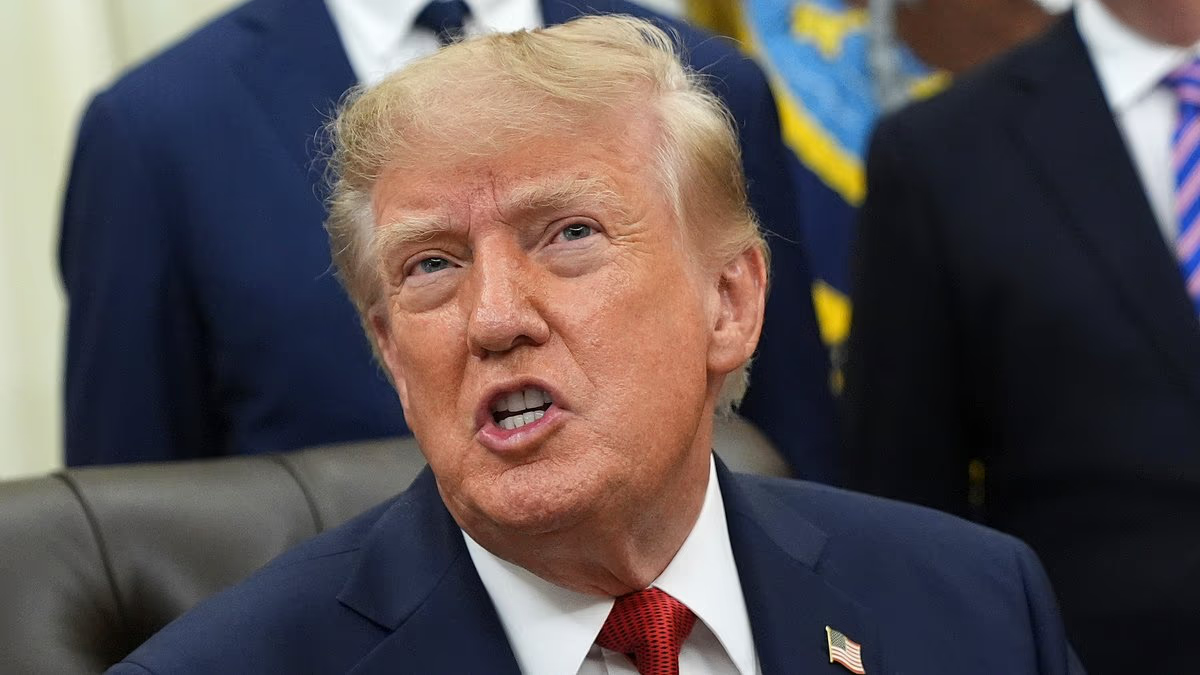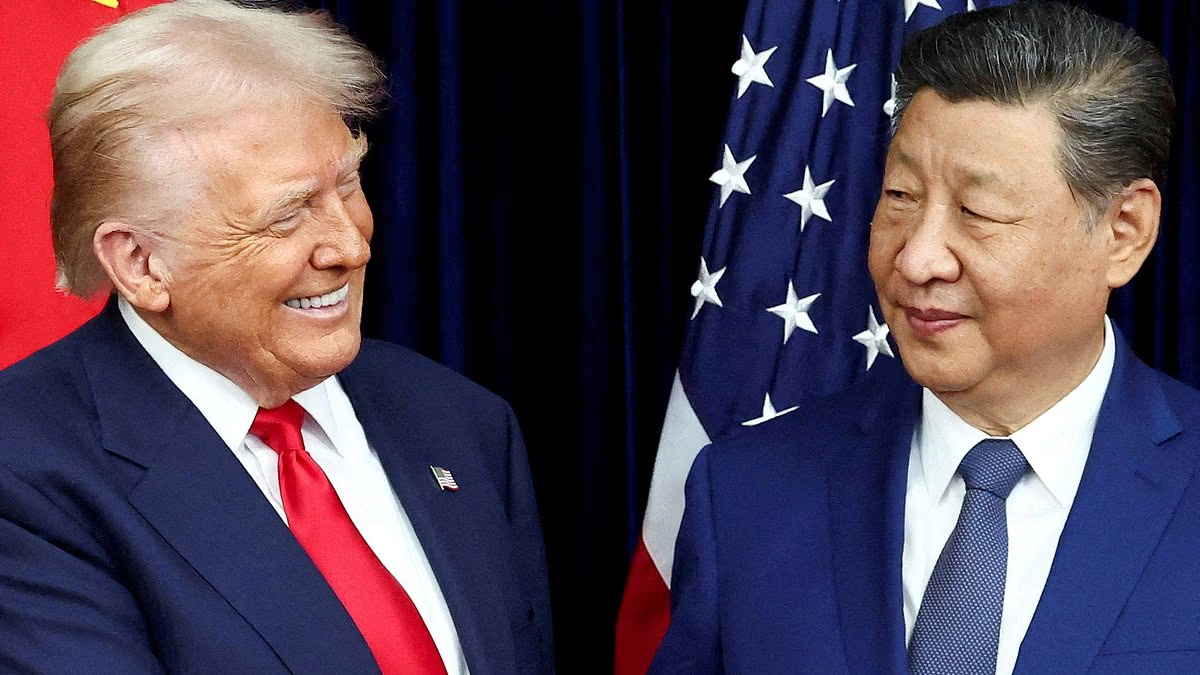
The atmosphere in Washington is thick with tension as Donald Trump’s recent social media commentary on the Middle Eastern conflict continues to stir volatile market reactions.
Adding to the apprehension, the International Monetary Fund has issued a grim set of alternative economic forecasts, preparing for a scenario where the Strait of Hormuz remains closed for an extended period.
Drawing from the UK’s experience last fall, particularly before the delayed Budget, it’s evident that uncertainty paired with rampant speculation severely undermines confidence.
Fund economists highlighted this yesterday, noting that such factors significantly contributed to the UK’s growth forecast being sharply reduced by 0.5 percentage points, bringing it down to a mere 0.8 percent for the year.
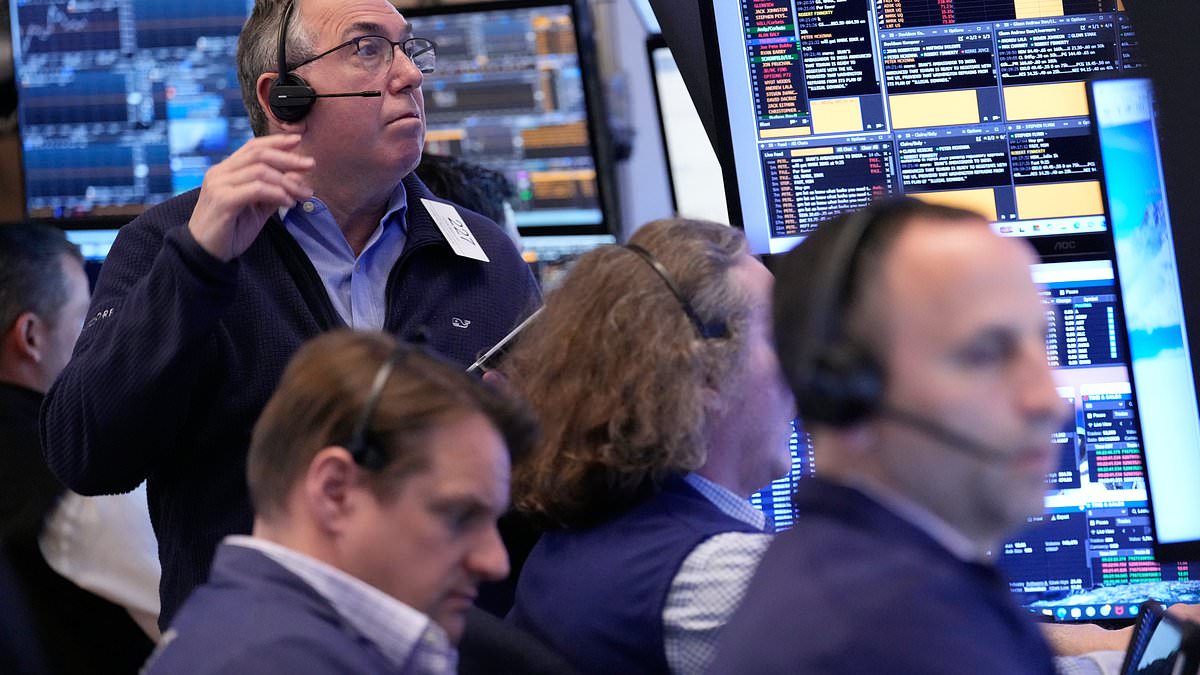
The looming threat of a global downturn, the first since the pandemic, is concerning. Equally alarming is the unusual sensitivity of financial markets to unexpected jolts.
Despite experiencing erratic stock prices and fluctuations in the yields of gilts and other G7 government bonds, market instability has, thus far, been fleeting.

Uncertainty: The biggest beasts on Wall Street have been among those stopping exits from funds because of the lack of liquidity
Yet anyone dipping into the IMF’s global financial stability report will have cause for anxiety, if not panic.
These pages have monitored the fractures or cockroaches seen in largely unregulated credit markets such as car parts firm First Brands last year and more recently Blue Owl Capital.
The biggest beasts on Wall Street have been among those halting exits from funds because of the lack of liquidity.
Numbers involved are frightening. Over the last decade, the amount of risk in the global financial system has rocketed.
Private credit lending had climbed to $2 trillion at the end of last year. Hedge fund exposure to market volatility spurted from $2 trillion to $6 trillion, and equity options at risk are just under $4 trillion.
And all of this just represents the less monitored, understood and more complex parts of financial markets where, as we know from the sub-prime crisis of 2008, stability can unravel so rapidly that regulators and central banks struggle to cope.
At the time, there were behind the scenes warnings that the whole UK banking system might need to be nationalised and the UK could face a sterling crisis.
Government bond markets are meant to represent the ultimate in safety. But the IMF reminds us that in 2020, as the pandemic descended, some $172bn of hedge fund holdings rapidly were liquidated.
In Britain, the liability-driven investments (LDIs) built on gilts came close to knocking out major pension funds.
Vast government borrowings – the US is heading towards a debt-to-output ratio of 140 per cent plus – raise the potential perils of a prolonged Middle East war.
There have been $6 trillion in equity gains since the last substantial dip in the markets.
The rise is concentrated in the top ten stocks, mainly the ‘Magnificent Seven’ tech stocks, representing 20 per cent of values a decade ago and 33 per cent today.
Much of the recent surge has been around the excitement of artificial intelligence. An early backer of Silicon Valley, Sequoia’s Michael Moritz, told me recently as smart as some AI investments will prove, there are bound to be failures.
There is a natural tendency among market monitors to be over-cautious, having been so wrong in 2008. But the current risks are daunting.
BP gusher
Meg O’Neill’s first action as chief executive of BP is to reveal that its oil trading arm is heading for ‘exceptional’ profits.
With the oil price up some 66 per cent since the US and Israeli attacks on Iran began, extraordinary gains were inevitable.
BP investors are doubly fortunate – not only will they benefit from higher prices, but its trading arm is a big beneficiary of volatility.
Ahead of the current blockage of the Strait of Hormuz the suggestion was that chairman Albert Manifold might seek to jettison oil trading as the group responds to activist demands to pay down debt.
The current gusher from trading means that makes much less sense, even though debt levels have shot up towards $27billion, as BP presses ahead with capital investment.
The energy giant’s announcement of booming income, required by market rules, means that O’Neill is getting her defence in first before critics revive claims of profiteering.
Before we know it, there will be Labour and Green demands for a windfall tax.
DIY INVESTING PLATFORMS
AJ Bell

AJ Bell
Easy investing and ready-made portfolios
Hargreaves Lansdown

Hargreaves Lansdown
Free fund dealing and investment ideas
interactive investor

interactive investor
Flat-fee investing from £4.99 per month
Freetrade

Freetrade
Investing Isa now free on basic plan
Trading 212

Trading 212
Free share dealing and no account fee
Affiliate links: If you take out a product This is Money may earn a commission. These deals are chosen by our editorial team, as we think they are worth highlighting. This does not affect our editorial independence.
Compare the best investing account for you