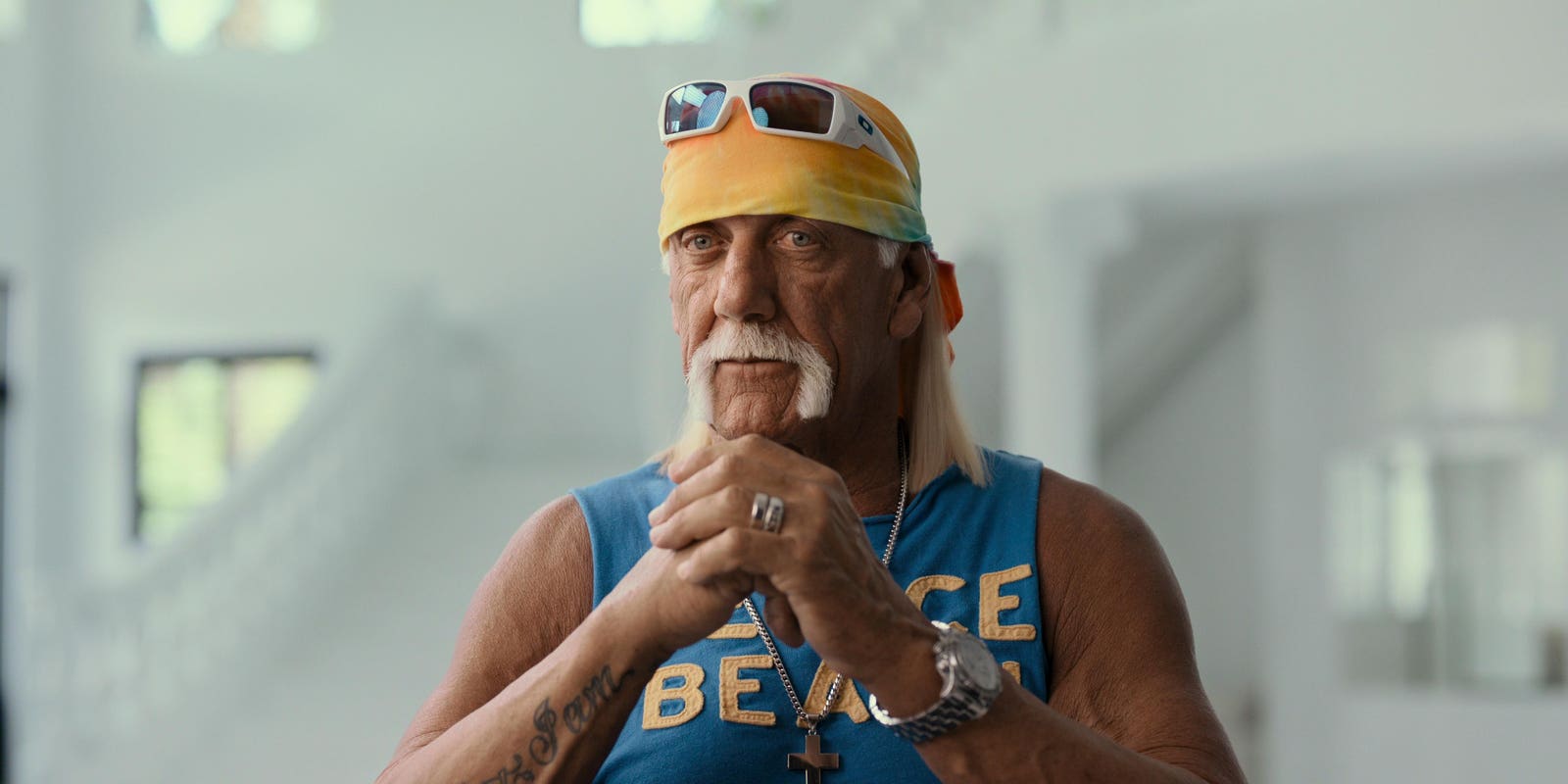


“Hulk Hogan: Real American” delves into the life of the iconic wrestler, offering an intriguing glimpse into how Terry Bollea, the man behind the persona, navigated his existence both inside and outside the wrestling ring.
In the world of professional wrestling, using a wrestler’s actual name is often considered off-limits. Yet, if anyone epitomized their wrestling persona, it was the man clad in red and yellow, later adopting black and white attire. From his emergence as Hulk Hogan to his final days, he embodied the character, captivating audiences in WWE and WCW, appearing in promotional videos, and even participating in political rallies shortly before his unexpected demise.
The Netflix docuseries takes a closer look at his personal life, featuring interviews with his ex-wife Linda and son Nick, while exploring his relationships through various ups and downs. Although his daughter Brooke, who became estranged from him before his death, did not participate, archival footage of her is included. The series also touches on his strained relationship with his brother Allan and the initial resistance from his parents towards his wrestling career, which eventually turned to support at Madison Square Garden.
Above all, the documentary paints a picture of how Hogan was consumed by a persona that transcended mere performance. Hulk Hogan became inseparable from Terry Bollea, with glimpses of the latter emerging only in personal aspects of his life, such as his marriages or during high-profile events like the Gawker sex tape trial in the 2010s.
The fourth episode of “Real American” dives into the controversies that marked Hogan’s later years, including the lawsuit, his infidelity, and his dismissal from WWE following the release of a recording where he used a racial slur. The series also addresses his political leanings in his later years, including his support for Donald Trump, highlighting the complexities of a public figure with an extensive following who openly divides opinion.
Ultimately, everything ties back to the central theme: Hogan never ceased to be Hogan. Whether in the wrestling ring, at public events, or on political platforms, he continued to embody the larger-than-life character he created. The documentary underscores his relentless pursuit of the spotlight, portraying a man unable to relinquish his public persona, even while hinting at retirement in the 1990s or orchestrating backstage decisions, such as questioning Bret Hart’s suitability as a successor before WrestleMania 9. In the end, it was always about the business and the life he forged within it.
Even then, everything circles back to the same idea: Hogan never stopped being Hogan. Whether in the ring, at public appearances, or on political stages, he carried himself as the larger-than-life character he created decades earlier. The documentary reinforces that addiction to the spotlight, showing a man who could not step away, even while teasing retirement in the 1990s or maneuvering behind the scenes when he did not see Bret Hart as the right successor before WrestleMania 9. In the end, it always came back to the business and the life he built within it.
The documentary lands a few shots when it comes to Hogan’s controversies and covers a wide range of ground across its four-hour runtime. Still, there are noticeable gaps, particularly around his WWE departure in 2005 and the absence of Mr. America. To its credit, the docuseries only features one sit-down with Hogan, and a moment late in the series makes it clear there were plans to revisit the conversation before his passing. That context helps explain some of what is missing.
Ultimately, “Real American” tries to separate Hulk Hogan from Terry Bollea, but it never fully succeeds because that separation feels impossible by the end. The line between the two had blurred too much over time. Hogan was seen as Hulk, not Terry, and the audience treated him that way. Even in his final WWE appearance on the first episode of Raw on Netflix, fans booed the character for actions that took place outside the ring. If the expectation is to separate the performer from the person, then those reactions should not exist. But they do, because for Hogan, the two were never truly separate.


