Share this @internewscast.com
By Jason Meyers
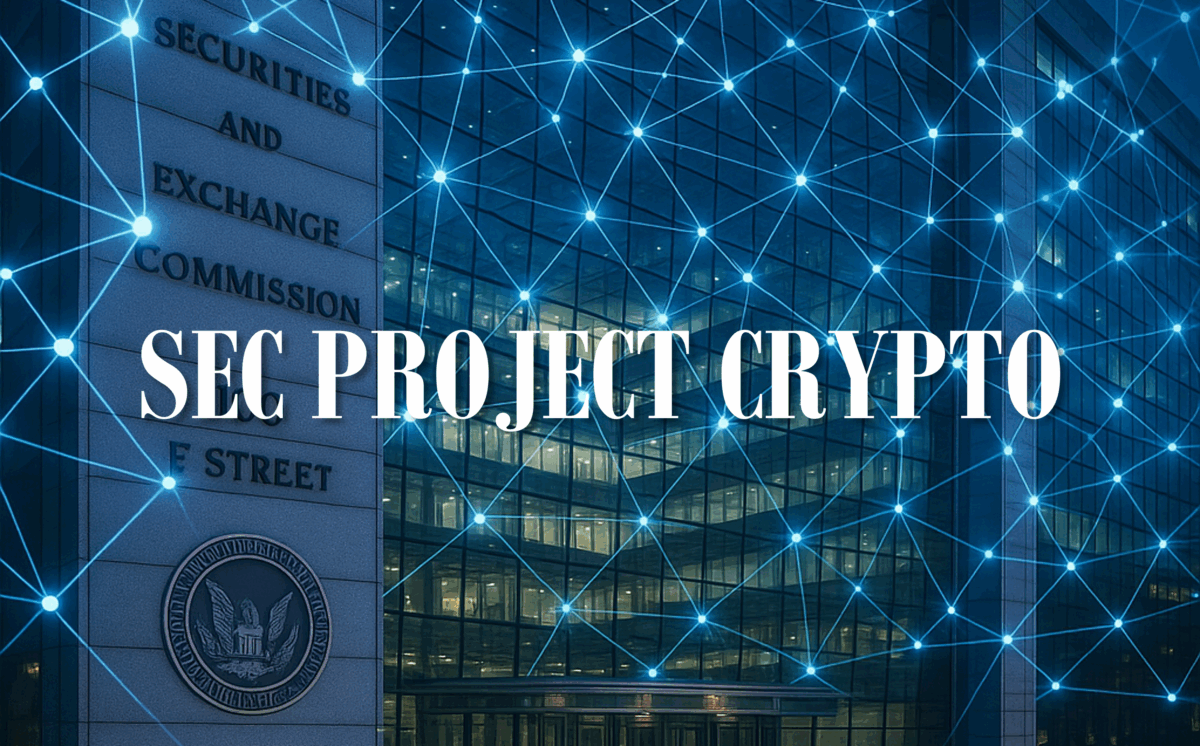
In a ground-breaking address on July 31, 2025, at the America First Policy Institute in Washington, D.C., SEC Commissioner Paul S. Atkins unveiled “Project Crypto,” a compelling venture designed to position the United States at the cutting edge of the global digital asset landscape. Entitled “American Leadership in the Digital Finance Revolution,” Atkins’ speech drew comparisons to the early financial innovations that shaped the nation, presenting blockchain and cryptocurrencies as pivotal new influences in capital markets. This initiative surfaces amidst a dynamic regulatory shift under the Trump administration, which has exhibited robust support for crypto innovation to enhance economic advancement and technological supremacy.
The genesis of Project Crypto is directly linked to the recommendations from the President’s Working Group on Digital Asset Markets (PWG) Report, unveiled just a day before Atkins’ speech. This report is a strategic framework for federal bodies, including the SEC, to cultivate a regulatory setting that promotes innovation while safeguarding against risks. Atkins stressed that the initiative will guide the SEC’s policy branches to work hand-in-hand with the agency’s Crypto Task Force, spearheaded by Commissioner Hester Peirce, to expedite the development and execution of these suggestions. This coordinated effort aims to resolve enduring ambiguities in the crypto realm, such as digital asset classification under securities regulations, custody concerns, and the oversight of decentralized finance (DeFi) protocols.
Project Crypto’s primary aims are diverse, with a focus on establishing legal clarity, enhancing investor protection, and spurring economic opportunities. One key objective is updating disclosure requirements for crypto asset transactions that are governed by securities laws. Atkins underscored the necessity for “purpose-fit disclosures” tailored to the distinctive nature of digital assets, rather than imposing outdated regulations that hinder progress.
Chair Atkins noted, “Thus, for those crypto asset transactions that are subject to the securities laws, I have asked staff to propose purpose-fit disclosures, exemptions, and safe harbors, including for so-called ‘initial coin offerings,’ ‘airdrops,’ and network rewards.” This initiative aims to motivate issuers to include American investors in their offerings, providing regulatory certainty and lessening the urge to exclude U.S. participants due to complex regulations.
Another vital aim revolves around reimagining custody rules to align with the digital age. Traditional custody models, crafted for tangible securities, often conflict with the decentralized and programmable essence of blockchain assets. Project Crypto intends to investigate exemptions and safe harbors to facilitate secure and innovative custody solutions, assuring that investors can securely hold and trade digital assets without undue hurdles.
Atkins also tackled DeFi protocols, advocating for clearer rules that harmonize innovation with regulatory oversight. By accurately classifying certain DeFi activities—whether as securities, commodities, or a new category—the project seeks to avert fraud and market manipulation while allowing protocols to flourish.
Beyond regulatory tweaks, Project Crypto is poised to create significant opportunities for collaboration between the SEC, industry stakeholders, and policymakers. Atkins envisions a participatory process where crypto firms, investors, and experts can engage through public consultations, workshops, and feedback mechanisms. This collaborative model draws inspiration from historical SEC successes, such as the resolution of the 1960s “Paperwork Crisis” through the creation of the Depository Trust and Clearing Corporation. By working hand-in-hand with the Crypto Task Force, the SEC aims to finalize frameworks that are not only clear but also adaptable to future technological advancements.
Such collaboration will be instrumental in finalizing regulatory frameworks that benefit America on multiple fronts. First, it will facilitate the “onshoring” of crypto businesses, attracting entrepreneurs and capital back to U.S. shores. Atkins noted that overly restrictive regulations in the past have driven innovation abroad, but Project Crypto could reverse this trend, creating jobs and boosting GDP. He quoted President Trump’s vision, aligning it with the project’s goals: “The President said last week that he wants ‘the entire world running on the backbone of American technology.’ I stand ready to help get that job done.” This underscores how the initiative will position America as a global hub for blockchain development, enhancing national security by reducing reliance on foreign tech infrastructures.
Moreover, clear frameworks will democratize access to finance, particularly for unbanked populations. Blockchain’s potential for faster settlements, lower costs, and transparent transactions could revolutionize remittances, lending, and investment opportunities. Atkins drew parallels to Alexander Hamilton’s establishment of a national bank and credit system under George Washington, arguing that crypto represents a similar opportunity to build inclusive financial systems. He warned against repeating past mistakes of regulatory overreach, which he said “drove innovation offshore and left American investors on the sidelines.”
Project Crypto also emphasizes risk management, ensuring that frameworks protect against illicit activities while fostering growth. By implementing the PWG’s recommendations, the SEC will propose rules for on-chain markets, including rethinking the Howey Test for digital assets. This test, established in 1946, determines whether an asset is a security, but Atkins called for its modernization to better fit decentralized networks. He expressed optimism about the project’s impact: “That is why I am launching Project Crypto and directing the SEC’s policy divisions to work with the Crypto Task Force, led by Commissioner Peirce, to swiftly develop proposals to implement the PWG’s recommendations. Project Crypto will help ensure that the United States remains the best place in the world to start a business, develop cutting-edge technologies, and participate in capital markets.”
In conclusion, Project Crypto marks a pivotal shift toward pro-innovation regulation, aligning with the Trump administration’s agenda to make America the crypto capital of the world. Through targeted collaborations and finalized frameworks, it promises to unlock economic potential, enhance financial inclusion, and secure U.S. leadership in digital finance. As Atkins aptly put it, this initiative could herald a “golden age” where blockchain not only transforms markets but also upholds the American spirit of ingenuity and opportunity. With stakeholders rallying around this vision, the future of digital assets looks brighter—and decidedly American.
About the Author

Jason Meyers is Contributor and Head of Digital Assets at Crypto File. His work focuses on policy and regulation. Jason is the lead architect of Pacioli.ai, the world’s first web3 regulatory disclosure automation infrastructure. Jason is a former investment banker and took many companies public including Alexion Pharmaceuticals ($40 billion exit to AstraZeneca), VCA,($9 billion exit to Mars Inc) and Medarex, Inc ($2.5 billion exit to Bristol Myers). Follow @JasonMeyersNYC on X.