
Share this @internewscast.com

A U.S. district judge has once again rejected the Trump administration’s attempt to challenge the legality of two subpoenas directed at the Federal Reserve. This decision comes after the judge had already blocked the subpoenas in a previous ruling last month.
In a sharply worded six-page opinion, U.S. District Judge James Boasberg emphasized that the administration failed to present any new evidence or pinpoint errors in his initial decision from March. He criticized the government’s submission as lacking substance.
Judge Boasberg, who serves as the chief judge of Washington’s federal trial court, described the government’s brief as insufficient, stating it fell far short of providing any reason to alter the outcome of the original ruling.
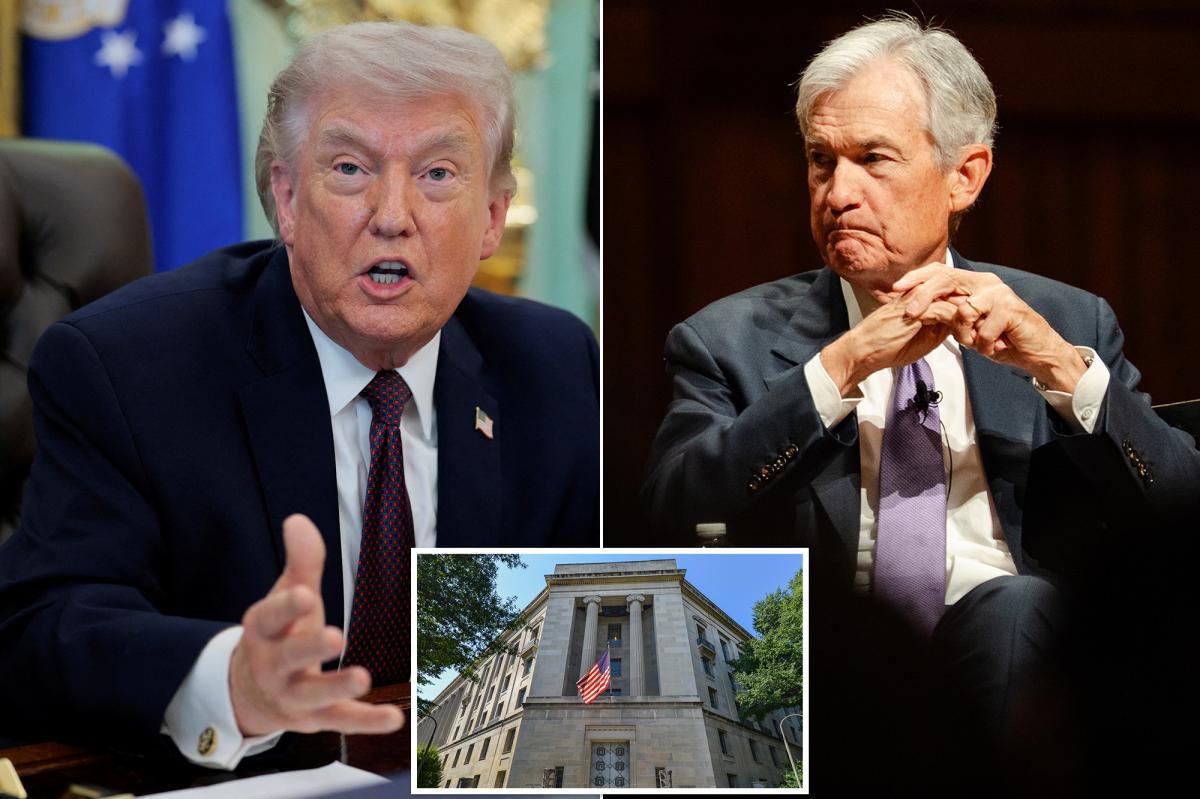
Previously, U.S. Attorney Jeanine Pirro had appealed the March decision, which halted two subpoenas that sought records from the Federal Reserve. These records were connected to a criminal investigation involving Fed Chair Jerome Powell and the costly renovation of the central bank’s headquarters.
In their motion for reconsideration, Pirro’s office contended that Boasberg’s ruling restricted their ability to pursue evidence of criminal activity by denying access to the requested subpoenas.
Following the judge’s latest decision, Pirro expressed her dissatisfaction, labeling the ruling as “outrageous” and accusing the “activist judge” of granting Powell unwarranted protection.
Boasberg wrote Friday that the government was ignoring the crux of his initial ruling, which was that the subpoena power cannot be used to investigate someone for an improper purpose.
He argued that the subpoenas were not part of a real criminal investigation, but a tool to target Powell after months of President Trump pressuring the chairman to lower interest rates.
“No matter whom the subpoenas were addressed to … it was clear whom they sought dirt on: Powell,” Boasberg wrote.
Pirro’s office promised Friday to press ahead.
“We will absolutely appeal the judiciary’s interference with our access to the grand jury,” a spokesperson told The Post.
An appeal has the potential to further delay confirmation of Kevin Warsh, Trump’s pick to succeed Powell.
Sen. Thom Tillis (R-NC), a voting member on the Senate Banking Committee, has vowed to block any Fed nominee until the government ends its investigation into Powell.
At the Fed’s meeting last month, Powell said he will stay on as “chairman pro tem” if a successor is not confirmed by May 15, adding that it’s “what the law calls for.”
He also said he plans to remain on the board until the investigation is “well and truly over” – though he has not yet made a decision on whether to remain after Warsh steps into the chairman seat.
Powell could serve as a governor through 2028.