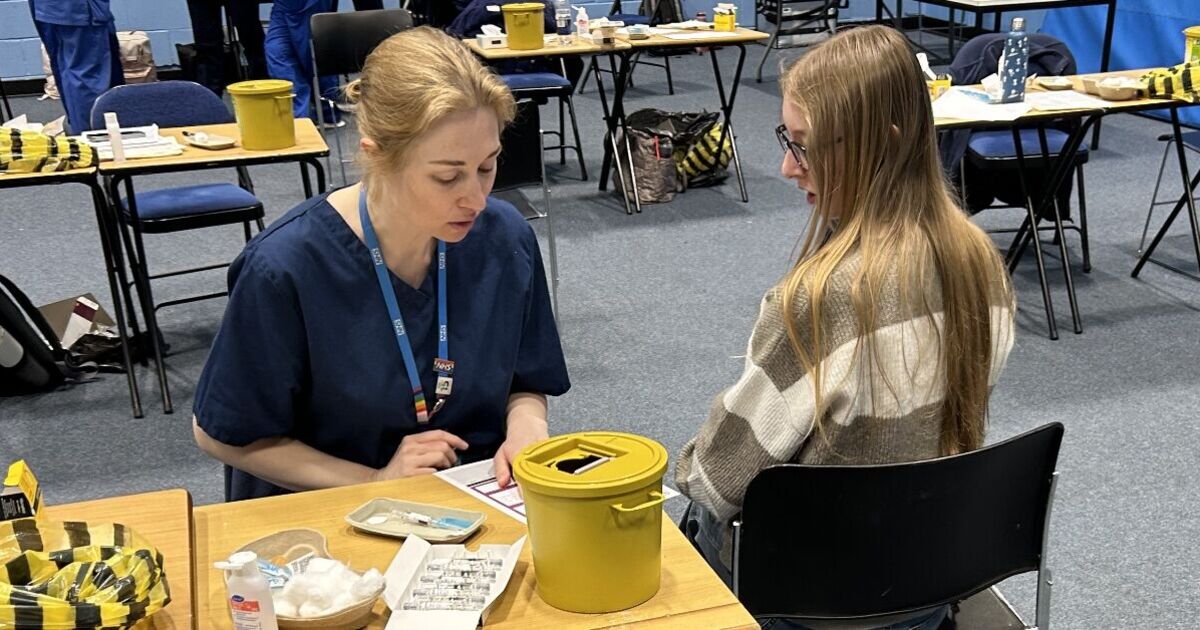

Doctors raise alarm over declining vaccine rates in America's most vulnerable... as deadly new 'super flu' continues to spread
Share this @internewscast.com

Health experts are raising concerns about a concerning decline in vaccination rates among older adults in the United States.

According to newly published statistics from the CDC’s National Center for Health Statistics (NCHS), the percentage of individuals aged 65 and older who received a flu vaccine last year fell by six percent in 2024 compared to the previous year.

Historically, from 2019 to 2023, approximately 70 percent of seniors received their annual flu shot, which offers between 30 to 75 percent protection against the virus. However, in 2024, the vaccination rate slipped to just two-thirds within this demographic, as reported by NCHS.

Moreover, data from 2024 reveals a 3.5 percent decrease in seniors who have ever received a pneumonia vaccine compared to figures from 2019, declining from 67 percent to 65 percent. Within the past year alone, this rate has further dipped from about 66 percent to 65 percent.

In the United States, the pneumonia vaccine is specifically provided to children under two and adults over 50, as these groups are most vulnerable to severe health issues, including respiratory failure, bloodstream infections, and sepsis. The vaccine’s effectiveness ranges from 50 to 80 percent.

Typically, most people require only one pneumonia vaccine in their lifetime, although those with compromised immune systems might need additional doses.

Vaccines against respiratory viruses are especially important in older Americans because they are most prone to hospitalization and death from the flu, the CDC states, due to having weakened immune systems.

The decline in vaccination is especially concerning this year as the new ‘super flu’ strain, H3N2 subclade K, ravages the US, especially retirement homes and long-term care facilities. 

The latest CDC data shows a decrease in flu and pneumonia vaccination among adults over 65 (stock image)

The latest CDC data shows a decrease in flu and pneumonia vaccination among adults over 65 (stock image)

NCHS said in its report: ‘Older adults face higher risks of certain diseases because immune systems tend to weaken with age, and they also are more likely to have other underlying health conditions. The majority of deaths from flu and pneumonia occur in adults age 65 and older.

‘Vaccination prevents illness and serious complications from these diseases.’

It’s unclear exactly why vaccination has declined in this age group, but experts suspect insurance and Medicare barriers, as well as growing distrust of doctors and vaccines in general, may be contributing. 

Dr Peter Kowey, professor of medicine and clinical pharmacology at Thomas Jefferson University in Philadelphia, told the Daily Mail: ‘Vaccination rates are declining in all age groups, but it is most surprising that immunizations against potentially lethal diseases are declining in the elderly. 

‘This is the group that has been identified as being most vulnerable to being hospitalized or dying from diseases like COVID-19, influenza and pneumonia. 

‘Since elderly patients have more contact with health care providers, I fear that some practitioners and patients have been badly influenced by misinformation emanating from political leaders, social media and pseudo-scientists. 

‘Vaccines save lives and they are safe. These facts have been proven beyond doubt in solid scientific studies across the board, without exception.’ 

The new figures show just 67 percent of adults over 65 have gotten a flu shot in the past 12 months, down from 71 percent in 2023. 

Men older than 65 were slightly more likely to get the shot than women, with a vaccination rate of 68 percent compared to 66 percent.

The likelihood of getting the vaccine increased with age. About 63 percent of adults between ages 65 and 74 have gotten the vaccine in the past year compared to 72 percent of people ages 75 to 84 and 75 percent of those over 85. 

The data also shows white non-Hispanic adults were seven percent more likely to get the shot than Black Americans and nine percent more likely than Hispanic adults over 65. About 68 percent of white, non-Hispanic older adults got the shot compared to 63 percent of Black Americans and 62 percent of Hispanic Americans in this age group. 

Flu vaccine uptake also increased based on household income. About 58 percent of adults making less than 100 percent of the federal poverty level got the vaccine in the past year compared to 74 percent of those making 400 percent of this level. 

The federal poverty level is $15,650 per year for a single-person household and $21,250 for two people, with increases of $5,500 for each additional household member. 

As for the pneumonia vaccine, women over 65 were seven percent more likely than men to get the shot with rates of 67 percent compared to 62 percent.  

Similar to the flu shot, vaccine uptake partly increased with age. 

About 58 percent of adults between ages 65 and 74 have gotten a pneumonia vaccine in their lifetime compared to 74 percent of adults ages 75 to 84, a 24 percent difference. However, rates dipped slightly to 71 percent in people over 85 years old. 

White adults were also significantly more likely to have received the vaccine than other racial and ethnic groups. About 68 percent of white adults over 65 said they have received the vaccine compared to 55 percent of Black adults and 49 percent of Hispanic adults. 

Like the flu shot, uptake also increased alongside income level. Just 51 percent of those over 65 with incomes less than 100 percent of the federal poverty level have received the shot compared to 70 percent of those making four times the federal poverty level. 

The CDC estimates adults over 65 make up between 70 and 85 percent of deaths from influenza and around 80 percent of pneumonia deaths. 

Dr Kowey said: ‘Older people have more diseases that can be exacerbated by an infection. Heart and lung disease, for example, render elderly patients much more susceptible to severe manifestations like heart failure and pneumonia. 

‘It takes much longer for older individuals to recover from a severe infection and return to a normal level of function.’

He urged healthcare providers to communicate these risks clearly to older patients. ‘As principled practitioners, we need to deliver a clear message about the clear need for vaccines,’ he said. 

Share this @internewscast.com
You May Also Like

Urgent Health Alert: Measles Resurgence in UK Sparks Four-Day Isolation Warning

The NHS advises people to follow a four-day rule to help prevent…

Rising Cases of Serious Foot Condition: The Everyday Item That Could Be Putting You in Danger

In the United States, approximately 34 million individuals will experience a particular…

Emily Atack Stuns in Bold Plunging Dress, Reveals Dramatic Transformation & Insights on Modern Parenting

On Tuesday, Emily Atack captivated her Instagram followers by revealing her striking…

Outrage Erupts as Former Nurse Incites Violence Against ICE Agents: A Deep Dive into the Controversial Call to Action

A nurse has ignited controversy after allegedly encouraging protesters to confront ICE…

Shocking Findings on Popular Pasture-Raised Egg Brand’s Chicken Feed Spark Widespread Boycotts

Once considered a straightforward grocery item, eggs have become a source of…

Professor Tim Spector Highlights Common Mistakes in Eating Apples and Potatoes

Tim Spector is a much-loved expert and a trusted soruce when it…

Affordable Spice May Reduce Cancer Risk and Lower Cholesterol Levels

It is a common ingredient in a number of cuisines (Image: Hispanolistic…

Top 5 Essential Health Facts Every Adult Needs to Know to Ward Off Major Health Problems

Dr. Luke Powles, the Associate Clinical Director at Bupa Health Clinics, has…

Groundbreaking Report Confirms Link Between Sports-Related Head Injuries and Dementia

According to a significant new report, head traumas endured in sports like…

UK Health Authorities Release Urgent Nipah Virus Advisory: Fatality Rates Could Reach 75%

Health authorities in the UK have raised concerns over the Nipah virus,…

Beware the Chilling Effects: Understanding Cold Allergy and Its Itchy Red Spots

As the winter season draws to a close, many continue to feel…