
Share this @internewscast.com
For the moment, it seems the financial world can breathe a sigh of relief. This sentiment was echoed in the markets following Donald Trump’s announcement of the Federal Reserve Board’s new chair.
In response, gold prices dropped, the dollar gained strength, and US Treasury note yields stabilized.
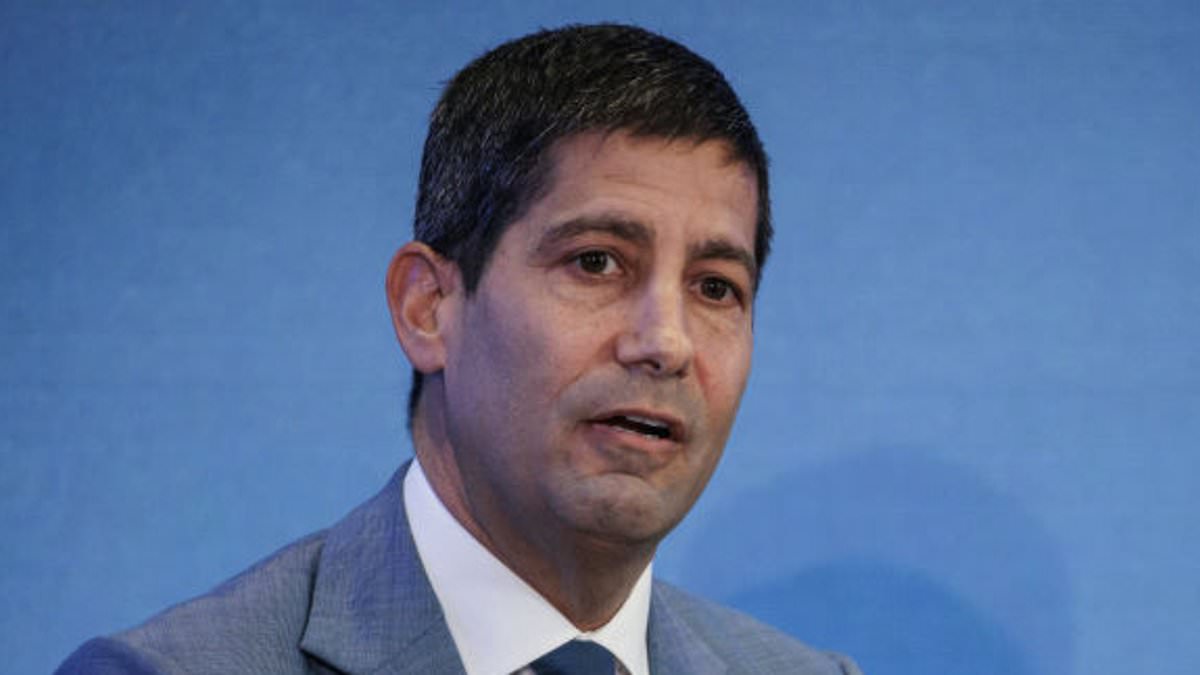
Kevin Warsh, a figure recognized for his prudence, has been nominated. While his confirmation by the Senate is pending, it is anticipated to proceed smoothly.
This decision is significant beyond US borders, as a loss of confidence in the Fed could lead to a rise in US bond yields, thereby increasing the cost for other governments, like ours, to manage national debt.
Warsh’s foresight is commendable; he anticipated the adverse effects of prolonged near-zero interest rates—seen in both the US and Europe—and their negative repercussions on the global economy from 2008 to 2022.
Remember quantitative easing? Money was not only incredibly cheap, but central banks also printed it in abundance, leading to a predictable outcome: inflation levels unseen since the collapse of the fixed exchange rate system in the 1970s.

Well‑known and sensible: Kevin Warsh’s appointment still has to get through the Senate, but that should be reasonably straightforward
Warsh was a Fed governor from 2006 to 2011 and during that time fiercely criticised quantitative easing. He argued that it distorted financial markets, increased inequality, and increased the risks of inflation and the distrust of paper currencies more generally.
It took a while for all these worries to be proved right, but that makes his judgements all the more prescient. Central banking is as much an art as a science.
It’s about getting the really big decisions right – not just controlling inflation, but balancing that objective with the need to steady markets in times of stress and encouraging long-term growth.
That includes understanding how financial markets interact with the real economy, how business leaders make their investment decisions, and how ordinary people react to changes in their circumstances. It’s not about whether interest rates should be cut by a quarter of a percentage point this month or next.
The Federal Reserve matters enormously to the world, directly as the custodian of the dollar, which still dominates global trade and investment, and indirectly because its actions affect markets everywhere. Its record in the first quarter of this century has been at best uneven.
It’s not fair to heap all the blame for the financial crisis of 2008 on to the Fed and the other central banks. It was a failure of regulation too, here as well as in the US.
It wasn’t a brilliant idea of the incoming Labour government in 1997 to take banking regulation away from the Bank of England and give it to a newly-created and inevitably inexperienced body, the Financial Services Authority.
That power was brought back to the Bank in 2012-13, by which time the damage had been done.
But central banks, including the Fed, could have done more to minimise the damage the financial crisis did to the real economy.
So what will be the main challenges facing the Fed’s new chair – the equivalent of the banking crash and the surge in inflation?
It’s impossible to see any detail, but one area of global finance is clearly fragile: the unsustainable debts that governments are running up across the developed world. The US is one of the worst, with a fiscal deficit running at about 6 per cent of GDP.
We look like being close to 5 per cent of GDP. France is higher at 5.5 per cent, but it is protected by the European Central Bank – euro-denominated debts are supported by the relative creditworthiness of Germany.
For the moment, notwithstanding Trump’s pressure for lower interest rates, there is reasonable confidence among investors that US Treasury notes offer adequate protection against things that might go wrong.
My instinct is that the crisis – if and when there is one – is at least several months away, probably longer.
But I do expect something serious to happen on Warsh’s watch, and we in Britain will get caught in the backwash.
The markets welcomed his nomination. For all our sakes, let’s hope they are right.
DIY INVESTING PLATFORMS
AJ Bell
AJ Bell
Easy investing and ready-made portfolios
Hargreaves Lansdown
Hargreaves Lansdown
Free fund dealing and investment ideas
interactive investor

interactive investor
Flat-fee investing from £4.99 per month
Freetrade
Freetrade
Investing Isa now free on basic plan
Trading 212

Trading 212
Free share dealing and no account fee
Affiliate links: If you take out a product This is Money may earn a commission. These deals are chosen by our editorial team, as we think they are worth highlighting. This does not affect our editorial independence.
Compare the best investing account for you