
Share this @internewscast.com
Venture capital trusts (VCTs) are gearing up for an unprecedented Isa season following a significant change announced by the Chancellor, which experts say could result in start-ups facing a funding gap exceeding half a billion pounds.
Originally considered niche investments, VCTs have increasingly become a prominent component in many portfolios, offering opportunities to invest in start-ups along with a notable 30 percent income tax relief.
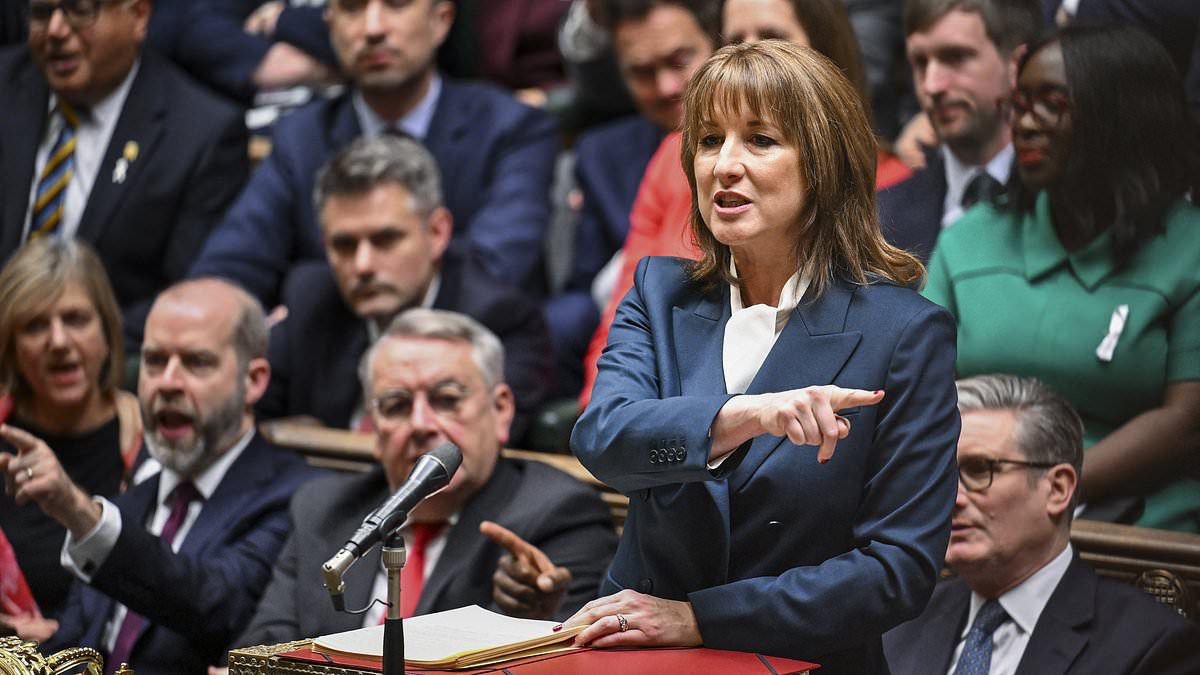
This, however, might shift dramatically after Rachel Reeves disclosed in the latest Budget that the income tax relief will be reduced to 20 percent beginning in April with the new financial year.
The sector cautions that this adjustment could create a substantial funding deficit for start-ups, precisely when the Chancellor is seeking to stimulate economic growth.
Tax relief cut is ‘bonkers’
VCTs are publicly traded on the London Stock Exchange, providing investors a chance to support rapidly growing early-stage companies.
Numerous British success stories have origins in VCT funding, such as the fashion marketplace Depop, which was recently acquired by eBay.
When the VCT scheme was introduced in then-Chancellor Ken Clarke’s 1994 Budget, one of the biggest attractions was the offer of 40 per cent income tax relief.

Wealth Club’s Alex Davies has called the tax relief ‘bonkers’
That was cut to 30 per cent in 2006, still offering investors the opportunity to invest £40,000 tax-free if they meet the full £200,000 limit.
The prospect of a further cut next month, which the Treasury estimates will affect 24,000 investors and bring in £200million, is seeing investors pile into trusts while they can.
Wealth Club, a platform specialising in private investment, told This Is Money that investment in VCTs had surged 21 per cent since the Budget, and is up 3 per cent annually.
Hargreaves Lansdown is encouraging customers to ‘beat the drop’ with time ‘running out to secure a higher rate.’
The platform said it had seen a 15 per cent increase in VCT investment over the past year, but had also doubled the number of trusts available to customers.
Chris Lewis, chair of industry body VCTA, told This Is Money the industry had not been consulted and the changes were a ‘bombshell.’
Alex Davies, chief executive of the Wealth Club, described the Chancellor’s decision as ‘completely bonkers’.
Several bigger VCTs are already close to capacity, two weeks away from the end of the financial year.
For example, Octopus Apollo VCT, which specialises in software firms, is 84 per cent full, while Pembroke VCT – investor in the likes of Five Guys – is 82 per cent full.
Lewis said: ‘There’s definitely a get in while you can factor being felt. I can’t blame them for that.
‘Flows are up, but I think there’s maybe a cannibalising of next year’s fundraising by just bringing it forward.’
In the immediate term, it’s good news for the VCT industry and the start-ups they invest in, but leading figures warn that the future success of the regime is in doubt as investors choose not to put their cash anywhere else.
How a cut to tax relief will throttle growth
When the Treasury announced the tax cut, it assumed investors would switch to the Enterprise Investment Scheme (EIS), in which investors directly own shares in early-stage firms.
However, Davies expects a ‘sharp fall in VCT investment, with only a small proportion of displaced capital expected to be redirected into the EIS.’
While Lewis is less definitive, he expects there to be ‘extra pressure on the amount of cash available for investing into these businesses,’ and 90 per cent of VCT investors ‘won’t even think about doing EIS.’
The last time VCT relief was cut, fundraising fell by two-thirds and didn’t recover for 16 years, according to the Association of Investment Companies, risking a cohort of founders that won’t receive any VCT funding again.
Wealth Club analysis has found that start-ups face a funding shortfall of over £500million, as a direct result of the changes.
‘If the aim, as was claimed in the Budget, is to make Britain the best place to start and scale a business, this misguided policy risks achieving the opposite,’ said Davies.
Instead, founders may be pushed to look abroad for funding, according to Lewis, deepening a crisis in public and private markets as companies look to the US, or other equally favourable markets.
As Reeves pins her hopes on growth in the face of a worsening economic backdrop, startups should be central to her plan, the VCT industry says.
While a boost over the next two weeks may be hailed as a new record, the industry is facing an existential crisis.
DIY INVESTING PLATFORMS
AJ Bell

AJ Bell
Easy investing and ready-made portfolios
Hargreaves Lansdown

Hargreaves Lansdown
Free fund dealing and investment ideas
interactive investor

interactive investor
Flat-fee investing from £4.99 per month
Freetrade

Freetrade
Investing Isa now free on basic plan
Trading 212

Trading 212
Free share dealing and no account fee
Affiliate links: If you take out a product This is Money may earn a commission. These deals are chosen by our editorial team, as we think they are worth highlighting. This does not affect our editorial independence.
Compare the best investing account for you