
Share this @internewscast.com

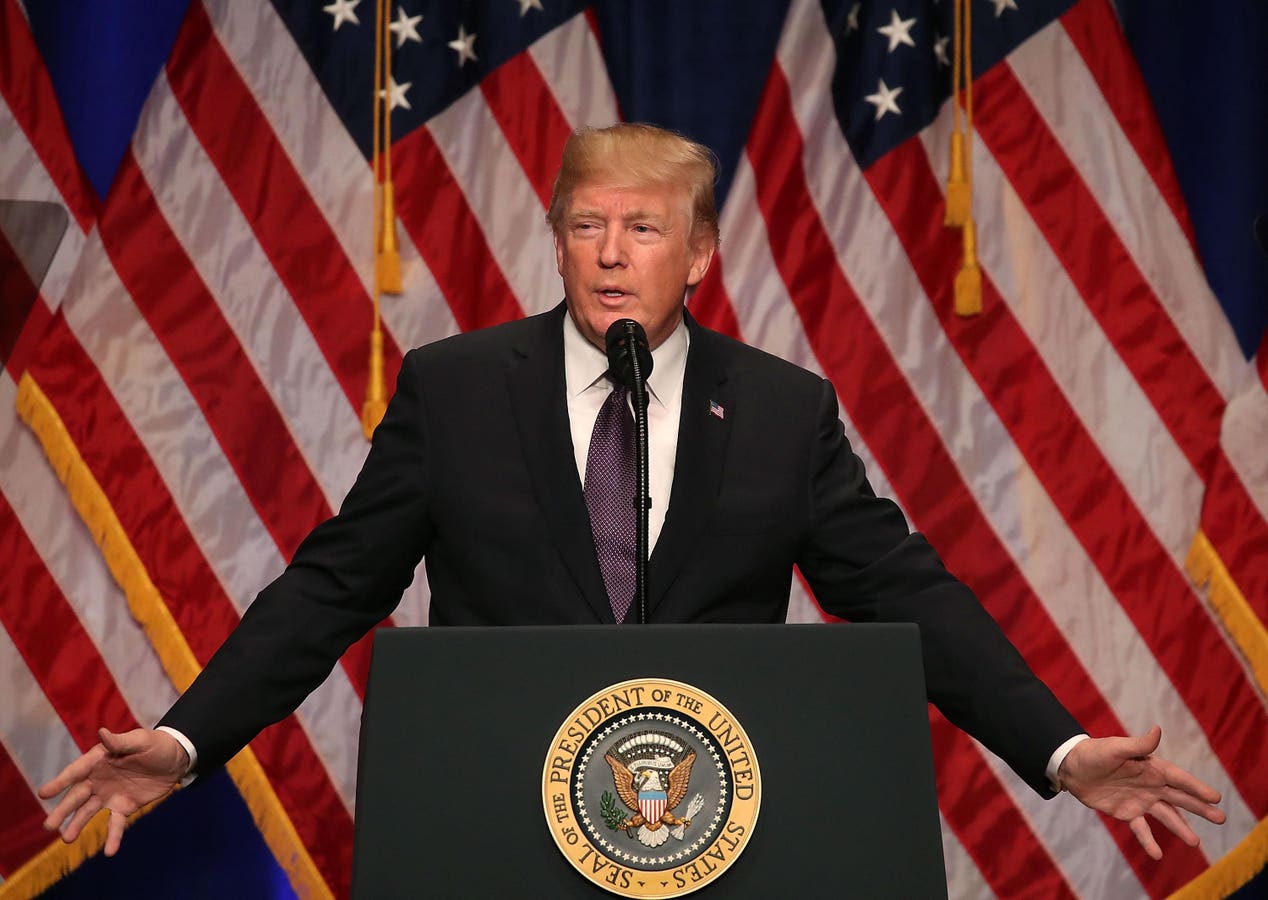
Last night, the Trump Administration unveiled its latest National Security Strategy (NSS), setting the stage for the forthcoming National Defense Strategy (NDS), which will delve deeper into America’s military priorities and tactics. The NDS is anticipated to be published possibly as soon as this weekend.
The newly released security document echoes sentiments from centuries past, heavily endorsing the Monroe Doctrine which cautions foreign powers against establishing military bases in the Western Hemisphere. This renewed focus has been informally dubbed the “Donroe Doctrine” in deference to President Trump. While the document also addresses the challenges posed by China, as well as security concerns in the Middle East and Europe, it places considerable emphasis on the Western Hemisphere.
One of the more perilous elements of this hemispheric emphasis is the potential for a full-scale military intervention in Venezuela. This strategy is fraught with risks, both economically and in terms of human cost. The administration’s justification—that Venezuela is a major conduit for deadly drugs entering the United States—is viewed as a significant exaggeration. A recent New York Times investigation highlights why this focus on Venezuela may be misguided:
“Mr. Trump’s emphasis on Venezuela contradicts the facts: The majority of cocaine is produced and smuggled from other parts of Latin America, supported by data from the U.S., Colombia, and the United Nations.”
Furthermore, Venezuela is not a producer of fentanyl, a highly dangerous drug that is among the most lethal substances trafficked into the U.S. each year—a major target of President Trump’s anti-drug campaign.
Advocates for U.S. intervention have suggested that dismantling the Maduro regime in Venezuela would be straightforward. However, historical precedents suggest caution. Previous U.S. regime change efforts have often been fraught with difficulties. For example, a Bush administration official once suggested ousting Saddam Hussein would be a “cakewalk,” yet it resulted in a protracted 20-year conflict costing over a trillion dollars and incurring significant casualties. This long-term engagement ultimately led to a sectarian regime in Iraq, creating a fertile ground for ISIS to establish a presence.
Some proponents of U.S. intervention have suggested that toppling the Maduro regime in Venezuela would be a relatively simple matter. History suggests otherwise. Past U.S. efforts at regime change have not gone well. One Bush administration official assured the public that the war to dislodge Saddam Hussein would be a “cake walk.” Instead, it was a 20 year war that cost well over $1 trillion and cost tens of thousands of lives on all sides. And the result of that enormous investment of blood and treasure was a sectarian regime in Iraq that made it easier for ISIS to get a foothold in that nation.
In short, the public and the Congress should beware the prophets of quick and easy regime change in Venezuela.. The potential costs are too high and the rationale is too weak. That’s one of the reasons a bipartisan group of senators and representatives has introduced a War Powers Resolution aimed at blocking a war with Venezuela. Leaders of the effort include senators Tim Kaine (VA), Charles Schumer (NY), Rand Paul (KY), and Adam Schiff (D-CA).
The new focus on the Western Hemisphere will not come at the expense of spending designed to prepare for a war with China and to maintain the ability to intervene anywhere in the world on short notice. Without a change in this ill-conceived “cover–the- globe” strategy, our current eye popping $1 trillion Pentagon
The budget will be just the beginning of a military spending binge that will drive up the deficit and consumer funds needed to address other pressing national needs.
Taken as a whole, the NSS too often focuses on the wrong problems, or uses the wrong tools to deal with actual ones. This has to change. We need a national security strategy grounded in the realities of the 21st century, not a throwback to failed policies of the past.