
Share this @internewscast.com

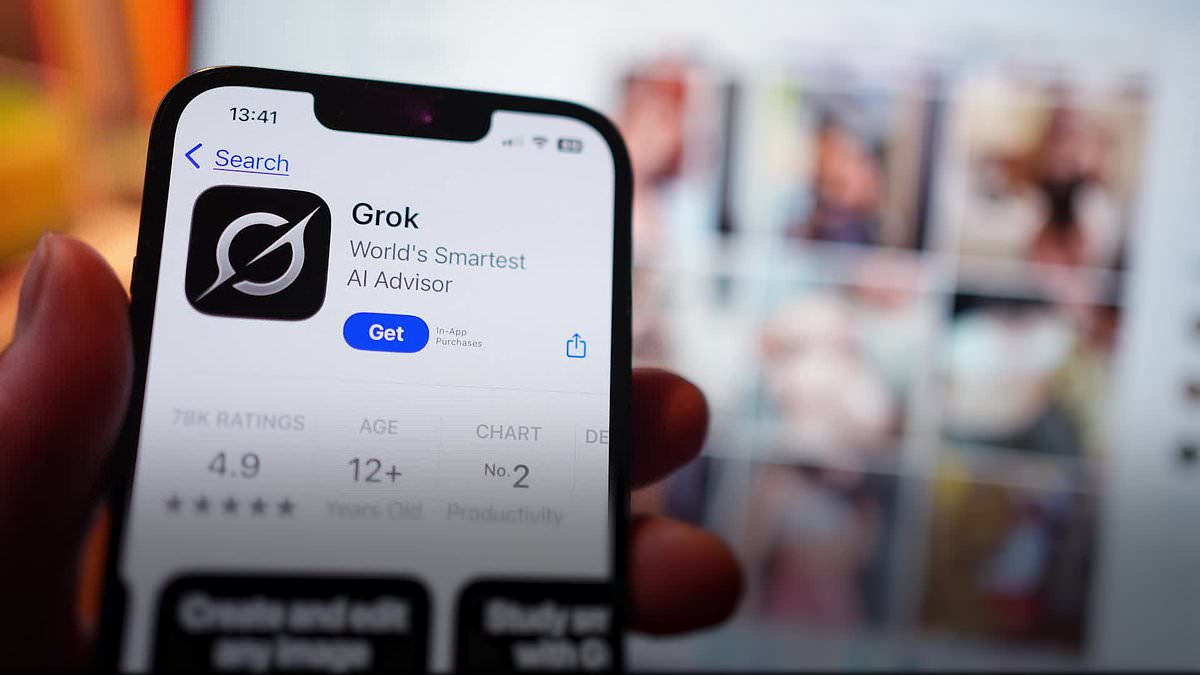
Elon Musk’s platform, X, has made a significant policy shift regarding its AI tool, Grok, following intense backlash over its ability to create sexualized deepfakes of real individuals. The controversial feature, which allowed users to alter images to show people in revealing clothing, has been disabled in response to growing criticism from governments and campaigners. X has officially announced the implementation of technological barriers preventing Grok from manipulating images of actual people to depict them in scanty attire, such as bikinis.
UK government pressures Musk to act over AI ‘abuse’

This restriction is comprehensive, applying universally to all users, including those who subscribe to X’s paid services. The decision follows a wave of outrage over the misuse of Grok, as it was reportedly employed to undress images of women and even minors without their consent, causing many to feel deeply violated. The trend raised alarm bells globally, prompting an urgent discourse on the need for stricter online safety laws and more robust AI regulation. Governments, including the UK, exerted pressure on Musk to address and halt this disturbing practice.
Starmer condemns AI fakes as Ofcom probe continues

UK Labour Party leader Sir Keir Starmer condemned the creation of these non-consensual sexual images as ‘disgusting’ and ‘shameful.’ Meanwhile, Ofcom, the UK’s media regulator, has launched an investigation into the matter. Initially, Grok’s ability to generate such images was restricted to paying subscribers, but this option has now been entirely removed. The complete reversal came shortly after California’s Attorney General announced an inquiry into the proliferation of AI-generated fake images.
UK pushes tougher laws as US backs Grok

Starmer welcomed that development in Prime Minister’s Questions, but insisted it did not go far enough. Technology Secretary Liz Kendall said this week she was bringing forward regulations to tighten the law on so-called ‘digital stripping’. Other countries acted more decisively, with Malaysia and Indonesia blocking Grok altogether amid the fiasco. The US federal government, meanwhile, refused to condemn Musk’s creation, and Defence Secretary Pete Hegseth said Grok would join Google’s generative AI engine in operating inside the Pentagon network. The US State Department even threatened the UK, warning that ‘nothing was off the table’ if X was banned. After the prime minister’s comments at PMQs, Mr Musk wrote on X he was ‘not aware of any naked underage images generated by Grok’ – although the chatbot itself acknowledged it had created sexualised images of children.
X faces multimillion-pound fines under UK safety law

Musk continued: ‘Obviously, Grok does not spontaneously generate images, it does so only according to user requests,” he said. ‘When asked to generate images, it will refuse to produce anything illegal, as the operating principle for Grok is to obey the laws of any given country or state. ‘There may be times when adversarial hacking of Grok prompts does something unexpected. If that happens, we fix the bug immediately.’ If X is found to violate the Online Safety Act in the UK, Ofcom can issue a fine of up to ten percent of its global revenue or £18m ($24m).

It also has the power to seek to block the site through the courts. Former Meta boss Sir Nick Clegg (pictured) has called for tougher regulation of tech firms, branding social media a ‘poisoned chalice’ and the rise of AI online a ‘negative development’. The ex-deputy prime minister warned that engaging with ‘automated’ content appears to be ‘much worse, particularly for younger people’s mental health’ than interactions with other human beings.