
Share this @internewscast.com
What is Abdullah Gül’s Net Worth?
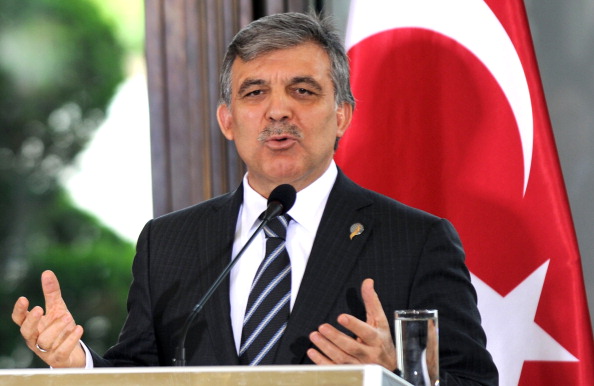
Abdullah Gül, a prominent figure in Turkish politics, boasts a net worth of $5 million. His career as a statesman, economist, and diplomat has significantly influenced Turkey’s political transformation in the 21st century. As a co-founder of the Justice and Development Party (AKP), Gül held top government roles during a time marked by economic growth, institutional change, and heated discussions about Turkey’s democratic path. Notably, he is among the few Turkish leaders to have been prime minister, foreign minister, and president.
On the global stage, Gül earned a reputation as a diplomatic and consensus-building leader, advocating for economic integration and engagement with Western entities while maintaining strong connections with the Muslim world. At home, he was often seen as a balancing force in Turkish politics, especially during periods of tension between secular authorities and religiously conservative citizens. Although his presidency overlapped with Recep Tayyip Erdoğan’s rise to power, Gül distinguished himself as a constitutionalist committed to the rule of law, civil liberties, and Turkey’s European goals. His career encapsulates the ambitions and complexities of contemporary Turkish conservatism.
In 2007, after becoming president, Gül filed a legally mandated financial disclosure detailing his assets. Court documents and media reports indicate that his wealth was mainly tied up in real estate rather than cash or securities. His assets included an apartment in Istanbul’s Üsküdar district, a home in the Erenköy neighborhood, and agricultural land in Ankara’s Gölbaşı district. The most significant holdings were two villas in Istanbul’s Ümraniye area, purchased from the state housing body, TOKİ, for a combined price of 820,000 YTL, roughly $600,000 to $630,000 at the exchange rates of 2007.
2007 Financial Disclosure
Born on October 29, 1950, in Kayseri, Turkey, Gül grew up in a middle-class family, showing academic talent from an early age. He studied economics at Istanbul University, where he developed a keen interest in development policy and international finance. Pursuing further studies in the UK at the University of Exeter, he broadened his perspective and improved his English fluency. This exposure to Western academic and political systems later influenced his diplomatic and economic policies.
Early Life and Education
Before stepping into the political arena, Gül worked as an economist at the Islamic Development Bank in Jeddah, gaining valuable experience in international finance and multilateral organizations. He entered Turkish politics in the early 1990s with the Welfare Party and later the Virtue Party, both part of Turkey’s Islamist political tradition. During this time, he served in parliament and became known as an insightful policy thinker rather than a populist.
Early Career and Entry into Politics
Before entering frontline politics, Gül worked as an economist at the Islamic Development Bank in Jeddah, gaining firsthand experience in international finance and multilateral institutions. He entered Turkish politics in the early 1990s as a member of the Welfare Party and later the Virtue Party, both part of Turkey’s Islamist political tradition. During this period, he served as a member of parliament and built a reputation as an articulate policy thinker rather than a populist campaigner.
After Turkey’s constitutional court shut down the Virtue Party, Gül joined Recep Tayyip Erdoğan and other reformists in founding the Justice and Development Party. The new party sought to distance itself from overt political Islam and present a conservative democratic platform focused on economic growth, European Union accession, and political reform.
Prime Minister and Foreign Minister
Following the Justice and Development Party’s sweeping electoral victory in 2002, Gül briefly served as prime minister while Erdoğan resolved a legal ban that initially prevented him from holding office. Once Erdoğan assumed the premiership, Gül became foreign minister, a role in which he played a key part in redefining Turkey’s international posture.
As foreign minister, Gül championed Turkey’s bid for European Union membership, oversaw major diplomatic initiatives, and worked to improve relations with neighboring countries. His tenure was marked by an emphasis on dialogue, economic diplomacy, and positioning Turkey as a regional bridge between East and West.
Getty Images
Presidency of Turkey
In 2007, Abdullah Gül was elected president of Turkey, a milestone that carried deep symbolic significance. His candidacy was controversial due to his Islamist roots and the fact that his wife wore a headscarf, a sensitive issue within Turkey’s staunchly secular establishment. Despite initial resistance from the military and opposition parties, Gül’s election ultimately proceeded through parliamentary vote.
As president, Gül adopted a largely conciliatory and institutional tone. He exercised veto powers selectively, voiced concern over press freedom and judicial independence, and frequently emphasized constitutional norms. While the presidency is a largely ceremonial role, Gül used the office to promote moderation and international credibility during a period of profound political change.
Relationship with Erdoğan
Although Gül and Erdoğan rose to power together, their political paths gradually diverged. Gül was often seen as more cautious and institutionally minded, while Erdoğan pursued an increasingly centralized style of governance. After completing his single presidential term in 2014, Gül declined to seek further political office and avoided direct confrontation with Erdoğan, even as Turkey’s political climate grew more polarized.
Life After the Presidency
Since leaving office, Gül has remained active in public discourse through speeches, academic engagements, and international forums. He has occasionally voiced concern about democratic backsliding, economic management, and Turkey’s international standing, though he has stopped short of leading an opposition movement. Periodically mentioned as a potential unifying figure in Turkish politics, Gül has consistently resisted calls to return to electoral politics.
All net worths are calculated using data drawn from public sources. When provided, we also incorporate private tips and feedback received from the celebrities or their representatives. While we work diligently to ensure that our numbers are as accurate as possible, unless otherwise indicated they are only estimates. We welcome all corrections and feedback using the button below.
(function() {
var _fbq = window._fbq || (window._fbq = []);
if (!_fbq.loaded) {
var fbds = document.createElement(‘script’);
fbds.async = true;
fbds.src=”
var s = document.getElementsByTagName(‘script’)[0];
s.parentNode.insertBefore(fbds, s);
_fbq.loaded = true;
}
_fbq.push([‘addPixelId’, ‘1471602713096627’]);
})();
window._fbq = window._fbq || [];
window._fbq.push([‘track’, ‘PixelInitialized’, {}]);