
Share this @internewscast.com
What is Janie Fricke’s net worth?
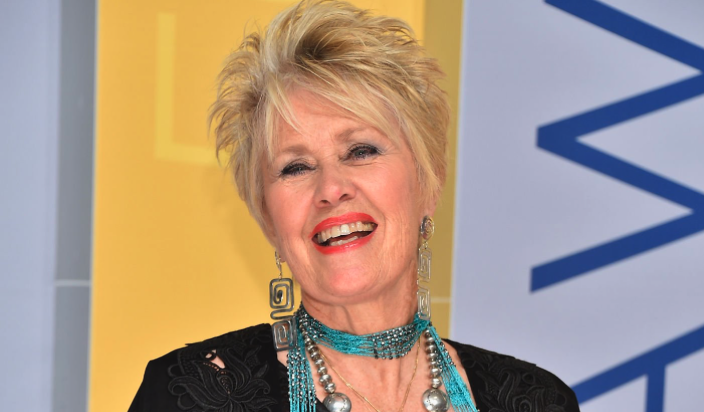
Janie Fricke, a revered figure in American country music, boasts a net worth of $10 million, a testament to her enduring influence and success in the industry. Emerging as one of the most distinct voices of the 1980s, Fricke first made her mark as a sought-after background and demo singer. Her transition into a solo artist was marked by a string of hits, including the unforgettable chart-toppers “Don’t Worry ’bout Me Baby,” “It Ain’t Easy Bein’ Easy,” “He’s a Heartache,” and “Tell Me a Lie.” Her voice, celebrated for its warmth and emotional depth, became a staple in collaborations with major artists, earning her a special place in the country music pantheon.
Early Life
Born Jane Marie Fricke in 1947 in South Whitley, Indiana, she was raised on a family farm where music was woven into the fabric of daily life. Encouraged by her parents to sing, she honed her harmony skills through performances at local events, churches, and school functions. By her teenage years, Fricke had already developed the vocal prowess that would later catapult her to session singing success. She pursued music education at Indiana University, where she participated in touring vocal groups, gaining essential experience in professional performance settings. Her passion for commercial music led her to Nashville post-graduation, setting the stage for a remarkable career.
Session Work and Industry Breakthrough
Initially, Fricke’s talents shone behind the scenes in Nashville. Her versatile voice, impeccable pitch, and ability to blend effortlessly with other artists made her a favorite among producers. She lent her vocals to commercial jingles for major brands like Red Lobster, Coca-Cola, and United Airlines, and became a regular on Music Row, providing harmonies for industry giants such as Merle Haggard, Ronnie Milsap, Conway Twitty, and Charlie Rich. Her big break came through her collaborations with Johnny Duncan, particularly on the hit “Stranger,” where her uncredited yet striking vocal contributions caught the attention of audiences and industry professionals alike.
This pivotal exposure paved the way for Fricke’s solo career. Signing with Columbia Records in the late 1970s, she initially struggled to establish her identity beyond her reputation as a background singer. However, with encouragement from producers and label executives, she embraced a unique musical style, focusing on emotionally charged ballads that highlighted her vocal clarity and interpretative skills.
Solo Career in the Late 1970s and 1980s
This strategic shift quickly yielded success. Fricke achieved her breakthrough with hits like “Down to My Last Broken Heart” and “I’ll Need Someone to Hold Me When I Cry,” which laid the groundwork for a series of top-charting singles including “It Ain’t Easy Bein’ Easy,” “Don’t Worry ’bout Me Baby,” “Tell Me a Lie,” and “He’s a Heartache.” Her impressive consistency during this period ensured that nearly every release climbed into the top ten. Fricke became a fixture on the touring circuit, television specials, and award shows, solidifying her status as one of country music’s most reliable and expressive artists.
Throughout her career, Fricke’s catalog has showcased her versatility, ranging from traditional ballads to pop-infused crossovers and later bluegrass-inspired projects. Her enduring presence in recording, touring, and collaborations has established her as a beloved and enduring figure in the country music landscape.
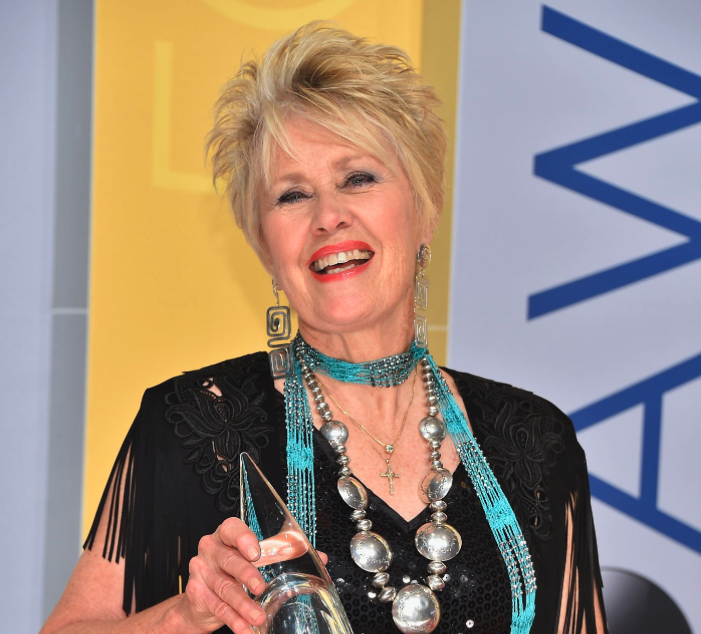
Her peers and critics took notice. She won the ACM’s Female Vocalist of the Year award in 1982 and earned back-to-back CMA Female Vocalist of the Year awards in 1982 and 1983. Producers valued her ability to elevate any song, whether it leaned traditional or contemporary, and listeners gravitated to the sincerity of her delivery.
Getty
Later Career, Collaborations, and Musical Evolution
As the country landscape shifted in the late 1980s and early 1990s, Fricke adapted once again. She explored new subgenres, including gospel and bluegrass, and embraced acoustic arrangements that highlighted her vocal purity. She toured internationally, maintained a dedicated fan base, and remained active in recording projects, tribute albums, and collaborative performances with longtime industry friends.
Her catalog has continued to earn renewed attention through reissues, live recordings, and digital rediscovery. Many modern artists cite her as an influence, particularly for her phrasing, tonal control, and interpretive depth. While she is best remembered for her classic run of hits in the 1980s, her broader career showcases a rare combination of technical skill, emotional authenticity, and professional longevity.
Legacy
Janie Fricke’s legacy rests on both her body of solo work and her behind-the-scenes contributions to country music’s evolution. Long before she topped charts, her harmonies were woven into some of the era’s biggest recordings, shaping the sound of Nashville in subtle but lasting ways. Her rise from session singer to award-winning star underscores her adaptability and artistry, and her continued touring and recording demonstrate a lifelong devotion to her craft. For many country fans, her voice remains one of the defining sounds of the genre’s 1980s era, and her influence continues to echo through generations of vocalists who admired her precision and emotional clarity.
All net worths are calculated using data drawn from public sources. When provided, we also incorporate private tips and feedback received from the celebrities or their representatives. While we work diligently to ensure that our numbers are as accurate as possible, unless otherwise indicated they are only estimates. We welcome all corrections and feedback using the button below.
(function() {
var _fbq = window._fbq || (window._fbq = []);
if (!_fbq.loaded) {
var fbds = document.createElement(‘script’);
fbds.async = true;
fbds.src=”
var s = document.getElementsByTagName(‘script’)[0];
s.parentNode.insertBefore(fbds, s);
_fbq.loaded = true;
}
_fbq.push([‘addPixelId’, ‘1471602713096627’]);
})();
window._fbq = window._fbq || [];
window._fbq.push([‘track’, ‘PixelInitialized’, {}]);