
Share this @internewscast.com
In a bid to escape the sky-high personal income tax rates of California and New York, a growing number of billionaires have been trading their coastal mansions for the allure of Palm Beach, Florida. This sunny locale has transformed into a haven for the ultra-wealthy, offering year-round warmth, premier golf courses, and a significant role in the American political landscape. Here, for a sum ranging from $70 million to over $200 million, one can acquire a vast oceanfront estate, a luxury rarely found in other parts of the country.
Recently, we covered the story of David MacNeil, a discreet billionaire who made headlines by purchasing a $75 million mansion in Manalapan, just south of Palm Beach. This acquisition adds to his impressive portfolio, which already includes about $95 million in local real estate holdings. MacNeil also boasts ownership of a $70 million Ferrari 250 GTO, one of a mere 36 ever produced.
What makes MacNeil’s journey intriguing is his departure from the flashy tech-driven paths of many modern billionaires. Although his name might not be widely recognized, his products likely are. MacNeil is the mastermind behind WeatherTech, an Illinois-based company specializing in automobile floor mats. In 2025, WeatherTech generated around $800 million in revenue, with MacNeil retaining full ownership of the company.
Today, we shift our focus to another billionaire involved in a significant real estate transaction in Palm Beach. Like MacNeil, this individual didn’t amass wealth through tech innovations or digital currencies; instead, he inherited it.
This billionaire, who recently sold a lavish Palm Beach-area estate for $97 million, derived his $3.7 billion fortune from his great-grandfather’s pioneering work in the chewing gum industry. While his face might not be familiar, his last name certainly is.
A Soap Salesman, A Gimmick, And An Accidental Empire
His great-grandfather, also named William, was born in 1861. Coming from humble beginnings as the son of a soap maker, William left school at 13 to start selling soap door-to-door, a move that would eventually lead to the creation of a chewing gum empire.
To boost sales, he came up with a clever sales gimmick: Every bar of soap came with a free pack of baking powder. As it turned out, his customers were much more interested in his baking powder than his soap. So, he ditched the soap and made baking powder his primary product.
As a new promotional gimmick, he included two free packs of chewing gum with every baking powder purchase. As it turned out, his customers were much more interested in his chewing gum.
In 1891, when he was 29, William founded his own company that would exclusively focus on selling chewing gum. He named the company after himself: The William Wrigley Jr. Company.
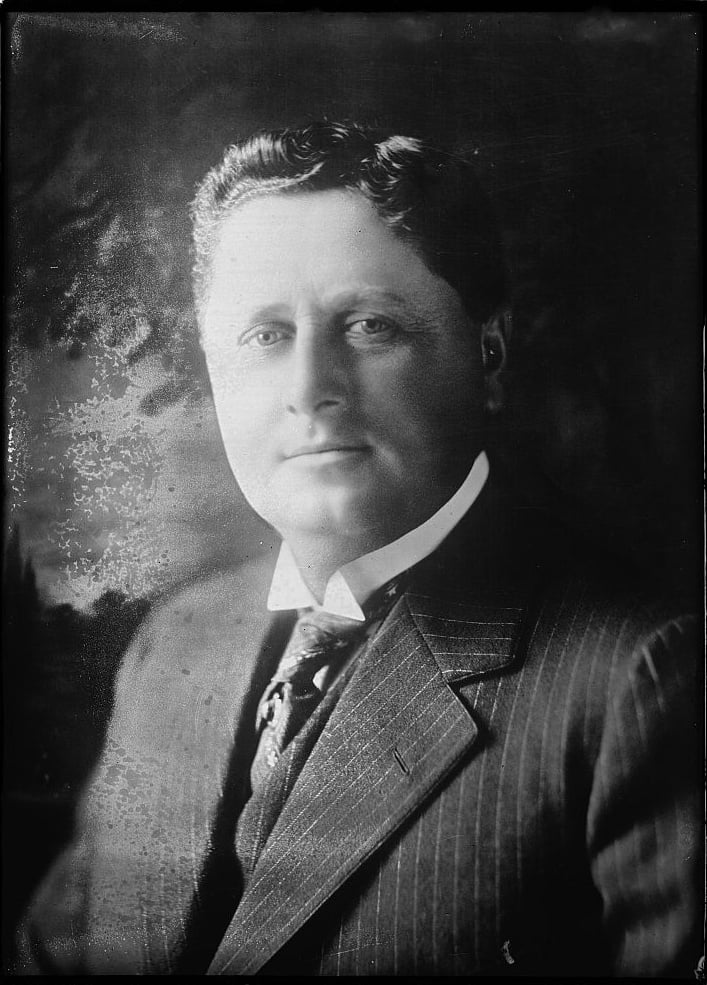
(public domain)
Generational Billions From Candy
Over the ensuing decades, the William Wrigley Jr. Company became a candy empire. But interestingly, the company was built not just on gum but on obsessive advertising, distribution scale, and brand repetition. By the early 20th century, Wrigley was spending more on advertising than any other company in America, plastering his brand on billboards, newspapers, magazines, and even mailing free gum to millions of households.
Chewing gum turned out to be the perfect product: cheap to produce, easy to ship, habit-forming, and universally consumable. The money stuck around.
By the time William Wrigley Jr. died in 1932, he was worth $40 million. After adjusting for inflation, that’s the same as $915 million today.
Following William’s death, his son, Philip K. Wrigley, took over and oversaw its expansion through the Great Depression and World War II, while also becoming the owner of the Chicago Cubs and steward of Wrigley Field.
Philip K. Wrigley’s son, William Wrigley Jr. III, later assumed control of the family business and played a key role in modernizing the company during the postwar consumer boom. William Wrigley Jr. III is the father of William Wrigley Jr. II, today’s billionaire who just sold a house in Palm Beach for $97.5 million.
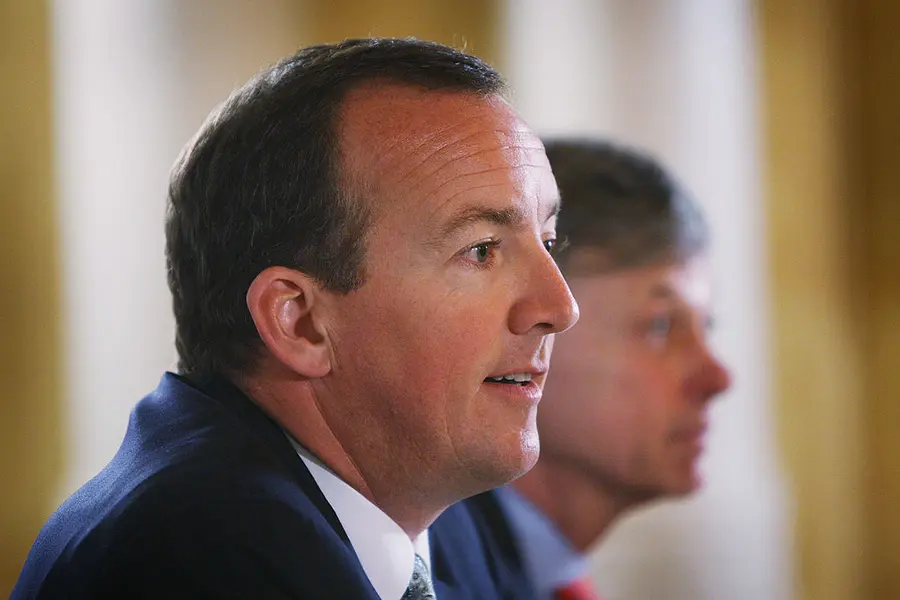
(Photo by Scott Olson/Getty Images)
$97 Million Palm Beach Sale
After attending Duke University and then earning an MBA from Wharton, William Wrigley Jr. II became CEO of the family business in 1999. Under his leadership, the company expanded beyond chewing gum through acquisitions of brands such as Altoids and Life Savers. He stepped down in 2008 after orchestrating the sale of the family business to a similarly family-owned business, Mars Inc., for $23 billion.
With the sale, dozens of extended Wrigley family members became liquid hundred-millionaires and billionaires. Today, William Wrigley Jr. II’s net worth is $3.7 billion.
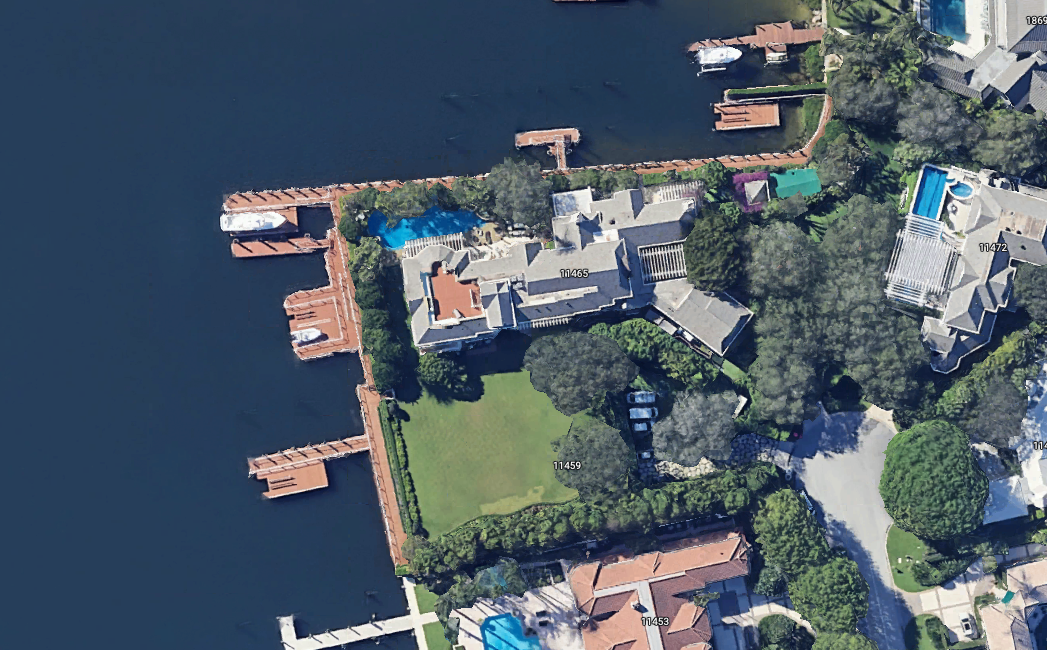
In 2009, a year after the Mars deal closed, William paid $11 million for a parcel of waterfront land inside a private, gated golf community in Palm Beach, Florida. A year later, he added a neighboring parcel for $6.1 million. By 2013, he had completed construction on an 18,000-square-foot waterfront mansion featuring multiple docks, including one capable of accommodating a large yacht, along with a swimming pool and an expansive lawn overlooking the Intracoastal Waterway.
William just sold this property for $97.5 million to a buyer whose identity has not yet been named.
This is not William’s first major real estate transaction. In 2022, he sold a mansion in Aspen, Colorado, for $30 million.
And to his credit, both before and after the $23 billion Mars sale, William did not simply sit back and collect dividends. He played a central role in pushing for and ultimately securing the deal that ended more than a century of family control.
After the sale, at a point when he could have comfortably done nothing for the rest of his life, he chose to take on a new challenge. In 2018, William became the chief executive officer of the cannabis company Parallel, a role he continues to hold today.
(function() {
var _fbq = window._fbq || (window._fbq = []);
if (!_fbq.loaded) {
var fbds = document.createElement(‘script’);
fbds.async = true;
fbds.src=”
var s = document.getElementsByTagName(‘script’)[0];
s.parentNode.insertBefore(fbds, s);
_fbq.loaded = true;
}
_fbq.push([‘addPixelId’, ‘1471602713096627’]);
})();
window._fbq = window._fbq || [];
window._fbq.push([‘track’, ‘PixelInitialized’, {}]);