
Share this @internewscast.com
In the realm of Hollywood, rising to the top as a producer or studio executive usually follows one of two distinct paths. The first, and most conventional, involves a slow and steady climb through the industry ranks. This journey often starts at the very bottom, fetching coffee and answering phones, then gradually progresses through a combination of perseverance, skill, and a bit of luck. If all goes as planned, you’re eventually handed a slate of projects to oversee. Seth Rogen’s character in the series “The Studio” epitomizes this traditional trajectory.
The alternative path is a fast track, propelled by immense wealth. In this scenario, individuals leverage their financial resources to quickly establish themselves in the industry. Megan Ellison is a prime example of this route. With the backing of her father Larry Ellison’s considerable fortune, she launched Annapurna Pictures and swiftly produced critically acclaimed films like “Zero Dark Thirty,” “Her,” “American Hustle,” and “Phantom Thread.” Her brother, David Ellison, took a similar approach, founding Skydance Media and producing blockbusters such as “Mission: Impossible,” “Top Gun: Maverick,” “Terminator: Dark Fate,” and “World War Z.” In 2024, Skydance made headlines with a monumental merger with Paramount Global, valued around $8 billion, cementing David Ellison’s status as a significant player in the studio landscape.
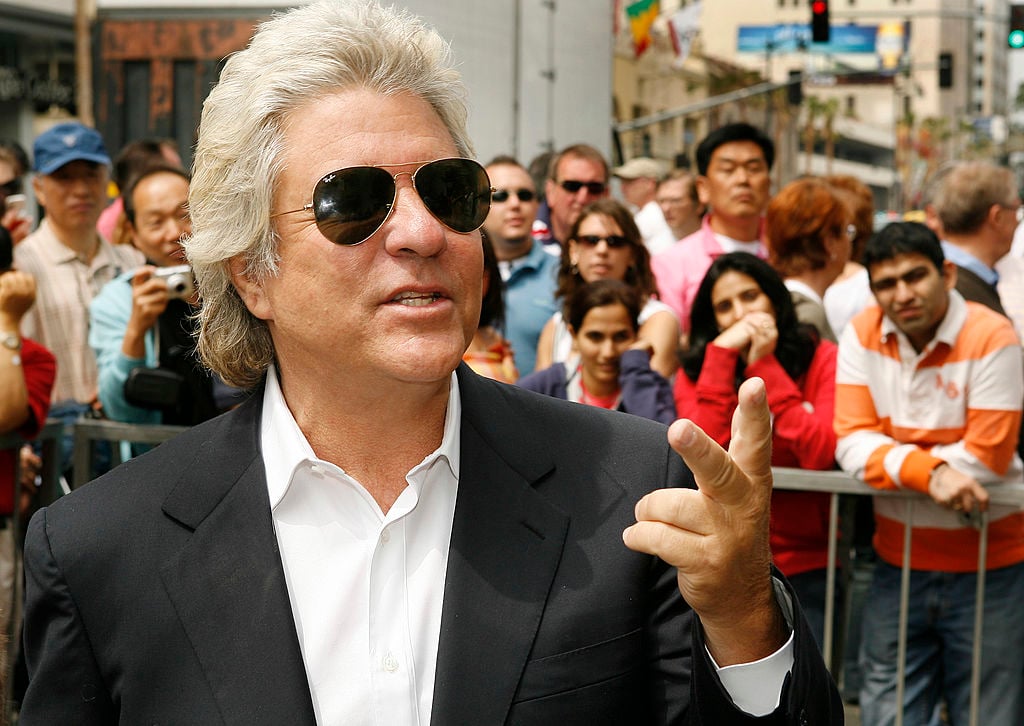
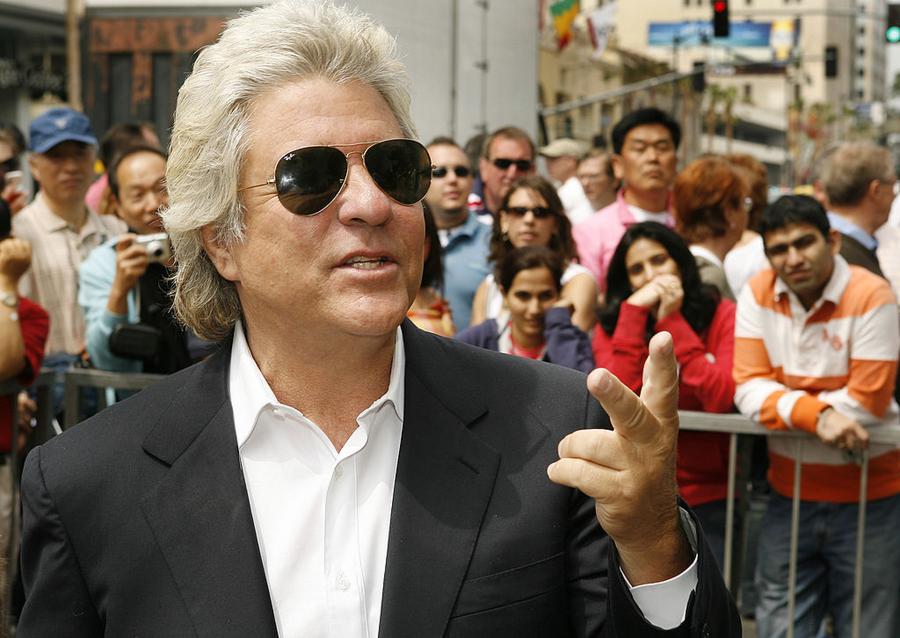
Jon Peters, however, carved his own unique path to success, bypassing both the traditional and wealth-driven routes. Lacking the advantage of a billionaire parent and without enduring years of corporate ladder climbing, Peters began his Hollywood odyssey in a Rodeo Drive hair salon, armed with a pair of scissors. Amid the gossip and glamour of Beverly Hills, he transformed into one of the industry’s most influential producers, eventually co-leading a major film studio and pioneering the superhero film genre. His rise was as unlikely as it was tumultuous, marked by moments of brilliance, controversy, and a legacy that continues to resonate in Hollywood lore.
Vince Bucci/Getty Images
From Rodeo Drive To Barbra Streisand’s Inner Circle
Before Peters was mingling in studio boardrooms and flying on private jets, he honed his craft in his family’s Beverly Hills salon. His early days were spent sweeping up hair and cleaning dye bowls, surrounded by a world of vanity and aspiration. The salon, a fixture on Rodeo Drive before it became a symbol of luxury, was not just a place for beauty but a hub of confessions, social dynamics, and a direct line to Hollywood’s elite.
Peters had an innate understanding of this environment. Despite having no formal education beyond seventh grade, he possessed sharp instincts for reading people, exuding confidence, and captivating an audience. He realized that being a hairdresser in Beverly Hills transcended mere styling; it required insight into clients’ psyches, anticipation of their needs, and the ability to make them feel like the center of the universe. Peters excelled at this, charming and entertaining his clientele while absorbing the nuances of the rich and famous, towel draped over his shoulder like a magician’s cloak.
By the early 1970s, Peters had established himself as Los Angeles’ premier hairstylist, catering to an exclusive clientele of actresses, socialites, producers’ spouses, and others capable of opening doors with a single recommendation. His confidence suggested that the salon was just a stepping stone to greater ambitions. He spoke of ideas, dreams, and the films he aspired to create, leaving clients to see him not merely as a stylist but as a dynamic force destined for bigger things.
And then came Barbra Streisand.
In 1973, Peters was hired to design a wig for Streisand for the film “For Pete’s Sake.” Their connection was instantaneous, electric, and transformative. Peters, then married to actress Lesley Ann Warren, walked into the job expecting to style a wig. By the end of the project he had inserted himself into Streisand’s inner orbit with an intensity that startled people around her. He challenged her ideas, pushed back on her choices, and spoke to her with a confidence few people dared. She found the bluntness refreshing. He found in her someone who could elevate his ambitions from talk to reality.
What followed was one of Hollywood’s most public power romances. Peters became her lover, confidant, gatekeeper, protector, and collaborator. He managed her career with a mix of charm, aggression, and unshakeable belief in her potential. He took credit for pushing her toward bolder image choices. He produced her 1974 album “ButterFly.” And he began inserting himself into film conversations with executives who could not quite believe that a Rodeo Drive hairdresser suddenly had opinions on story structure.
But Peters had something most aspiring producers never develop: absolute fearlessness. He walked into rooms he wasn’t invited to. He voiced opinions no one asked for. He asserted control even when he had none. And, strangely, it worked. Streisand trusted him. Her team adapted to him. Hollywood, begrudgingly, adjusted around him.
Their creative peak came with the 1976 movie “A Star Is Born,” a project guided as much by their relationship as by the script itself. Peters pushed the film through development, helped shape its modern tone, and fiercely protected Streisand’s vision. The film became a commercial juggernaut, earning more than $100 million on a $6 million budget and transforming Peters from novelty to legitimate power player.
Their twelve-year relationship dominated magazine covers, gossip columns, paparazzi lenses, and public fascination. It was intense, dramatic, glamorous, and unstable. But for Peters, it was also foundational. Streisand gave him legitimacy, access, and a front-row seat to the inner workings of show business. She introduced him to agents, executives, financiers, and creative power brokers. She made him believe he belonged in Hollywood.
Even decades later, Peters still refers to her as the love of his life. And even if the relationship ultimately ended, its impact on his trajectory was permanent.
It was an improbable beginning for what would become one of the most astonishing careers Hollywood has ever produced.
The Partnership That Took Over Hollywood
In 1980 Peters joined forces with producer Peter Guber, whose polished corporate demeanor balanced Peters’ volatility. Their partnership, Boardwalk Productions, produced a torrent of commercial hits.
- “Flashdance.”
- “Caddyshack.”
- “An American Werewolf in London.”
- “The Color Purple.”
They weren’t just making movies. They were shaping culture. By the mid-1980s the pair had unprecedented leverage, which led to a Warner Bros production deal and the opportunity to tackle a property with enormous untapped potential: Batman.
The Birth of the Modern Superhero Blockbuster
Tim Burton’s “Batman” debuted in 1989 and instantly changed Hollywood. It grossed over $400 million on a $35 million budget and turned superhero films into global event franchises for the first time. Merchandise sold at levels never seen before. Sequels became inevitable. Studios realized superheroes were not simply characters but intellectual property empires.
Every Marvel and DC film released in the past thirty years carries DNA from the Guber–Peters playbook. They proved the model worked. Today’s multibillion-dollar superhero economy started with their gamble.
Jon Peters became one of the most powerful men in entertainment. And that’s when Sony showed up with a checkbook.
Sony’s Billion-Dollar Mistake
Sony had just purchased Columbia Pictures and wanted Peters and Guber to run the studio. Warner Bros still held their contracts, so Sony paid approximately $500 million to release them. Then Sony bought the Guber-Peters company for about $50 million and gave the duo control of a major Hollywood studio.
The result became industry legend.
Peters and Guber oversaw staggering spending, chaotic greenlights, massive budgets, and notoriously thin returns. Heidi Fleiss famously appeared as a billable studio expense. Peters once commandeered the Sony corporate jet to deliver flowers to a supermodel.
During their reign, Sony lost more than $3 billion. The Japanese executives were stunned. Hollywood was stunned.
Peters was fired in 1991. Guber followed in 1994. Both walked away with severance packages estimated between $30 million and $50 million.
Their partnership dissolved in bitterness. In 2010, Peter Guber and a partner bought the Golden State Warriors for $450 million. A few months later they drafted an unremarkable rookie named Steph Curry. Today the Warriors are worth $10 billion and Peter Guber is a multi-billionaire. Jon Peters was also not finished reinventing himself after the Sony debacle.
The Superman Deal That Made Jon Peters Rich Forever
In the early 1990s, Jon Peters acquired the film rights to Superman. He spent years trying to mount a reboot, most famously the abandoned Nicolas Cage project “Superman Lives.” The movie never materialized, but Peters’ ownership rights remained airtight, even with projects he had nothing to do with.
When Warner Bros. revived the franchise with 2006’s “Superman Returns” and 2013’s “Man of Steel,” Peters owned around 7.5% of both projects’ backend gross. The result? Between the two movies, Jon earned $85 million. Without lifting a finger. Few producers in history have ever been paid more for doing less. Actually, it’s crazier than that. For the latter film, the producer/writer Christopher Nolan banned Peters from showing up to set.
Myth, Madness, And The Peters Persona
As the money and power accumulated, so did the mythology. The gun on the coffee table. The silk pants and marijuana haze. Epic affairs with actresses. Fights with abusive husbands. Rumors that he inspired films like “Shampoo” and “American Gigolo.” Spending sprees that would make a billionaire blush.
Some stories were true. Some were embellished. All were Peters.
Yet those who worked closely with him insist there was more to the man than chaos. They describe a driven, relentless operator. A producer who worked obsessively when it counted. A personality split between unstoppable bravado and deep insecurity.
By the late 2000s, Peters lived quietly on a 3,000-acre ranch in Santa Barbara, waking up at 5:30 a.m. to trade stocks and spend afternoons with old-guard Hollywood friends like Jack Nicholson. He avoided the spotlight, but the spotlight never fully avoided him.
A Hollywood Original, For Better Or Worse
Peters received a producer credit on the 2018 remake of “A Star Is Born” due to his legacy involvement with the property, though he did not participate in the production. Even without being present, his fingerprints remained on one of Hollywood’s most enduring stories.
His personal life generated headlines again in 2020 when he briefly married Pamela Anderson for twelve days. As with most things involving Jon Peters, the story was strange, dramatic, and instantly immortalized.
Today, Jon Peters has a net worth of $300 million and remains one of the most improbable success stories Hollywood has ever produced. His career is a mix of ambition, chaos, intuition, excess, luck, and sheer force of will.
Jon Peters never followed the accepted route to the top. He bulldozed his own path. And whether Hollywood likes it or not, the industry he helped build still runs on many of the ideas he put into motion.
(function() {
var _fbq = window._fbq || (window._fbq = []);
if (!_fbq.loaded) {
var fbds = document.createElement(‘script’);
fbds.async = true;
fbds.src=”
var s = document.getElementsByTagName(‘script’)[0];
s.parentNode.insertBefore(fbds, s);
_fbq.loaded = true;
}
_fbq.push([‘addPixelId’, ‘1471602713096627’]);
})();
window._fbq = window._fbq || [];
window._fbq.push([‘track’, ‘PixelInitialized’, {}]);