
Share this @internewscast.com
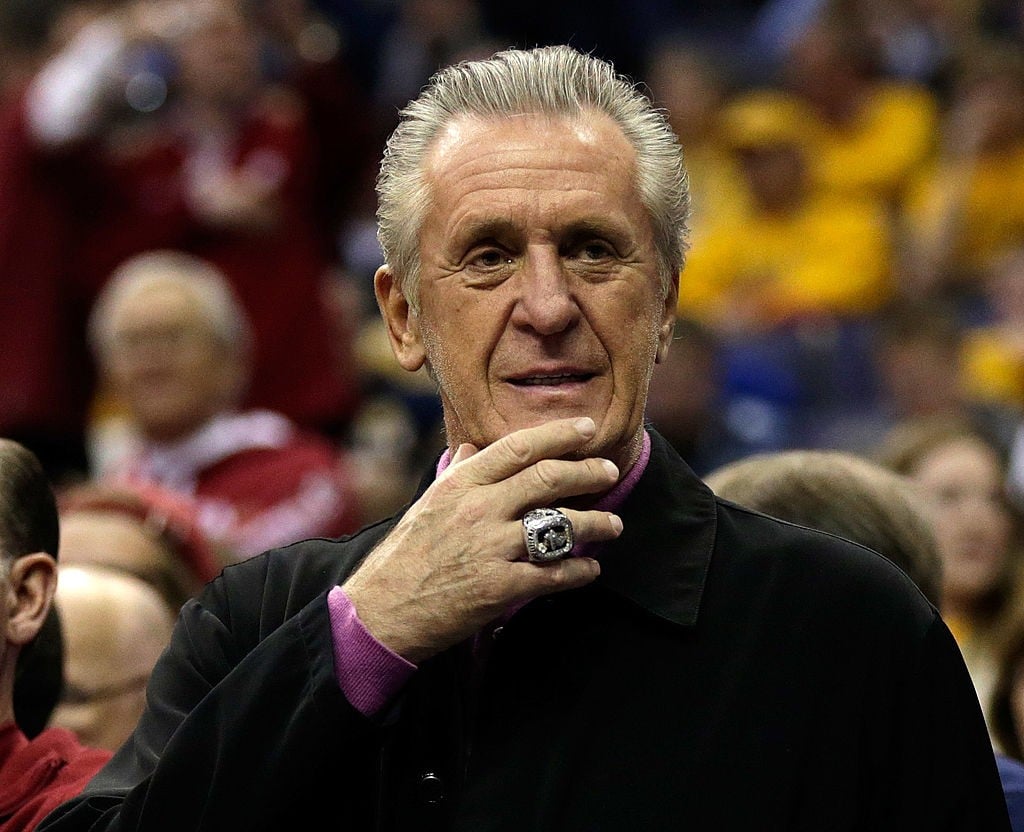
On a sunlit Sunday afternoon in Los Angeles, the Los Angeles Lakers paid homage to Pat Riley by unveiling a statue outside their arena. Capturing him in his signature Armani suit with his fist triumphantly raised, this sculpture immortalizes his indelible impact on the team.
While the tribute honors the four championships and the illustrious “Showtime” era, it also underscores a less visible aspect of Riley’s legacy: his astute business acumen. Riley is not only remembered for his strategic prowess on the court but also for his foresight in securing the trademark to the term “three-peat.”
Statues may commemorate victories, but trademarks can turn them into profitable ventures.
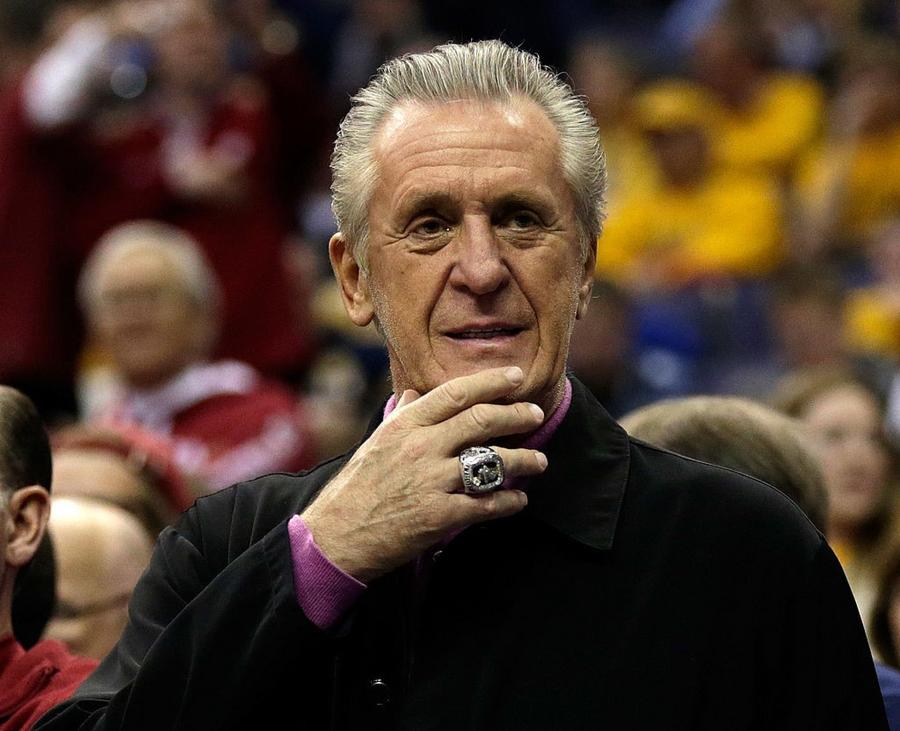
(Win McNamee/Getty Images)
History of the “Three Peat” Trademark
Pat Riley’s accomplishments in basketball are legendary. He secured an NBA championship as a player with the Lakers in 1972 and went on to win five more titles as a head coach. Two of these victories, in 1987 and 1988, were back-to-back triumphs with the Lakers.
As the 1989 season approached, Lakers guard Byron Scott coined the term “three-peat” to inspire his teammates. The phrase quickly resonated with Lakers fans throughout Los Angeles, becoming a rallying call.
With the Lakers, driven by league MVP Magic Johnson, sweeping past Portland, Seattle, and Phoenix, a three-peat seemed within grasp as they faced the Detroit Pistons in the NBA finals. However, the Pistons dashed these hopes with a decisive sweep of their own. Yet, for Riley, this setback revealed a different opportunity.
After hearing Byron Scott use the phrase “three-peat,” Pat Riley made a shrewd business decision. In November 1988, Riley submitted an application to trademark the term “three-peat” through his corporate entity, “Riles & Co.” A few months later, the application was approved, and trademark #1552980 was granted. This meant that anytime someone used that phrase commercially from that point on, they would have to pay Pat Riley a licensing royalty.
When Other Dynasties Cashed In for Him
The real payday came courtesy of other teams.
The Chicago Bulls won three consecutive championships from 1991 to 1993, then repeated the feat from 1996 to 1998. Each time, merchandise makers, apparel companies, and other commercial users who wanted to print “three-peat” on shirts, hats, or promotional materials needed a license.
In 1993, Riles & Co. earned around $300,000 in royalties. In 1998, that figure nearly doubled to approximately $600,000.
Ironically, Riley did not coach either Bulls run. Yet he profited from both.
Later, the Los Angeles Lakers themselves achieved a three-peat from 2000 to 2002 under Phil Jackson. Once again, Riley’s trademark generated licensing revenue.
Over the decades, Riles & Co. has continued collecting royalties whenever a professional or collegiate team attempts to commercialize a three-championship streak. The exact cumulative total has never been publicly disclosed, but conservative estimates suggest the trademark has generated well over $1 million, possibly several million, in licensing income across multiple sports and eras.
Defending the Phrase
Riley did not just secure the original trademark. He expanded and protected it.
Riles & Co. obtained additional marks, including variations such as “3 Peat.” He also successfully challenged attempts to register similar phrases. One notable case involved a group attempting to trademark “Three-Pete” in reference to former USC football coach Pete Carroll and a potential national title run. Riley’s legal team argued that the variation was too similar, and the application was rejected.
There have been periodic legal challenges claiming “three-peat” has become generic sports language and should no longer be enforceable. So far, the U.S. Patent and Trademark Office has continued to uphold the trademark’s validity.
And that means Riley continues to collect.
(function() {
var _fbq = window._fbq || (window._fbq = []);
if (!_fbq.loaded) {
var fbds = document.createElement(‘script’);
fbds.async = true;
fbds.src=”
var s = document.getElementsByTagName(‘script’)[0];
s.parentNode.insertBefore(fbds, s);
_fbq.loaded = true;
}
_fbq.push([‘addPixelId’, ‘1471602713096627’]);
})();
window._fbq = window._fbq || [];
window._fbq.push([‘track’, ‘PixelInitialized’, {}]);