
Share this @internewscast.com
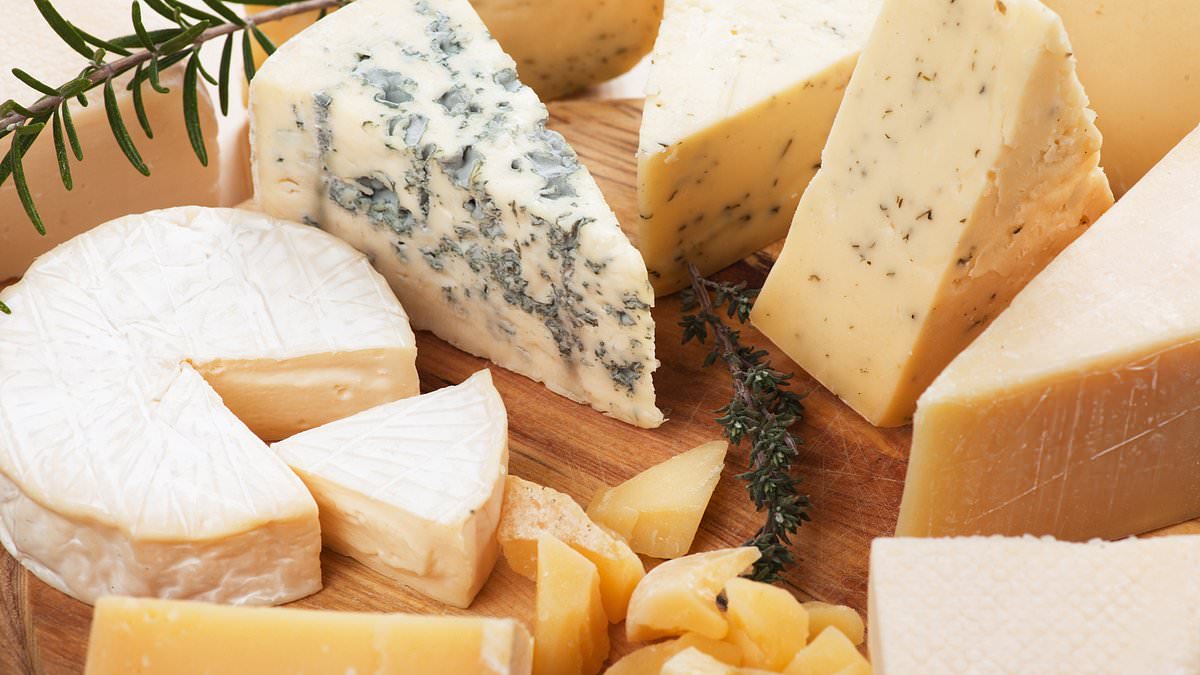
Consuming high-fat dairy products like brie and other cheeses regularly might significantly reduce the risk of developing dementia, according to new research findings.
Researchers from Sweden, who tracked the dietary habits and health of more than 27,000 middle-aged individuals, discovered that those who frequently enjoyed cheese or high-fat cream had a lower likelihood of receiving a dementia diagnosis.
The study revealed that participants who consumed around 20 grams of cream daily—equivalent to about one and a half tablespoons—were 16% less likely to develop dementia compared to those who did not consume cream at all.
Similarly, individuals who ate 50 grams of cheese each day experienced a 13% reduction in dementia risk compared to those whose intake was below 15 grams daily.
The researchers noted that cheese might be rich in nutrients that enhance brain function; however, they emphasized the need for further studies to fully understand these effects.
Despite these findings, it’s important to remember that cheese, while high in calcium and protein, is also rich in saturated fat and salt. As a result, the NHS currently advises limiting cheese consumption to about 30 grams per day.
Maintaining a healthy weight, not drinking too much alcohol and keeping blood pressure at a healthy level are recommended by health chiefs to reduce the risk of dementia.
Professor Emily Sonestedt, an expert in nutrition and public health at Lund University and study co-author, said: ‘For decades, the debate over high-fat versus low-fat diets has shaped health advice, sometimes categorising cheese an unhealthy food to limit.

Swedish researchers, who monitored the health and eating habits of over 27,000 middle-aged adults, said those who regularly ate cheese or high fat cream, scored better in cognitive tests
‘Our study found that some high-fat dairy products may actually lower the risk of dementia, challenging some long-held assumptions about fat and brain health.’
High fat cheeses are typically those which contain more than 20 per cent fat, such as cheddar, parmesan, stilton and brie.
In the fresh research, scientists asked participants to keep food diaries tracking how often they ate certain foods.
Over a follow-up of 25 years, they discovered 3,207 people developed dementia.

Everyone experiences dementia differently. Use this checklist to help you make a note of your symptoms before you talk to your GP.
After accounting for factors that could skew results, they also discovered that those who ate more high-fat cheese had a 29 per cent lower risk of vascular dementia—the second most common form after Alzheimer’s.
It is caused by reduced blood flow to the brain, damaging cells, while Alzheimer’s involves plaques and tangles of certain proteins.
There was also a lower risk of Alzheimer’s disease among those who ate more high-fat cheese, the scientists said.
But this was only found among those not carrying the APOE e4 gene variant — a genetic risk factor for Alzheimer’s disease.
Writing in the journal Neurology, they added that full-fat cream appeared to have a similar protective effect.
Those who consumed around 1.5 tablespoons a day, were 16 per cent less likely to develop dementia, compared to those who consumed none.
No such association, however, was found between dementia and low-fat cheese, cream, milk, butter or fermented milk products.
Experts, however, who were not involved in the research urged caution over the findings, arguing other confounding factors, aside from cheese, may explain the link.
Professor Naveed Sattar, an expert in cardiometabolic medicine at the University of Glasgow, said: ‘I do not believe there is a causal link here, as this is an observational study rather than a randomized controlled trial.
‘It is important to note that individuals who consumed more high-fat cheese and cream were, on average, better educated.
‘This raises the possibility that other “healthy” characteristics associated with higher education, rather than the cheese or cream itself, may explain the lower dementia rates observed.
‘We already know of several well-established and proven factors that reduce dementia risk, such as maintaining healthy blood pressure, managing weight, and preventing heart disease or stroke.
‘These interventions should remain the priority, given their strong evidence base, rather than focusing on unproven dietary associations.’
Professor Tara Spires-Jones, Director of the Centre for Discovery Brain Sciences at the University of Edinburgh, added: ‘ It is highly likely that diet and other lifestyle factors changed over the course of the study.
‘Strong evidence from across the field indicate that healthy diet, exercise, and cognitively stimulating activities — education, challenging jobs and hobbies — can boost brain resilience to diseases that cause dementia.

‘There is not strong evidence for any individual food protecting people from dementia.’
The condition now affects around one in 11 people over the age of 65 in the UK and claims 76,000 lives each year and is the UK’s biggest killer.
Costs to the UK economy, including that of the round-the-clock care many need as dementia takes hold, is an eye-watering £42 billion a year, according to the charity Alzheimer’s Society. That figure will double by 2040, it warns.
Earlier this month, the Daily Mail launched its Defeating Dementia campaign, in association with Alzheimer’s Society, to raise awareness of the disease, increase early diagnosis, boost research and improve care.
Scientists now believe around 45 per cent of all cases of dementia may be preventable or — at the very least — that the symptoms can be delayed, in some cases for many years, allowing everyone to live longer, healthier lives.