
Share this @internewscast.com
When Seren Deverell faced the daunting challenge of losing her long, beautiful hair due to intensive cancer treatment at the tender age of five, a charity provided her with a wig to help her through the ordeal.
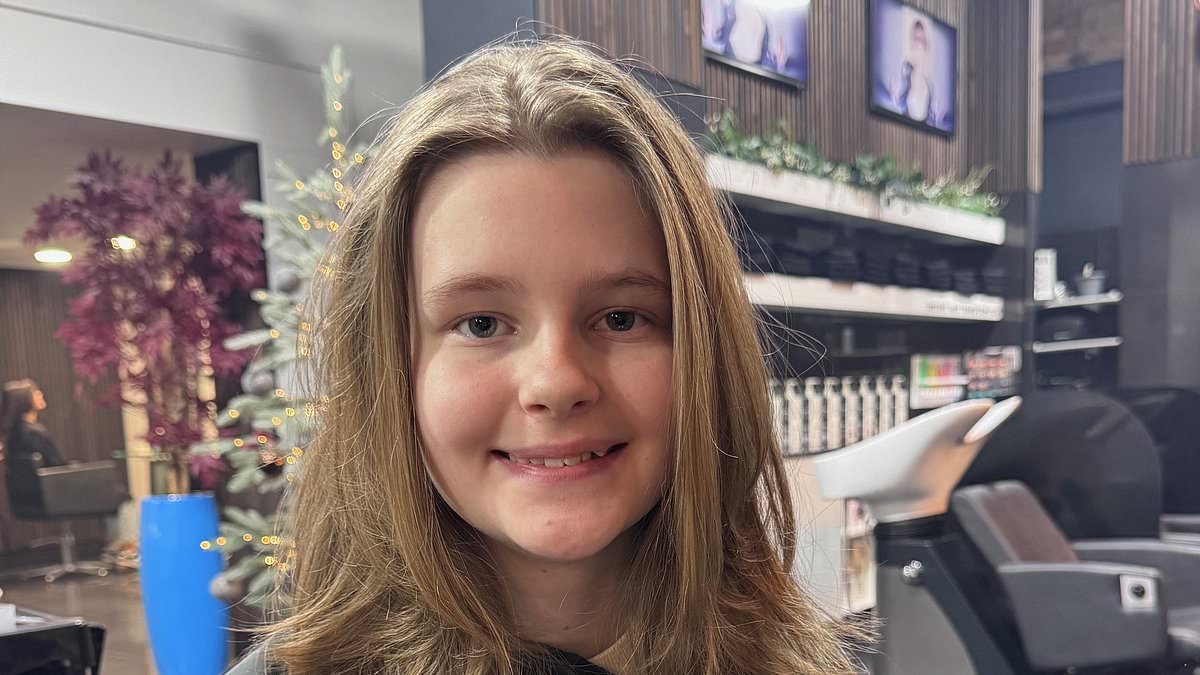
Fast forward nine years, Seren is not only cancer-free but also eager to spread the kindness that uplifted her during her toughest times. With a heart full of gratitude, she has chosen to donate her cherished hair to young cancer patients who are battling the same fight she once did.
On New Year’s Eve, the courageous 14-year-old parted with 18 inches of her brunette hair, donating it to the Little Princess Trust. This organization had given her a wig back in 2017, a gesture that had been a lifeline during her treatment.
Seren, a student in Year 9 at Castell Alun High School in Hope, North Wales, shared with the Mail: “I wanted a new look, and giving back to the charity that supported me during my hardest times just felt right.”
“Having long hair was a big part of me, and losing it was terrifying. The wig from the Little Princess Trust was crucial in restoring my confidence to face the world,” she explained.
She reflected, “It took eight years to grow my hair back, but cutting it now marks a significant milestone in my journey. It feels like I am finally closing a chapter and moving beyond cancer.”
Seren, of Broughton, near Chester, was diagnosed with Wilms tumour, a form of cancer of the kidney that affects young children, after complaining about a tummy ache one morning at breakfast back in July 2017.
Her mother, Jenny Deverell, 48, spotted a small, unusual lump under her daughter’s ribcage and on ‘mother’s instinct’ took her to the Countess of Chester Hospital to be checked out.
Seren pictured shortly before she began her treatment aged five

Seren’s mother Jenny Deverell (pictured right) had her head shaved in solidarity with her daughter

Seren underwent 34 sessions of chemotherapy which caused her long hair to fall out and made her very poorly

Seren pictured wearing the wig made of real hair which she was sent by childhood cancer charity, The Little Princess Trust

Seren’s hair was so long and thick that she was compared to Disney’s Little Mermaid character, Ariel
But she and her pipeline fitter husband, Tom, 47, never dreamed their otherwise healthy child could be seriously ill so the couple, who also have a daughter, Nia, 11, were devastated when a scan revealed several tumours on both Seren’s kidneys.
Doctors diagnosed stage five cancer, which had also spread to her right lung, and put the youngster on a brutal course of chemotherapy treatment, which they warned would result in her losing all her hair.
Mrs Deverell, who shaved her own head in support of her daughter following her diagnosis, said: ‘Seren was born with lots of hair and by the time she was three it was down to her waist.
‘It was long and thick and this lovely mid-brown colour with blonde running through it. She used to get compared to the Little Mermaid – her hair was like her trademark, so we knew it would be such a big part of her to lose.’
Not long after Seren’s diagnosis, Mrs Deverell, a healthcare manager for a pharmaceutical firm, saw an advert for a new campaign by cancer charity Macmillan who were asking for patients to share their stories about losing their hair, so got in touch.
As part of the campaign, acclaimed photographer, Rankin, photographed Seren before she began her treatment, as well as Mrs Deverell and other patients having their heads shaved to raise awareness.
Soon afterwards Seren, who by then had had her hair cut into a short bob in preparation for her treatment, underwent surgery to remove her left kidney and parts of her right kidney, before starting chemotherapy.
In total, she had 34 chemotherapy infusions to try to eliminate the cancer over the course of 12 months.

Seren spent eight years re-growing her hair after her treatment but on New Year’s Eve decided to have it chopped off so she could donate it to other young cancer sufferers


Seren with hairdresser Sam Elliot before and after the drastic chop

Sam spent two hours plaiting and cutting Seren’s hair which will be donated to The Little Princess Trust

Seren said the charity wig really helped her cope with the ‘scary’ hair loss and she wanted to help-other children going through similar treatment
The aggressive treatment left her very poorly, needing frequent hospital stays and caused her hair to fall out repeatedly.
But The Little Princess Trust, the childhood cancer charity that provides real hair wigs for youngsters battling the disease, sent her a wig to cover her bald head to help her cope with the hair loss.
Fortunately, the treatment worked and although Seren continues to be monitored every six months, for the past seven years she has been cancer free.
And, despite missing a full year of school, she managed to catch up her studies and grow back her long hair, which, until this week she had refused to have cut – other than small half-inch trims – for more than eight years.
On Wednesday Seren took the plunge and had her locks lopped by award-winning London hairdresser Sam Elliot, who is a friend of the family, at Toni and Guy, in Chester, who allowed him to borrow their local studio for the two-hour cut.
She has also set up a fundraising page for The Little Princess Trust and so far has secured more than £500 in donations.
Mrs Deverell, who works as a volunteer with the North West Children’s Cancer Operational Delivery Network, added: ‘It was really emotional. Everyone was holding their breath and, I have to admit, I was holding back the tears.
‘Sam did an amazing job and we’re also really grateful to Toni and Guy for allowing him to use the space and making this milestone really special for Seren.
‘She looks so much older with her shorter hair and having it cut feels like a real turning point for her – and all of us.
‘Seren is healthy and thriving and every day we feel truly blessed that she is cancer free and doing so well.
‘We’ve come full circle and I can’t imagine a more meaningful way to give back than by donating her hair and raising money for the charity that really helped us at the beginning of Seren’s treatment.
‘Hopefully now we can put what’s been a really difficult chapter behind us and look forward to a great 2026.’