
Share this @internewscast.com
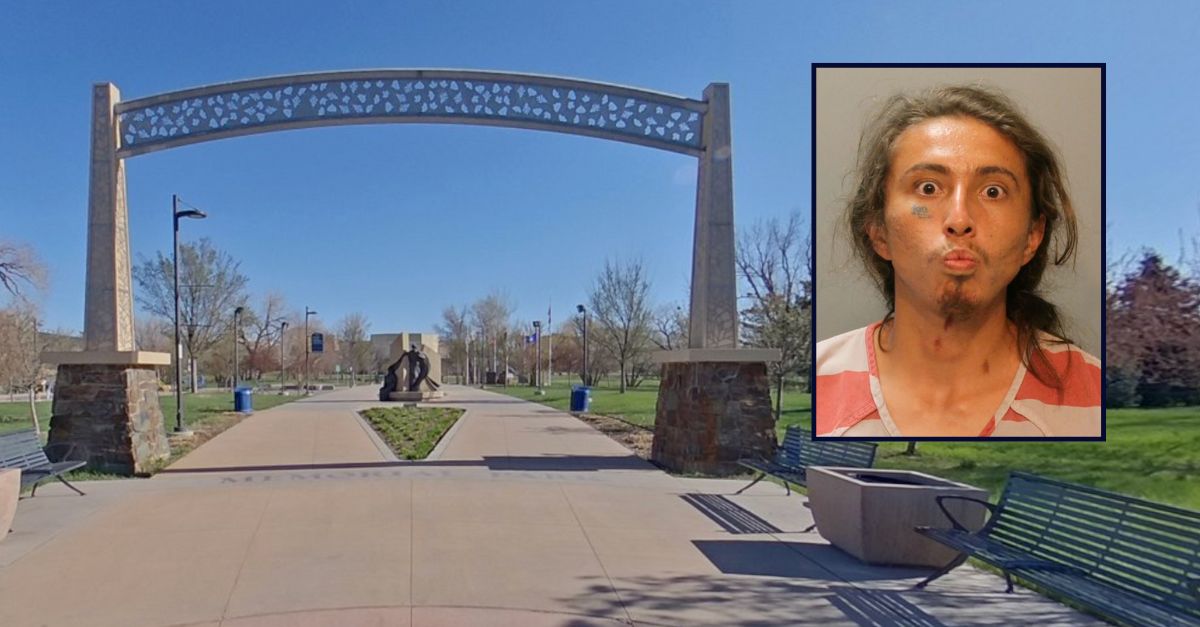
Inset: Walter Mousseau Jr. (Pennington County Jail). Background: The park where Mousseau drowned a man in Rapid City, S.D. (Rapid City Parks and Recreation).
A man from South Dakota has been sentenced to life imprisonment for the shocking daylight drowning of another individual, an event that left bystanders helplessly witnessing the tragedy unfold.
Walter Mousseau Jr., aged 30, was convicted in November 2025 for second-degree murder, with the jury finding him guilty but mentally ill.
On December 31, 2025, Seventh Judicial Circuit Court Judge Eric Kelderman handed down the mandatory life sentence, marking the conclusion of a case that has lingered in the public eye.
The case revolves around the murder of 43-year-old Sheldon Glenn, who was drowned by Mousseau in a pond during July 4th celebrations in 2022. The incident took place at Memorial Park in Rapid City, a city not far from the iconic Mount Rushmore.
Mousseau’s responsibility for the crime was clear from the start. His defense argued for a verdict of not guilty by reason of insanity, a plea that delayed the trial for years as questions about his mental competence were addressed, reported the Rapid City Journal.
During the trial, which spanned two weeks, testimonies from witnesses, law enforcement, and mental health professionals were presented. Ultimately, the jury rejected the insanity defense, aligning with the prosecution’s stance, as detailed in a courtroom report by the Journal.
“When a defendant is found legally insane, the focus shifts entirely to psychiatric treatment aimed at addressing the danger posed to society, and the law requires release once the individual is no longer considered a danger to society,” a spokesperson for the Pennington County State’s Attorney’s Office told the paper.
Embedded within the rejected insanity claim was the idea that the defendant’s “warped perception of reality” led him to genuinely believe he was acting in self-defense on the day he killed Glenn.
The state called this idea “fundamentally wrong.”
During the trial, witnesses were called to recall how onlookers begged Mousseau to let up and pull the victim to shore. Later, Mousseau told police he rejected those pleas for mercy as the other man slowly died because he did not want to “seem weak.”
“He was aware of what was happening around him, what he was doing,” prosecutor Emily Toms said. “But he chose to ignore it. The insanity defense protects those who can’t comprehend what they are doing. The defendant did, and he decided to kill Sheldon Glenn.”
Still, the defense argued there was more to it than that.
Psychiatrists testified about the defendant’s schizophrenia and a history of methamphetamine use as mitigating factors for the violence and compounding factors for the mental health argument. The way Mousseau saw the world was also explored as jurors heard he believed there were eyes in the sky that day and that Glenn could be brought back to life if only the water were removed from his body.
During sentencing, the state again rejected mental illness as an excuse.
“This was a choice to escalate violence to its highest and most irreversible level,” prosecutor Jason Thomas said, according to the Journal.
In fact, Mousseau also told police he had long intended to kill someone in self-defense if given the opportunity, the prosecutor added. He said the case was an example of a “broadly and deeply troubling pattern” of cases where people feel justified in killing one another, “based on perceived slights, disrespect, or anger.”
“Self-defense is not a license to kill,” Thomas said.
By the time of sentencing, due to Mount Rushmore State law, Mousseau’s sentencing was not really much in doubt either.
The prosecution, for its part, said the sentencing hearing was an important and necessary process for the victim’s loved ones.
“This case is about the value of a human life, Sheldon Glenn’s life,” Thomas said in a press release. “Sheldon was a person, not a name in a case file. He had relationships, history, and a future that existed until the moment the defendant decided it no longer did. That opportunity was taken away when the defendant chose to escalate a minor conflict into deadly violence. What was lost that day cannot be restored, and it will never be replaced.”