

A federal court on Tuesday ruled that drafts of a letter that was ultimately sent by the U.S. Department of Justice in order to request a citizenship question on the 2020 Census are not public records that can be accessed under the Freedom of Information Act.
In a 24-page opinion, Circuit Judge Patricia Millett was joined by Circuit Judges Neomi Rao and Gregory Katsas on a three-judge panel of the U.S. Circuit Court for the District of Columbia in rejecting efforts by the Campaign Legal Center to obtain those drafts. Millett is a Barack Obama appointee; Rao and Kansas were appointed by Donald Trump.
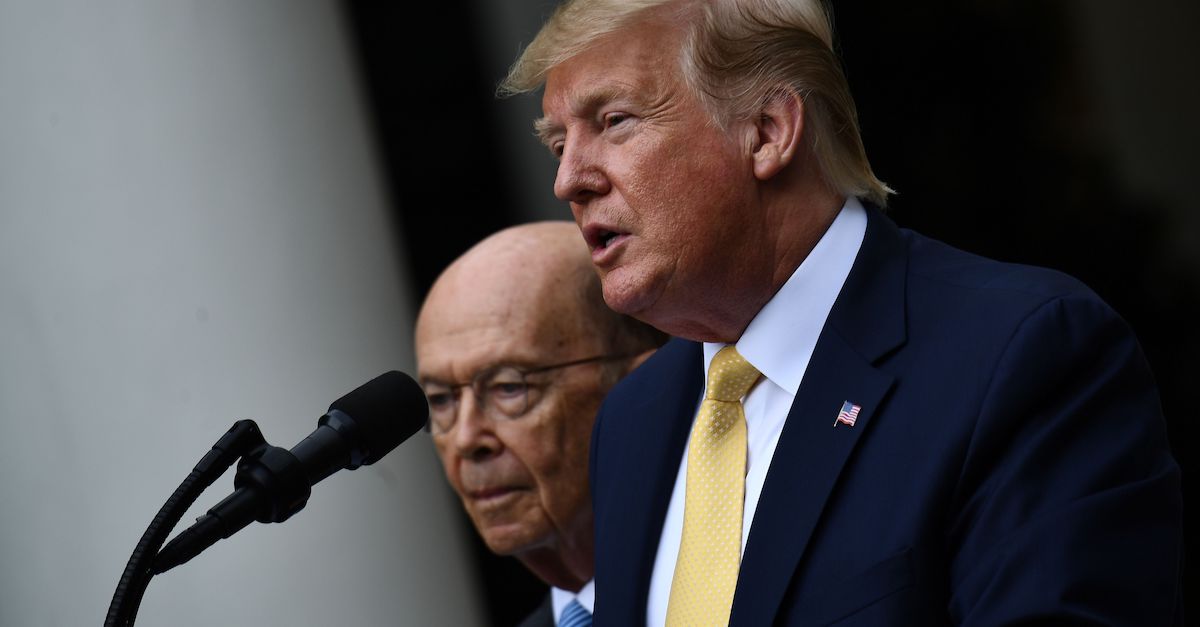
The original letter, sent by DOJ General Counsel of the Justice Management Division Arthur Gary, was used by then-commerce secretary Wilbur Ross to advocate for the inclusion of the controversial question. Soon after DOJ made their request, however, the CLC filed a FOIA request for documents that would explain how and why the DOJ came to request the citizenship question. In time, the DOJ withheld over 100 pages of responsive documents under two exemptions to the nation’s premier transparency law.
Numerous exemptions to FOIA are contained within the underlying statute. Relevant to CLC’s request were documents excluded under Exemption 5, which generally protects document that are “predecisional” and “deliberative.”
The CLC sued over the withheld documents–and some redactions contained in produced documents. In 2020, a D.C. district court granted the non-profit group access to a certain number of documents.
“[T[he court finds that the relevant decision for purposes of Exemption 5 is the one made by [then attorney general Jeff Sessions] to request the citizenship question, not the decision about the final contents of the letter,” U.S. District Judge Tanya Chutkan, an Obama appointee, wrote in a 27-page opinion. “The emails sent and the drafts written after that decision are thus not predecisional and cannot be withheld under Exemption 5.”
On appeal, the lower court was largely reversed.
“The parties do not dispute, nor could they on this record, that the documents at issue were created after [Sessions’] decision to request that the Census Bureau include a citizenship question on the Census,” Millett wrote. “So they were not predecisional as to that policy judgment.”
The court decided, upon further analysis, that the policy judgment decision doesn’t end the inquiry or the timeline in which the agency is allowed to claim they were still making their decisions.
From the opinion at length:
The policy judgments involved in the formulation of the Gary Letter went beyond the single, bottom-line decision to request a citizenship question. As precedent from this court has recognized, the substantive judgment calls made in the process of drafting and editing a formal agency document that first communicates a policy decision can themselves embody distinct policy determinations, especially when the content of that communication itself shapes and sharpens the underlying policy judgment or will have direct consequences for ongoing agency programs and policies.
“In other words, even after an agency head has set the direction of agency policy at the macro level, the subsequent work needed to define, refine, debate, and flesh out the boundaries of and justifications for that position can, upon a proper showing, also qualify as predecisional,” Millett goes on.
The opinion cites the plaintiffs’ own admission that “internal deliberations involved in drafting and defining the precise content and reach of agency arguments, as well as how most effectively to give voice to the agency position in a brief, all involve the type of substantive policy judgments that qualify as predecisional” in the context of the U.S. Solicitor General appearing before the U.S. Supreme Court.
Tuesday’s ruling wasn’t a complete loss for the group, however, as the opinion remands to the lower court to decide the question of whether or not “several redacted emails were predecisional and deliberative.”
Law&Crime reached out to CLC for comment on this story but no response was immediately forthcoming at the time of publication.
[image via BRENDAN SMIALOWSKI/AFP/Getty Images]
Have a tip we should know? [email protected]


