Share this @internewscast.com
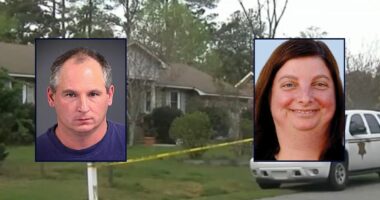
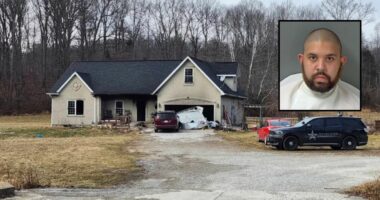
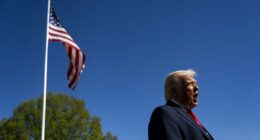
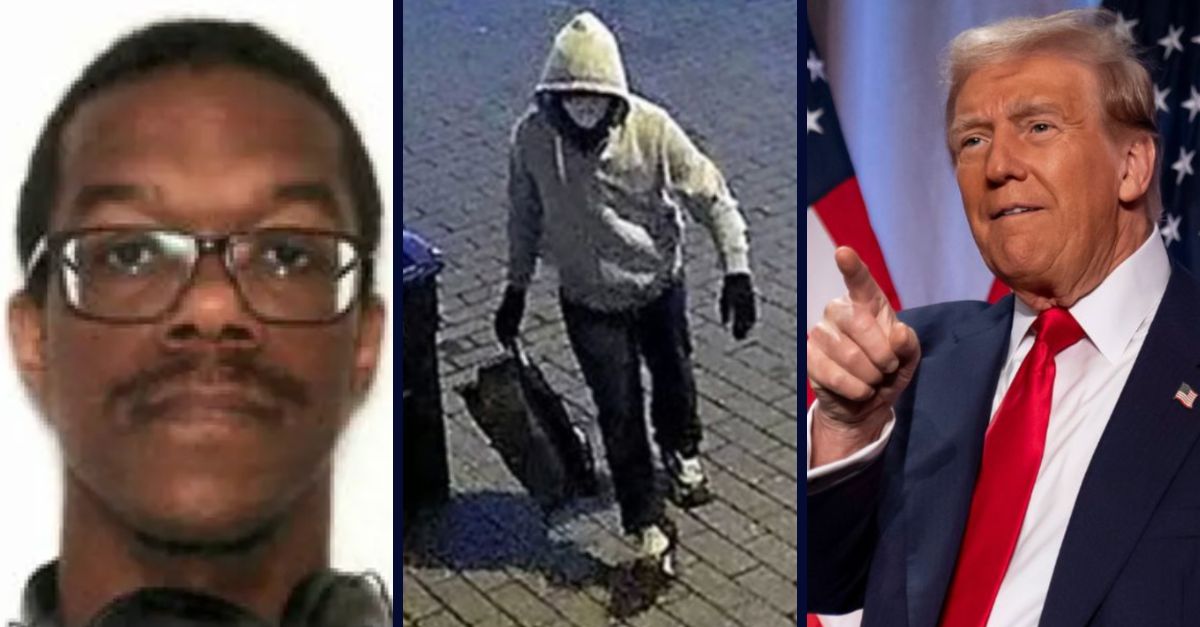
Left: Brian Cole Jr. (Department of Justice). Center: Surveillance footage allegedly shows Brian Cole Jr. walking around Washington, D.C., while placing pipe bombs at the RNC and DNC headquarters (DOJ). Right: President-elect Donald Trump arrives to speak at a meeting of the House GOP conference, Wednesday, Nov. 13, 2024, in Washington (AP Photo/Alex Brandon).
A Virginia resident, accused of placing pipe bombs near the Republican and Democratic National Committee headquarters in Washington, D.C., the day before the January 6 Capitol attack, claims his actions should be pardoned under former President Donald Trump’s January 6 pardon proclamation. This assertion has been dismissed by the Department of Justice as “unavailing” and lacking common sense.
In a memorandum filed on Friday, the DOJ countered a March motion from Brian Cole Jr., the suspect in the pipe bomb case, who is seeking to have his charges dropped under the provisions of Trump’s 2025 pardon proclamation. The DOJ argues that their consistent and reasonable interpretation of the proclamation, which they are tasked with administering, supports their stance.
Cole’s defense team contends that the charges are closely linked to the January 6 Capitol riot and thus should be dismissed. However, federal prosecutors refute this claim, pointing to the specific wording of Trump’s proclamation. It states that pardons apply solely to “offenses related to events that occurred at or near the United States Capitol on January 6, 2021,” and highlights Cole’s alleged confession.
The DOJ clarifies, “The proclamation, in its plain terms, applied only to those convicted or facing pending indictment for the specified offenses.” They argue that while the January 6 events provide relevant context, Cole’s alleged actions on January 5 do not fall under the proclamation’s purview.
Cole, aged 30 and from Woodbridge, was recently charged in the District of Columbia with transporting an explosive device across state lines with the intent to harm individuals or damage property. Additional charges include attempted malicious destruction using fire and explosive materials.
According to the prosecution, Cole allegedly traveled alone to Washington, D.C., on January 5, 2021, in his Nissan Sentra, where he planted at least two pipe bombs near the RNC and DNC headquarters. These devices were equipped with 60-minute timers but did not detonate. The DOJ reports Cole admitted to planting the bombs at night to avoid causing harm to individuals.
Federal prosecutors say Cole learned how to make the bombs by playing video games. He allegedly admitted that he is a Trump supporter but does not like “either party” and wanted to go after the RNC and DNC because he was sick of election deniers being called “conspiracy theorists” and other “bad” things.
“The defendant felt that ‘the people up top,’ including ‘people on both sides, public figures,’ should not ‘ignore people’s grievances’ or call them ‘conspiracy theorists,’ ‘bad people,’ ‘Nazis,’ or ‘fascists,” according to a DOJ memorandum that was filed in support of pretrial detention.
“Instead, ‘if people feel that their votes are like just being thrown away, then . . . at the very least someone should address it,’” Cole allegedly told federal investigators. “He explained that ‘something just snapped’ after ‘watching everything, just everything getting worse.’”
The DOJ says Cole’s pipe bombs were not discovered until approximately 1 p.m. on Jan. 6. “The FBI explosives examiner assessed that the pipe bombs were constructed using all the components necessary to explode and that they were viable explosive devices,” prosecutors say in the pretrial detention filing.
In their Friday memorandum, the DOJ says Cole’s offenses were “separate from the events of Jan. 6” as he planted explosive devices in publicly accessible locations near the RNC and DNC headquarters “under cover of darkness” on Jan. 5. “The devices did not explode as intended, they remained in plain view when daylight arrived the next day,” the DOJ says. “In the early afternoon on January 6, the bombs were discovered by a passerby and law enforcement in the area of the RNC and DNC. The events at the United States Capitol that day were only starting to unfold.”
Cole initially claimed he traveled to D.C. to show his support for Trump in the Jan. 6 protests and riots before allegedly admitting he went to plant the bombs ahead of the demonstrations and Capitol attack. “I didn’t agree with what people were doing, like just telling half the country that they – that their [votes] – that they just need to ignore it,” Cole allegedly told federal investigators. “In the defendant’s view, if people ‘feel that, you know, something as important as voting in the federal election is being tampered with, is being, you know, being – you know, relegated null and void, then, like, someone needs to speak up, right? Someone up top.”
Prosecutors note how Cole told federal agents that “something just snapped” in him after “watching everything, just everything getting worse.” They bring up how Cole allegedly told agents he wanted to do something “to the parties” because “they were in charge” and he did not like either party.
Given the focus on the political parties and not Congress, prosecutors say “it is hardly surprising” that Cole chose to target the headquarters of the DNC and RNC and not the Capitol, per the opposition filing. “Moreover, the defendant set the bombs to explode 60 minutes after placing them — i.e., on the night of Jan. 5, 2021,” the DOJ points out.
“It was only happenstance that the devices, which did not explode as intended, sat idle until the next afternoon when the events of Jan. 6 unfolded,” prosecutors conclude. “And, although the defendant was clearly motivated by then-recent events, the evidence shows that his interest in explosives and bombmaking (specifically, pipe bombs) dated back nearly a decade. In short, the defendant was upset about an issue that also motivated many who were convicted of offenses related to events that occurred at or near the United States Capitol on Jan. 6, but he chose a different target, on a different day, and acted through different means than those to whom the proclamation was directed.”