Share this @internewscast.com
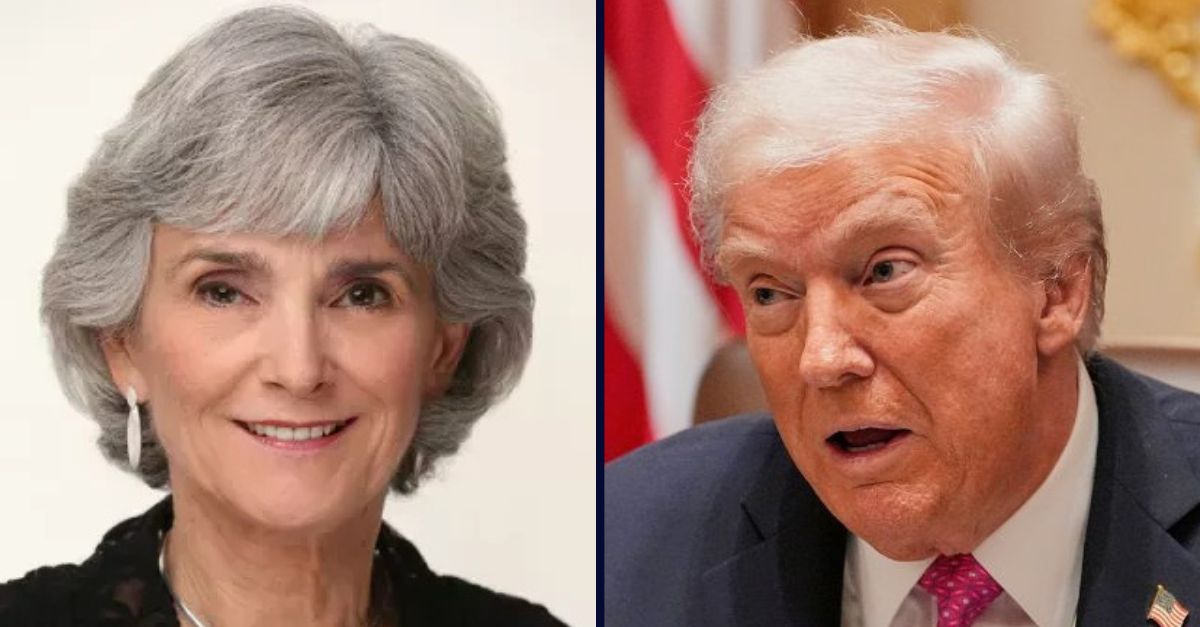
Left: U.S. District Judge Susan Illston (U.S. District Court for the Northern District of California). Right: President Donald Trump speaks in the Cabinet Room of the White House, Friday, Oct. 17, 2025, in Washington (AP Photo/Alex Brandon).
In a significant legal ruling, a federal judge has mandated the Trump administration to restore the positions of hundreds of government employees who were dismissed during the recent government shutdown. The decision marks a critical juncture in a contentious issue surrounding federal employment during budgetary standstills.
U.S. District Judge Susan Illston, presiding over the case, issued a preliminary injunction directing six federal agencies to withdraw their reduction in force (RIF) notices that were issued between October 1 and November 12. The agencies involved include the Office of Management and Budget (OMB), Office of Personnel Management (OPM), Department of State, Department of Education, General Services Administration (GSA), and the Small Business Administration (SBA).
Appointed by former President Bill Clinton, Judge Illston criticized the administration’s actions as being inconsistent with the continuing resolution passed by Congress to bring an end to the shutdown. Her ruling emphasized adherence to legislative directives.
“The defendants must comply with the stipulations of the continuing resolution,” Judge Illston stated in her detailed 27-page order. She specified that these agencies are prohibited from proceeding with any RIF actions until January 30, 2026, the duration covered by the resolution, irrespective of when the initial notices were issued. The judge also ordered the reinstatement of affected employees to their former roles, with compensation for lost wages.
The federal government had entered a shutdown on October 1, during which the Trump administration initiated layoffs of federal staff, continuing a pattern from prior months.
In response, the American Federation of Government Employees, along with other labor unions, filed a lawsuit. They sought urgent intervention from the U.S. Northern District of California, arguing that certain agencies were persisting with layoffs and failing to restore employees to their positions held before the shutdown.
Workers were upset: foreign service workers claimed they weren”t given sufficient notice of their terminations, and SBA employees fired during the shutdown received letters on Nov. 17 that their RIF notices were “formally rescinded” — only for those rescission letters to be rescinded the very next day without explanation.
The unions argued that the administration exceeded its authority, ran afoul of the Administrative Procedure Act (APA) — the statute that governs federal agency behavior — and violated the Constitution’s Appropriations Clause.
The shutdown ended on Nov. 12 when Congress passed a continuing resolution, essentially a temporary fix to fund the government until a more permanent solution can be found. As Illston recounts, “[m]any federal employees whose jobs were on the chopping block took solace: the bill contained a provision that paused further federal agency layoffs through January 30, 2026, and ordered that those federal agency employees who had been laid off during the shutdown be reinstated.”
The federal agencies have maintained that they have done nothing wrong. They say that because they submitted RIF notices before the Oct. 1 shutdown, the continuing resolution does not apply, even if the terminations were carried out during the record 43-day shutdown.
But Illston rejected this argument, finding that they displayed a “narrow reading” of the continuing resolution and its specific verbiage: “any reduction in force proposed, noticed, initiated, executed, implemented, or otherwise taken by an Executive Agency between October 1, 2025, and the date of enactment, shall have no force or effect.”
The judge also found that the federal workers established that they have been — or would be — harmed beyond merely losing their jobs.
“[T]he Court finds that what is at stake is more than the potential or temporary loss of income of one individual employee. In particular, the loss of health insurance coverage poses a risk that cannot be retroactively repaired through backpay,” she wrote, pointing to a fired employee who now has no health insurance for her and her son.
“Other affected employees describe being in treatment for cancer, having chronic medical conditions, and foregoing treatment for themselves and their babies due to lack of insurance coverage,” the judge continued. “The declarations also describe employees’ challenges in a difficult job market or re-starting careers after decades in government service,” she said, pointing to specific fired employees’ stories that “demonstrate the harms RIF’d workers face.”
In addition to being barred from “taking any action to implement, carry out, or effectuate” RIFs through Jan. 30, 2026, the Trump administration must rescind the notices “implemented or executed” during the shutdown and “give individual notice of this injunction” to relevant employees.
Illston has delayed the injunction from taking effect until Dec. 23 to give the administration time to consider appealing her ruling to a higher court. She set a status conference for Jan. 23, 2026.