
While some may find videos of their arrests entertaining, the beliefs can be far more dangerous than they might seem.
The movement has received a significant influx of followers following the COVID-19 pandemic as people retaliated against lockdowns, mask mandates and vaccination requirements.
So what exactly is a sovereign citizen? Here’s what you need to know.
What do sovereign citizens believe?
Sovereign citizens â or “SovCits” â is a term for people who hold extreme anti-government views, essentially believing laws and regulations don’t apply to them.
The idea is that, in the same way a country is a sovereign nation unconstrained by other nations’ laws, a person is themselves a sovereign unconstrained by the laws of a government.
“It’s a spectrum,” David Heilpern, dean of law at Southern Cross University, told Today Extra.
“On the one hand, there are those who want to challenge the law by raising old doctrine common law doctrines and concepts of sovereignty. That’s probably a positive thing.
“At the other end, there are those who simply refuse to comply with laws that apply to you and I. They see themselves as separate and different. They say they don’t consent to the jurisdiction.
“And by their own declaration, they’re not bound by laws.”
The exact reasoning behind this varies within the movement â no surprise given its uncentralised nature â but the idea of false governments is a common one for sovereign citizens around the globe.
One prevalent thought is Redemption Theory, which asserts the US (which is where the movement began) went bankrupt in 1933 when it abandoned the gold standard. It claims the government then began using its citizens as collateral in agreements with other nations.
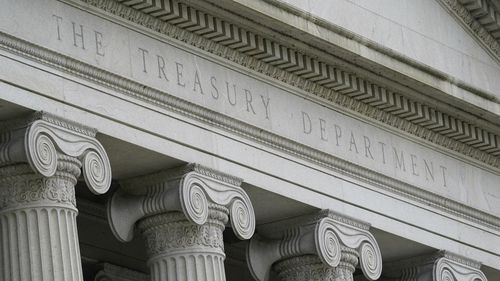
Redemption Theorists go on to claim each person, therefore, has a monetary value â up to millions of dollars â stored in a secret US Treasury Department account listed under someone else’s name. 
Some followers will also avoid entering into “contracts” with the government.
It’s why many of them are pulled over for driving without a licence or vehicle registration â or for just failing to produce such documents or provide their name and address when pulled over â and why you’ll hear phrases like “I do not consent” during exchanges between sovereign citizens and police officers.
So are they actually exempt from taxation and able to drive without a licence?
No. Just like anyone else, sovereign citizens must abide by the laws of the country they live in, including Australia.
“I was a magistrate for 22 years I saw a lot of these sovereign citizen arguments,” Heilpern said.
“They hold no weight whatsoever. It’s legal gobbledygook.”
That means they need to have a driver’s licence, pay their taxes, register their vehicle, and otherwise obey the law.
In a 2021 case in Queensland, a sovereign citizen charged with two drug offences tried to argue that the charges didn’t apply to him.Â
Judge Glen Cash gave his arguments â and that of the entire movement â a scathing appraisal.
“It is apparent that the applicant is one of a group of people who for some years have attempted, universally without success, to avoid the operation of laws with which they do not wish to comply…
“Recognising that the arguments presented by [such] litigants are largely incoherent, if not incomprehensible, courts have been increasingly willing to dismiss their claims summarily.”
So no, sovereign citizens are certainly not exempt from the law.
Where did the movement start and why can it be dangerous?Â
The sovereign citizen movement arose in the 1970s in America following the founding of anti-government group Posse Comitatus by William Porter Gale â a group which had “racist and antisemitic” origins, according to the Southern Poverty Law Centre, a social justice organisation in the US.
The movement rose in prominence and spread to different countries, including Australia, in the following decades, and has since received a notable boost during the pandemic.
“It’s fair to say that one of the recalls of COVID was a disillusionment by a significant proportion of the public with government and with health, with law, with their connection with society,” Heilpern said.
“They’ve gone looking elsewhere for justification for their views of ‘these laws don’t apply to me’.”
While it’s not necessarily inherently violent, extremists within the movement have committed violent crimes.Â
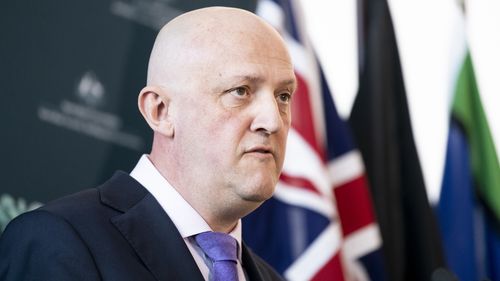
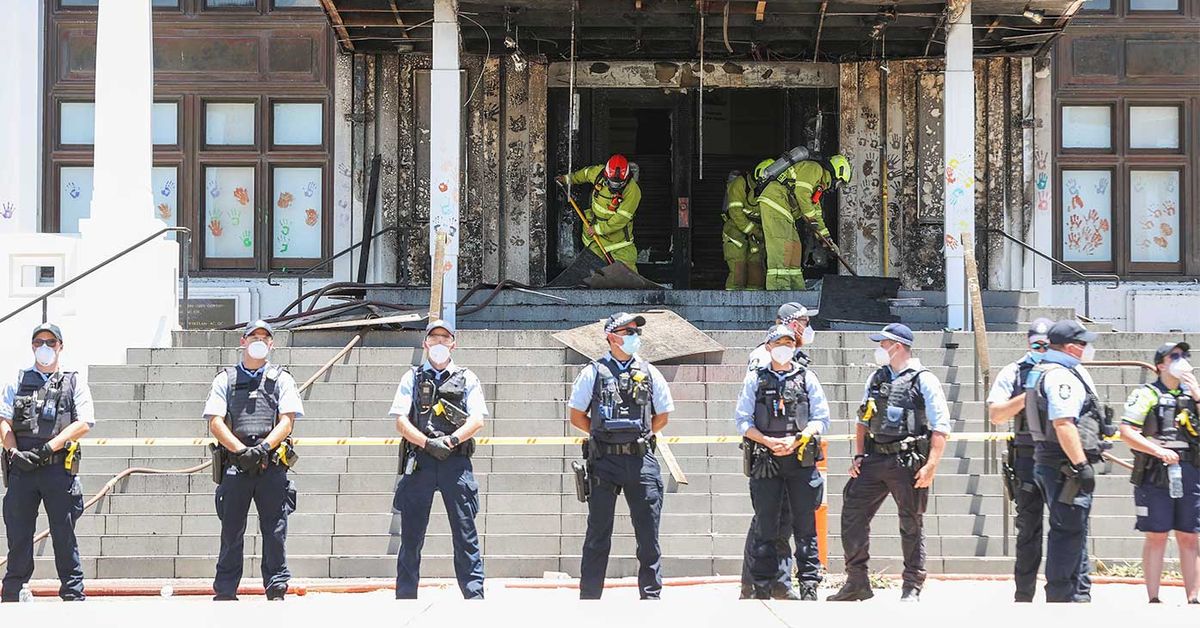
“Some of the alleged violent acts at the recent Old Parliament House protest are a case in point. The individuals involved were driven by a diverse range of grievances, including anti-vaccination agendas, conspiracy theories and anti-government sovereign citizen beliefs.”
Burgess isn’t the only top intelligence official to warn of the dangers of such beliefs.
Back in 2011, the FBI’s Counterterrorism Analysis Section stated it “considers sovereign-citizen extremists as comprising a domestic terrorist movement”, and it remains a serious issue today.
“We know there’s been many cases of violence from sovereign citizens in the US including shootings of police,” political sociologist and Associate Professor from Deakin University Dr Josh Roose said in 2023.
“About 15 per cent of domestic terrorism load, according to the FBI, in the US over the last five years was sovereign citizens.”
It’s also reached Australia with deadly consequences.
Previously, the Wieambilla shooting in December 2022 â the ambush killing of Queensland police constables Matthew Arnold and Rachel McCrow, and neighbour Alan Dare, by Gareth, Stacey and Nathaniel Train â was linked to sovereign citizens.
Gareth’s internet behaviour unearthed after the shootings showed him promoting anti-government and anti-law enforcement ideologies.
“At that more extreme end, (the beliefs) can end up being pretty dangerous as we see in … the connections between those involved with the sovereign citizen or pseudo law movement and horrible incidents like we saw in Queensland involving police late last year,” Heilpern said.
Notable extremist sovereign citizens from the US include Terry Nichols, who helped plan the Oklahoma City bombing, and Jerry R. Kane Jr and 16-year-old Joseph T. Kane, a father-son pair who killed two police officers in a traffic stop in Arkansas in 2010.

For the most part, though, the movement has a legal focus, with followers using certain phrases in an attempt to demonstrate laws don’t apply to them, and even conducting what’s known as “paper terrorism” â filing bogus, frivolous and often excessive legal paperwork to harass and intimidate someone.
“They bombard big firms with pseudo-legal paperwork, file bogus legal claims, they talk about arresting the police or the governor general or storming parliament and taking over,” Roose said.
“So there’s different dimensions. It is a significant concern, as we’ve seen… up in Queensland.”