

In a fascinating blend of archaeology and technology, researchers at the ancient site of Pompeii have employed artificial intelligence to recreate the visage of one of the approximately 2,000 individuals who perished in the catastrophic volcanic eruption that obliterated the Roman city.
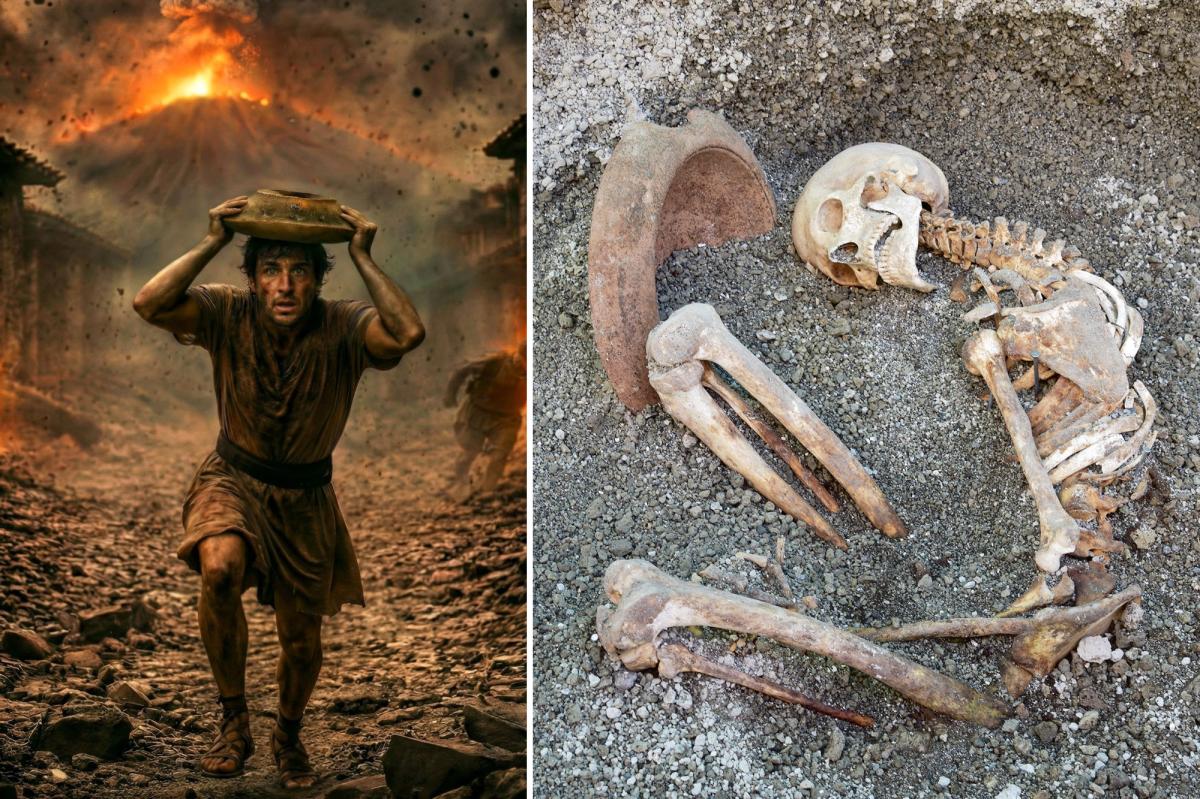
Unveiled by the Pompeii Archaeological Park on Monday, the digital reconstruction presents the image of a man desperately using a bowl-like object to shield his head as he tries to escape the fiery onslaught of Mount Vesuvius’s eruption in AD 79, which left the city in ashes.
This innovative reconstruction is based on one of two sets of human remains discovered by archaeologists beyond the ancient city’s walls in Italy.
Now a UNESCO World Heritage Site, Pompeii was rediscovered in the 18th century. The city boasts the remarkably well-preserved remnants of buildings and people, encapsulated in time by the layers of ash and pumice that engulfed them during the eruption.
Archaeologists unearthed the historical male remains alongside a terracotta mortar, which they suggest was used as a makeshift shield against the debris raining down during the disaster.
The recreated portrait aligns with historical descriptions, such as those by the Roman author Pliny the Younger, who wrote of Pompeii’s inhabitants resorting to various objects to fend off the hazardous ash and debris.
Archeologists believe the man in the digital portrait died early in the two-day disaster during a heavy fall of volcanic debris.
The man was also found alongside an oil lamp, a small iron ring and 10 bronze coins â offering astonishing insight into his final moments before the catastrophe, as well as what life in Pompeii was like some 2,000 years ago.
The digital reconstruction was created using AI and photo-editing software designed to translate skeletal and archaeological data into impressive human likeness.
âThe vastness of archaeological data is now such that only with the help of artificial intelligence will we be able to adequately protect and enhance them,â Pompeii park director Gabriel Zuchtriegel said in a statement.
âIf used well, AI can contribute to a renewal of classical studies.â
Pompeii Archaeological Park and the University of Padua worked in collaboration to generate the AI reconstruction as part of their ongoing project to make archeological research more accessible to the public.
The project aims to give the public greater access to more emotionally engaging archeological discoveries while maintaining a scientific foundation, researchers said.
With Post wires