
The term “reshoots” often stirs up dramatic headlines and a sense of unease in the film industry. Yet, at times, reshoots are simply a routine component of the creative process. An actor might not have been available during the main filming schedule, or perhaps a previously inaccessible location later opens up. Occasionally, a better storyline emerges during editing, necessitating reshoots to bring this new vision to life.
While many successful films have benefitted from strategic reshoots, in the world of big-budget releases, these additional shoots often carry a more cynical purpose. Studios might employ them to reshape a movie to align with current trends they perceive as marketable. There are also instances where reshoots aim to “enhance” a film, yet the result still falls flat.
The most disappointing cases demonstrate that even costly reshoots can’t rescue a poorly conceived movie. These projects undergo extensive reshoots, dramatically altering their initial vision, but still fail to achieve artistic success, highlighting that reshoots are not a guaranteed fix for a film’s woes.
Take “X-Men: The Last Stand,” which mishandled the “Dark Phoenix” storyline. One might expect that the 2019 attempt to revisit this arc, “Dark Phoenix,” would have learned from past mistakes. However, Simon Kinberg’s directorial debut turned into a debacle. Initially, the film’s alien antagonists were supposed to be the Skrulls, but they were transformed into the D’Bari. This was just one of the numerous significant changes during extensive reshoots in 2018.
During these reshoots, several character-driven elements from Kinberg’s original script were reduced, especially the focus on Cyclops and Jean Grey’s evolving relationship following her acquisition of superpowers. Furthermore, the planned finale was scrapped over fears of it being too similar to other films. Rather than a film with a clear vision, “Dark Phoenix” became a project in constant turmoil. It’s no surprise that Jessica Chastain was unsure of her villainous role.
Dark Phoenix
The end result was a commercial and critical flop for “Dark Phoenix.” The chaotic nature of the reshoots contributed to its failure, making it one of the most spectacular superhero flops. Not even the cosmic powers of Dark Phoenix could have saved a film so fraught with issues.
The reshoots also cut down on several character-based elements in Kinberg’s original “Dark Phoenix” script, particularly a heavier emphasis on Cyclops and Jean Grey’s relationship transforming once the latter character gets her superpowers. Meanwhile, initial plans for the finale were jettisoned due to concerns that they were too derivative. Rather than being a confidently conceived motion picture, “Dark Phoenix’s” reshoots reflected a movie that was constantly in flux. No wonder Jessica Chastain was never sure which villain she was playing.
All of this was a precursor to “Dark Phoenix” bombing at the box office and scoring terrible reviews. The disjointedness resulting from all those reshoots was overwhelming, making it no wonder that “Dark Phoenix” became one of the superhero movies that bombed the hardest. Not even the cosmic-based Dark Phoenix powers could’ve saved a movie so tortured.
Book of Shadows: Blair Witch 2
Trying to make a sequel to “The Blair Witch Project,” especially a little over a year after the sensational 1999 original, was always a dangerous idea. Trying to replicate the success of a horror movie that relied so heavily on the element of surprise was nothing short of a fool’s errand. Writer/director Joe Berlinger (who penned the script with Dick Beebe) tried to do just that with 2000’s “Book of Shadows: Blair Witch 2.” Eschewing the first film’s found-footage conceit and primary cast of characters, “Blair Witch 2” tried something different while maintaining its predecessor’s chilling quality.
Unfortunately, Berlinger’s grand hopes for the movie were dashed in a nightmarish post-production phase that saw Artisan Entertainment executives demand extensive reshoots take place. Despite there being a tight turnaround to get the horror film out for October 2000, Artisan higher-ups wanted significantly greater displays of extreme horror. Out went “Blair Witch 2’s” measured tones, in outsized, bloody attempts to wring scares out of moviegoers.
Undergoing lengthy last-minute reshoots did not turn this into a scary cinema sensation. It instead amplified the reality that making “Book of Shadows: Blair Witch 2’s” was a doomed concept from the start.
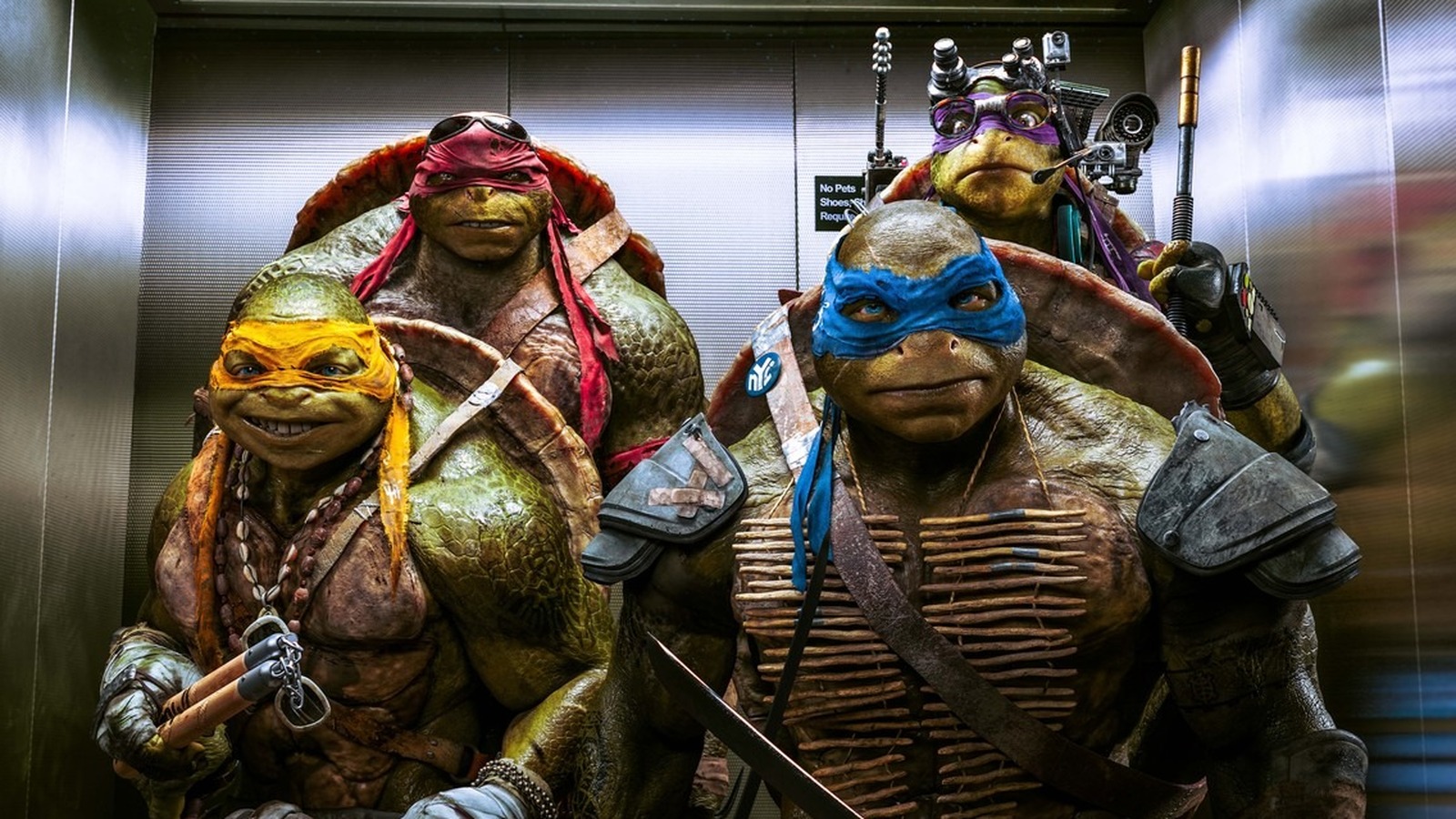
Teenage Mutant Ninja Turtles (2014)
One of the first set photos from 2014’s “Teenage Mutant Ninja Turtles” that caught people’s eyes was an image of one of the titular reptiles in a gigantic trench coat out and about with Megan Fox’s April O’Neil. A clear homage to the outfits donned by the turtles in the 1987 cartoon, it was nowhere to be seen in the final cut. This was one of many high-profile scenes tossed out or heavily tweaked during the tortured creation of 2014’s “Teenage Mutant Ninja Turtles.”
One of the major changes brought about by these reshoots was William Fichtner’s role. Originally, the performer would’ve played The Shredder, a piece of casting that proved controversial. Fichtner himself confirmed that late-in-the-game reshoots saw his character, Eric Sacks, becoming a separate entity from The Shredder. Tohoru Masamune now played the villain, a move Fichtner was unfazed by, though it required abrupt reshoots that left the final film disjointed. After all, Eric Sacks now didn’t have a purpose in the story.
Eventually, this “Ninja Turtles” movie secured some of the best box office numbers and worst reviews in the franchise’s history. A prime recurring complaint was the scattered storytelling and lack a distinctive personality. Not even featuring a towering turtle in a trench coat could’ve saved a production this messy.
Justice League
Few movies in history went through such drastic and infamous reshoots as “Justice League.” They were lengthy and expensive, inspiring several distracting changes to the final product. New director Joss Whedon brought in a radically new tone and visual aesthetic that proved a major departure from everything original director Zack Snyder envisioned. Major supporting characters were dropped while comedic set pieces, like Barry Allen/The Flash (Ezra Miller) saving a Russian family in the finale, were added.
To boot, Whedon was accused of engaging in inappropriate behavior with cast members Ray Fisher and Gal Gadot. All this chaos and toxicity was, in the eyes of Warner Bros. executives, all in the name of making a more “marketable” product than 2016’s “Batman v Superman: Dawn of Justice.” What the studio ended up getting was a film where Henry Cavill’s upper lip was coated in CG. In the end, no reshoots could turn this into a masterpiece or even an enjoyable popcorn-muncher.
Instead, critics were saying largely mixed to outright negative things about “Justice League’s” theatrical cut. Unlike most of the films on this list, though, something resembling the original vision of this tentpole did eventually get released thanks to “Zack Snyder’s Justice League,” providing a happy ending to an otherwise tortured saga.
Captain America: Brave New World

Eli Adé/Disney
Marvel Studios has been open about how prominently reshoots factor into its creative process. Sometimes, this endeavor can deliver important and even essential Marvel Cinematic Universe scenes that were never supposed to happen. Various Phase Four and Five Marvel Cinematic Universe movies, though, leaned too hard on reshoots to compensate for their half-baked concepts. For proof of this, look no further than “Captain America: Brave New World,” a movie that went through the wringer during additional principal photography.
The film’s reshoot process was massive and included jettisoning entire core concepts from the original version, like the initial incarnation of the Serpent Society. To boot, the first visual approach to “Brave New World’s” main baddie, Samuel Sterns (Tim Blake Nelson), was thrown out in favor of a new CG-leaning design. Giancarlo Esposito was also added as new villain Sidewinder. “Brave New World” was clearly uncertain what a Sam Wilson-led “Captain America” outing should look like.
No lengthy shoot, though, helped “Brave New World” avoid a mixed critical reception. There was especially criticism directed at the obvious seams in the final product. The MCU’s reliance on reshoots once again capsized one of its 2020s movies.


