
Share this @internewscast.com
Science fiction films often venture into the realm of future predictions, painting vivid scenarios ranging from dystopian wastelands to futuristic trends. These cinematic excursions into what might lie ahead offer a fascinating look back at their accuracy—or lack thereof—as we progress through our own timeline. While we haven’t quite achieved the era of hoverboards or artificial humans, we find ourselves in a digital age rife with online debates and connectivity issues.
Interestingly, “The Simpsons” has outperformed many sci-fi predictions, often eerily foreseeing the future more accurately than some films. This uncanny foresight might hint at a time-traveling genius hidden within the team of writers. Let’s explore some science fiction classics set in times we have since surpassed, comparing their speculative visions with our lived reality.
To any billionaires reading this: please note, this isn’t a rallying cry for hastening societal collapse. We are already navigating enough challenges without needing to draw inspiration from cinematic catastrophes. So, let’s proceed with caution.
Ridley Scott’s iconic “Blade Runner” remains a benchmark in science fiction cinema, depicting a world dominated by unrestrained tech giants and rampant capitalism. In this narrative, synthetic beings known as replicants live among humans, and Harrison Ford’s character, Rick Deckard, is tasked with retiring them. The film explores the challenge of distinguishing replicants from humans via an elusive empathy test, which is supposed to reveal their true nature.
Set in 2019, “Blade Runner” missed the mark on replicants, but it hit unsettlingly close to home regarding the unchecked power of Big Tech. In the film’s universe, profit often overshadows ethical considerations, a scenario not far from our current reality where innovation occasionally outpaces responsibility in a relentless pursuit of progress.
Blade Runner
A central theme of “Blade Runner” is the exploration of humanity itself, posing philosophical questions rather than scientific ones. It provokes us to contemplate how many people today might falter in an empathy test—a reflection on our society’s compassion that echoes Roy Batty’s poignant lament about lost moments, “like tears in rain.”
“Blade Runner” takes place in 2019. While there weren’t any replicants running around then (or now), there are some parts of this film that feel eerie in retrospect. It nails the fact that Big Tech would run the world in a reckless fashion, valuing profit over people. No one stops to consider if something is a good idea or what the consequences may be, as everyone charges ahead in a comical race to the bottom.
A major theme in “Blade Runner” revolves around what it means to be human. It’s more of a philosophical discussion than a scientific one, but it forces us to ponder a very important question: How many “real” human beings would fail empathy tests nowadays? Has this ability become nothing more than some “tears in the rain,” to quote Rutger Hauer’s forlorn antihero, Roy Batty?
Back to the Future Part II
In “Back the Future Part II,” Doc Brown (Christopher Lloyd) convinces Marty McFly (Michael J. Fox) and his girlfriend, Jennifer Parker (Elisabeth Shue), to go to 2015 to prevent their eventual son, Marty Jr., from committing a crime that threatens to ruin the good McFly name. So, off into the time-traveling DeLorean they go to change the future!
What Marty finds in 2015 was probably everyone’s wildest dream when “Back to the Future Part II” was released in 1989. From hoverboards to power-lace shoes, no lawyers, hydrating pizzas, and the release of “Jaws 19,” it looked like quite the time to be alive. Honestly, who couldn’t do with a hoverboard, especially considering the ever-shifting price of gas? Also, that hydrating pizza looks like a swell (and compact) idea, though one wonders what type of chemicals and preservatives might be in it.
As discovered, however, much of how “Back to the Future Part II” imagined 2015 didn’t come to fruition. Hoverboards aren’t readily available, lawyers are still around, and we haven’t even received “Jaws 5” yet (arguably, the greatest crime in cinema). Having said that, the movie predicted the prevalence of biometrics, as well as the regular use of video calls. Now, if only fashion could become as exquisite as it was here. The movie is still peak chic.
Escape from New York
There’s a saying (or at least there should be one): “Put on a John Carpenter movie, good or bad, and you’ll never go wrong.” This holds true for 1981’s “Escape from New York.” The sci-fi action film takes place in 1997, as Manhattan becomes a maximum security prison once crime spirals out of control. After President John Harker (Donald Pleasance) lands in the city following a terrorist coup of Air Force One, it’s up to the eye-patch-wearing tough guy Snake Plissken (Kurt Russell) to be a bad enough dude to rescue the president.
Manhattan didn’t become a prison in 1997, although anyone who is stuck in city traffic might be tempted to tell you that prison feels like a better option. The world never turned out quite like Carpenter imagined, however. Sure, lawlessness still happens in Manhattan — much like in any major city in the world — but no one has effectively cordoned off the city and turned it into no man’s land. Yet.
“Escape from New York” received a sequel in 1996’s “Escape from L.A.,” which takes place in the year 2013. This time, it centers on a plot device known as the Sword of Damocles, which is a system capable of shutting down electronic devices around the world. While an electronic magnetic pulse (EMP) is able to do this, it’s far more likely that Instagram will go down thanks to the latest Cloudflare outage.
Terminator Salvation
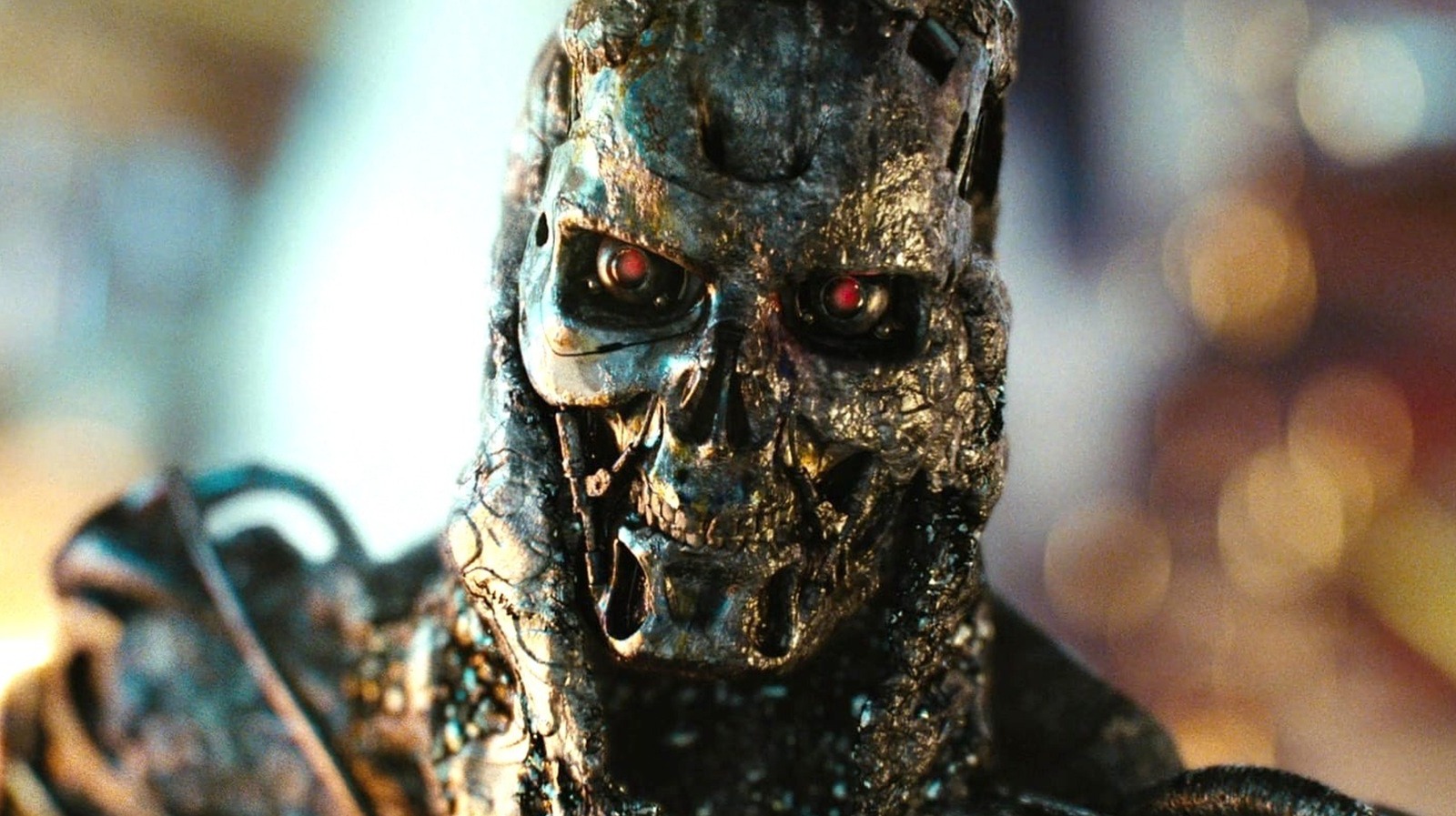
The complicated “Terminator” franchise timeline makes very little sense. It’s all over the place, with the proverbial Judgement Day shifting its schedule around more times than the doomsday picnic on “Parks on Rec.” In 2009’s “Terminator Salvation,” Judgement Day kicks off in 2003 and the machines take over the world. However, the actual setting for the movie is in 2018, as John Connor (Christian Bale) leads the Resistance in the bitter war against Skynet.
There was no machine apocalypse in 2018. Right now, the toaster still loves us and hasn’t tried to maim anybody for daring to scream at it. However, post-2020 has seen a dramatic acceleration in the development and usage of artificial intelligence — to a degree that’s frightening everyone over what the future holds in terms of both work and life.
To make matters even more concerning, these AI systems are reaching a point where they refuse to shut down, or follow instructions from the people who supposedly control them. As per Live Science, some OpenAI models aren’t playing nice. Maybe in typical “Terminator” fashion, “Salvation” flubbed the timeline and the apocalypse was never meant to be in full swing in 2018, but it’s still on the way. Does anybody have John Connor’s Instagram handle?
Johnny Mnemonic
William Gibson might not be Nostradamus, but the author has nailed a lot about humanity’s complex relationship with technology. In 1995’s “Johnny Mnemonic,” an adaptation of Gibson’s short story, the world lives in a highly connected virtual reality that results in a strange disease called Nerve Attenuation Syndrome (NAS) — essentially, information overload for people. The film sees Keanu Reeves play a data courier named Johnny who transports sensitive data in a brain implant for his clients. Johnny finds himself in a perilous situation when one assignment contains too much data, and he needs to offload it before it’s too late.
The events of “Johnny Mnemonic” take place in 2021. While neural implants have been around for some time, humanity is nowhere near acting like a walking hard drive to transport confidential data for others. The brain has the capacity to store info (and the classic “sneakernet” method is still available, where physical drives are smuggled by hand), but the owner is fully aware of what’s entering their mind.
Where “Johnny Mnemonic” gets it right, though, is in the concept. The Internet offers many benefits to society, but it’s also created a problem where people feel the need to be always online. A lot of individuals struggle to disconnect, leading to a number of persisting issues. As a society, we are bombarded by way too much information; this results in a sensory overload that could end up having a detrimental effect on us. Basically, turn off your phone for your own good.
The Island
Michael Bay’s “The Island” has a most wicked premise (even if it was stolen from 1979’s “Parts: The Clonus Horror). In 2019, a group of people stay together in a compound, ostensibly because the outside world has become uninhabitable. There’s a glimmer of hope in the distance: each week, one of them gets chosen to go off and live happily ever after on another island. Well, that’s what they think, as Lincoln Six Echo (Ewan McGregor) and Jordan Two Delta (Scarlett Johansson) discover they’re actually clones who are bred for organ harvesting (and other purposes) by the wealthy originals who participate in this controversial program.
Put aside all the trademark Bayhem — i.e., excessive explosions and over-the-top action — because “The Island” dishes up some serious food for thought in terms of morality and ethics. If those with means had the chance, would they clone themselves and unlock the ability to prolong their lives by exploiting these clones? You bet they would.
The good news is that this hasn’t happened … yet. While there are scientists exploring the possibilities and a primate was successfully cloned in 2020, it’s still not on the cards for humanity. If it was, the usual suspects will be blabbing about how they’ll be first in line. As of right now, don’t sweat the possibilities.
Rollerball
Norman Jewison’s “Rollerball” — a great sci-fi movie that’s for fans of “The Running Man” — was released in 1975, but it explored what society might look like in 2018. Here, big corporations rule the world and don’t like dissenters. The way in which they keep the population happy and in line is by giving them violent entertainment — like the titular Rollerball. After all, nothing says bliss more than watching other people pummel each other in front of bloodthirsty crowds. It worked for the Romans.
To a degree, “Rollerball” hit the nail on the head in terms of what appeals to society. Consider: modern-day audiences love to watch brutal sports. This is why boxing and MMA continue to be lucrative avenues for advertisers, competitors, and promotions. In December 2025, nearly 33 million people watched Anthony Joshua change Jake Paul’s chin from a solid into a liquid. That’s a hint.
In addition, “Rollerball” predicted how sportswashing would become more prevalent in our future. So many countries play sleight-of-hand tricks with the world, offering them sporting spectacles to divert the attention away from their real issues. It continues to be a controversial practice, but there’s no disputing that it happens.
Freejack
In Geoff Murphy’s “Freejack,” the elite from 2009 discover they can live forever by electronically transferring their consciousness into other bodies. However, there’s a problem: most of society isn’t healthy. The solution is to hire time-travelers to go back to the past and snatch people before their deaths, bringing them into the future for the procedure. In the movie, racecar driver Alex Furlong (Emilio Estevez) gets pulled into the future, but he manages to end up on the run rather than serve as a host body.
Unfortunately, time travel still doesn’t exist — unless someone counts looking over their Facebook memories. No one has figured out a way to move forward or backward through time, so we are all doomed to live in the current timeline. No exceptions.
In terms of transferring human consciousness, that isn’t happening anytime soon, either. While there are people paying lots of money to research firms to try and digitize and upload their brains into the cloud in the future, no one knows how to upload consciousness yet. The reason for this is simple: it’s impossible to define consciousness, much less every nuance that makes someone human.
The 6th Day
In the world of sci-fi, Arnold Schwarzenegger is happy to keep going toe-to-toe with the Predators, but this isn’t his only rodeo in the genre. In 2000’s “The 6th Day,” directed by Roger Spottiswoode, Schwarzenegger’s Adam Gibson returns home to find a clone in his place. Keep in mind that this all takes place in a version of 2015 where animal cloning is allowed but human cloning is still illegal. Ultimately, Adam is pulled into a tangled web, where he needs to get to the bottom of what’s going on while also keeping his family out of trouble.
As with any story dealing with replicated people, “The 6th Day” opens up the conversation about the ethics and regulations around human cloning. It addresses topics such as consent, as well as what a clone can be used to do — for better or worse.
While human cloning isn’t happening right now, there is the very real issue of deepfakes and artificial intelligence being used to besmirch reputations, commit fraud, and outright lie about facts. It’s becoming difficult to discern what’s real and what isn’t — which is also one of the sub-themes tackled in “The 6th Day.” There’s a slippery slope between technological advancement and careless exploitation, and while these developments might seem brilliant on the surface level, one wonders what’s being done to prevent bad actors from wreaking havoc.
On a positive note, the self-driving cars from the movie are real. Mostly.
Daybreakers
Lionsgate
The Spierig Brothers’ “Daybreakers” is an underrated sci-film from the 2010s that deserves another watch. It’s a vampire movie that also introduces a novel concept about what happens when the human blood supply goes short and vampires are left parched. In 2019, a contaminated vampire bat transforms most of the world into vampires. With fewer humans around to feed from, the vampire society needs to search for those rare ones left, study their blood, and figure out an alternative before catastrophe strikes. Not everyone is about do what’s right for the greater good, though.
While humans didn’t turn into vampires in 2019, it’s widely believed that bats (legendarily associated with vampires) played a role in how COVID-19 was spread, which was first reported in, yes, 2019. That’s a little uncanny.
That’s not all. In terms of the synthetic blood angle from “Daybreakers,” scientists are also working on artificial blood that could be used in the case of severe and life-threatening emergencies. Hematologist Edward Dalton (Ethan Hawke) would have had a much easier time in the movie had this development already been in progress.