
Share this @internewscast.com
Warning: Spoilers ahead for “Avatar: Fire and Ash”
20th Century Studios
James Cameron, the visionary behind the lucrative “Avatar” series, has described “Avatar: Fire and Ash” as the grand finale of this particular narrative arc. Although Cameron has hinted at the possibility of expanding the series to as many as seven films, he has acknowledged that the saga might conclude with “Fire and Ash” if the circumstances call for it. The film is rich with nods to its predecessors, such as the stirring moment when Jake Sully (portrayed by Sam Worthington) is reunited with his Toruk, a powerful creature from the inaugural film. However, attentive viewers might also catch a clever homage to one of Cameron’s most acclaimed films, the 1986 classic “Aliens.”
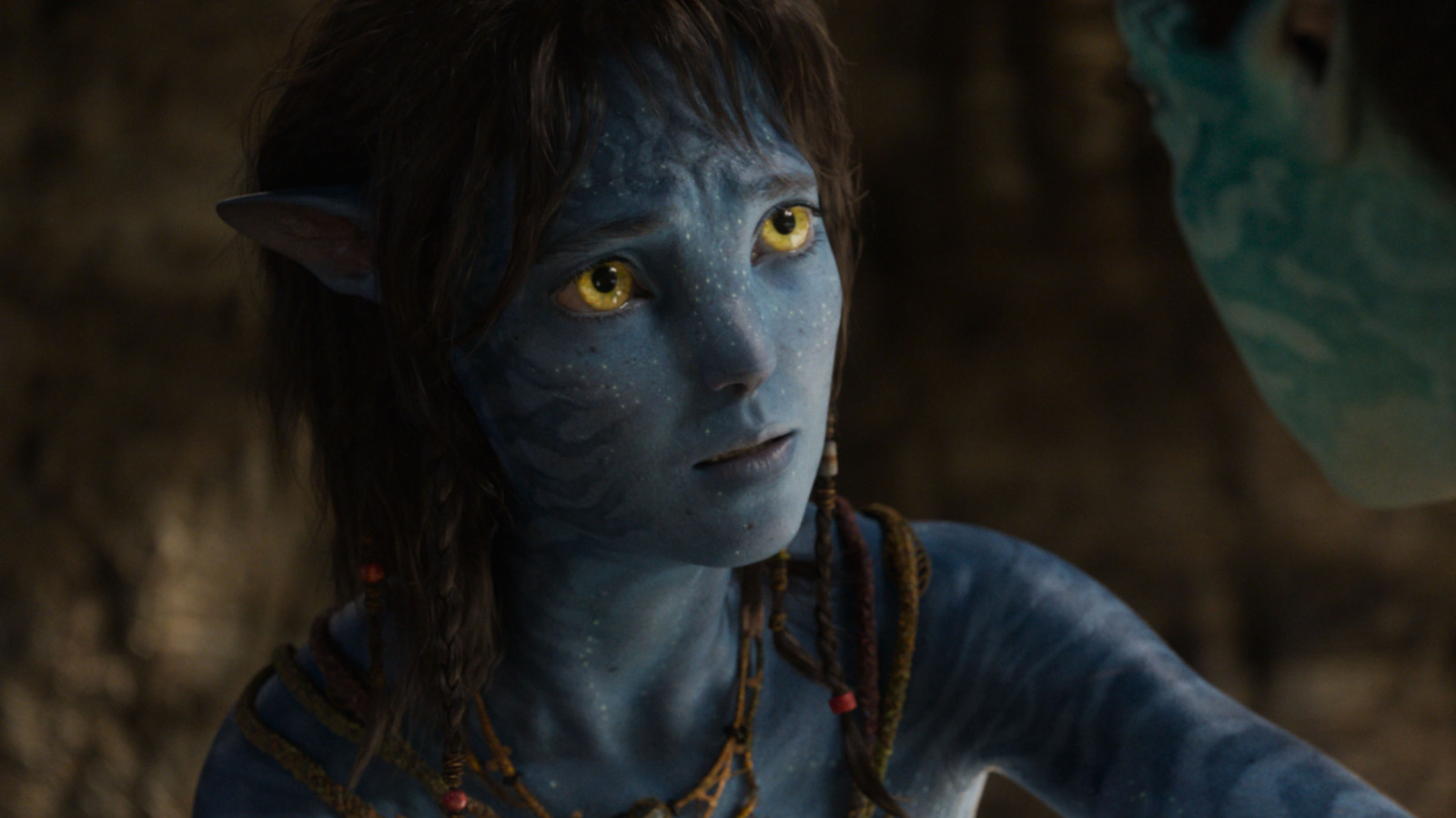
While “Avatar 3” doesn’t feature a cameo by a Xenomorph, it does pay tribute to one of “Aliens” most iconic lines. In the film’s intense climax, the Na’vi clash with the human colonizers, known as the Sky People. During this battle, Kiri (played by Sigourney Weaver) confronts the formidable Varang (Oona Chaplin), who has Neytiri (Zoe Saldaña) in her sights. In a heroic moment, Kiri intervenes, knocking Varang off their vessel and delivering a classic cinematic zinger: “Leave my mother alone, b****!”
This line unmistakably echoes Weaver’s character, Ellen Ripley, in “Aliens.” As Ripley rescues her surrogate daughter Newt (Carrie Henn) from the menacing Xenomorph Queen, she famously asserts, “Get away from her, you b****!” In “Fire and Ash,” the scene is a poignant twist of fate: Weaver transitions from a mother defending her child to a daughter standing up for her mother, all while invoking that notorious B-word. It’s a perfect homage to the legacy of action-film one-liners.
Spanning almost four decades, the connection between “Aliens” and “Avatar: Fire and Ash” reveals a thematic continuity in Cameron’s work. Central to both films is the exploration of motherhood. In “Aliens,” Ripley awakens from a 57-year slumber to find her world changed, yet she forms a powerful maternal bond with Newt, ultimately risking everything to protect her. The fierce, protective nature of motherhood is also a driving force in the “Avatar” series, as Neytiri fights tirelessly for her family, even adopting Ronal’s (Kate Winslet) newborn at the conclusion of “Avatar: Fire and Ash.”
Cameron’s films also reflect his enduring skepticism towards corporate greed. In the “Alien” universe, the Weyland-Yutani Corporation repeatedly sacrifices human lives in its ruthless pursuit of Xenomorphs, prioritizing profits over people. Similarly, the “Avatar” series features the Resources Development Administration, a corporate entity that plunders Pandora’s resources, indifferent to the destruction it causes. Their ruthless actions mirror real-world corporate malfeasance, as they slaughter Tulkuns for Amrita, a substance they believe can reverse aging, deeming it more valuable than the lives of sentient beings.
Avatar: Fire and Ash and Aliens are more alike than you might think

20th Century Studios
Nearly 40 years separate “Aliens” with “Avatar: Fire and Ash,” but they make for a fascinating throughline of the ideas James Cameron clearly likes to explore in his work. First and foremost, there’s the idea of motherhood. “Aliens” sees Ripley wake up 57 years after the events of “Alien,” so everyone she knows is dead. But she manages to forge a new mother-like relationship with Newt, and by the end of the film, she’s willing to die to protect her. That fierce motherhood is also paramount in the “Avatar” movies, as Neytiri fights to protect her kids, and she even adopts Ronal’s (Kate Winslet) newborn baby at the end of “Avatar: Fire and Ash.”
It’s also clear Cameron has maintained a healthy distrust of the corporate world throughout his career. In the “Alien” franchise, there’s Weyland-Yutani, a company that has proven it’s more than comfortable with sacrificing countless human lives to acquire Xenomorphs. Human lives don’t matter if they get in the way of maintaining profit margins. “Avatar” has a similar entity: The Resources Development Administration. It wants to extract any and all natural resources from Pandora, including Amrita inside of Tulkuns. They’re fine killing whales because the fluid can be used to reverse aging, and that’s far more important to a corporate entity than the well-being of sentient creatures.
The budgets and box office expectations may have changed throughout Cameron’s career, but some things stay consistent. One thing remains true above all else: Cameron’s still the king of the sequels.