
Share this @internewscast.com
“Star Trek” has been a staple of sci-fi entertainment since its debut in 1966, captivating audiences across seven decades with a plethora of films and TV series. Its enduring appeal lies not only in its imaginative science fiction narratives and exploration of social issues but also in the compelling moral quandaries that challenge viewers to examine their own values. A major factor in the franchise’s lasting success is its rich tapestry of characters, from inspiring heroes to complex villains who create formidable challenges for the protagonists.
However, over the years, “Star Trek” has seen some of its most compelling characters diminished or “nerfed,” as it’s termed in gaming circles. Initially introduced as powerful figures, whether heroic or villainous, these characters have, over time, lost their initial impact and become shadows of their former selves.
Characters may be intentionally nerfed by writers aiming to shift the story’s dynamics, but sometimes the weakening happens inadvertently, only becoming apparent when revisiting earlier narratives. After sifting through decades of “Star Trek” history, we’ve identified five characters whose once formidable presence has been notably diminished.
Take the Borg from “Star Trek: The Next Generation,” initially portrayed as a leaderless, menacing collective. This changed with “Star Trek: First Contact,” which introduced the Borg Queen (played by Alice Krige), an unnerving, cybernetic figure who commands the Borg and sets her sights on Captain Picard (Patrick Stewart). Combining the eerie qualities of Pinhead from “Hellraiser,” the alien menace of the xenomorph from “Alien,” and the dark allure of Maleficent from “Sleeping Beauty,” the Borg Queen stood out as one of the franchise’s most chilling antagonists.
Though she meets her end in “First Contact,” with her human elements destroyed and her cybernetic form dismantled by Picard, the Borg Queen made several returns in “Star Trek: Voyager,” mostly portrayed by Susanna Thompson. Despite Thompson’s menacing portrayal, these episodes diluted the character—and the Borg’s threat—significantly, lacking the fearsome impact they had in “The Next Generation.”
The Borg Queen
Their diminished threat became so apparent that even the show’s characters seemed unfazed. In her first “Voyager” appearance, Captain Janeway (Kate Mulgrew) exhibits little intimidation. The Borg’s presence eventually became just another routine challenge. The Queen reappears in “Star Trek: Picard” Season 2, played by Annie Wersching, but not as the main antagonist. Fortunately, Season 3 of “Star Trek: Picard” offered some redemption for the character, with Krige reprising her role to voice a now-distorted version of the original Borg Queen.
At the end of “First Contact,” the Borg Queen is defeated, with her human flesh disintegrated and Picard snapping her cyborg spine. But the Queen returned several more times in “Star Trek: Voyager,” now (mostly) played by Susanna Thompson. Though the actor’s performance is menacing, the episodes soften the character (and the Borg themselves) to such a degree that they rarely have the same impact as when we first saw them in “The Next Generation.”
In fact, they’re so nerfed that even the characters on the show don’t even seem to fear them: In the Borg Queen’s first appearance on “Voyager,” Captain Janeway (Kate Mulgrew) isn’t intimidated. Things got so bad that the arrival of the Borg eventually barely registered as a big deal — just another adversary to stand in their way. The Queen returns in Season 2 of “Star Trek: Picard” (played by Annie Wersching), and isn’t even the primary villain. Thankfully, Season 3 of “Star Trek: Picard” rehabilitated the character somewhat, with Krige returning to voice a now-malformed version of the original Borg Queen.
Chakotay
Debuting in 1995, “Star Trek: Voyager” took a fresh, innovative approach to the franchise, with a ship comprised of two crews. In addition to the ship’s Starfleet officers, the crew of a ship belonging to the terrorist/freedom fighters known as The Maquis, who are forced onto the ship when they are catapulted to the distant Delta Quadrant by an alien being called the Caretaker. The leader of the Maquis is Chakotay (Robert Beltran), a disgruntled former Starfleet commander.
In the pilot episode of the series, Chakotay is said to be a bitter, angry, but even-keeled leader of a band of renegades who are always ready for a fight. Chakotay, like all of his crew, is a headstrong rebel, and the “Star Trek: Voyager” series bible spells out clearly that he has “difficulty adhering to the rigid codes” with “a mind of his own.” But after that first episode, the show seems to forget who he is supposed to be, and by the end of the season, he’s probably the most by-the-book Starfleet officer among an already pretty straitlaced crew.
Worse still, by the end of the series, Chakotay becomes so far removed from the outlaw renegade that he was intended to be that he’s become iconic for being a soft character. Losing his bitter streak, Chakotay eventually turns into a passive character, often getting very little to do. Like others, though, a recent return to the franchise (in “Star Trek: Prodigy”) has helped correct his course, portraying him as a bold and adventurous explorer.
Jean-Luc Picard
It might come as a surprise to casual viewers, but one of the most-nerfed characters in “Star Trek” also happens to be one of the most beloved: Jean-Luc Picard, the captain of the USS Enterprise-D in “Star Trek: The Next Generation.”
Played by the Shakespearean Patrick Stewart, replete with that iconic, commanding authority, Captain Picard is introduced as one of the most well-respected and revered officers in the fleet; a man chosen to helm the Federation’s own flagship. Across seven seasons, he’s not just a distinguished diplomat and explorer, but a man so universally admired that even the Klingon Empire entrusts him with playing a key role in their political process. He has negotiated peace treaties, averted wars more than once, and has stood up to his superiors when they crossed moral bounds. Picard held enough power that he could sway the fate of entire worlds by his word alone.
Unfortunately, when Picard returned to screens in 2020 in the eponymous “Star Trek: Picard,” he’s a shell of his former self. No longer a powerful figure within Starfleet, events over the past two decades have cost him his reputation and diminished his influence. A far cry from the powerful figure that leader look to for guidance, he’s nearly an outcast on Earth. Granted, Picard being nerfed was sort of the point of his self-titled series. Over the course of three seasons, we witness his journey back to prominence. Nevertheless, it’s one of the harshest nerfings in “Trek,” especially when he was arguably the franchise’s most popular character.
Gowron
In the “Next Generation” episode “Reunion,” we meet Gowron (Robert O’Reilly, who looks very different in real life), a Klingon who’s renowned among his people for his fierceness. He’s a sinister figure, but one who is ultimately revealed to be an honorable warrior. With Captain Picard’s assistance, he takes his rightful place as the Chancellor of the Klingon Empire. He’s not just mighty, though; he’s a skilled tactician and respected leader. Like most Klingons, he prefers direct confrontation to guile and deceit, as those traits are commonly associated with his people’s biggest rivals, the Romulans.
As the feared and proud leader of the Klingon High Council, and one of the most powerful people in the Alpha Quadrant, Gowron’s name precedes him. But after a string of solid early appearances, he begins to feel less and less impressive, with a sense of shrinking dominance over his Empire. By the time he’s introduced into the ongoing Klingon war story in “Deep Space Nine,” he feels no more threatening than any other Klingon. Once the Klingons enter the Dominion War, Gowron no longer commands respect, making downright boneheaded tactical decisions — decisions so bad that Worf (Michael Dorn) is forced to challenge him for leadership of the Klingon Empire.
In the end, Gowron becomes a manipulative, conniving, and weak leader who fails to inspire his people, and is unable to win simple battles against the Dominion. In his final scene, he’s killed by Worf. Oh, how the mighty have fallen.
Hugh
Paramount
While it’s true that the entire Borg Collective is largely defanged and humanized over the course of “Star Trek: Voyager,” there’s another Borg character who is introduced and humanized in “Star Trek: The Next Generation.” First appearing in the episode “I, Borg” set after Picard’s return after being assimilated in “The Best of Both Worlds,” he’s the second Borg to leave the collective and regain his sense of self — but the first to do so without any outside intervention, as Locutus required for his return to his self as Picard.
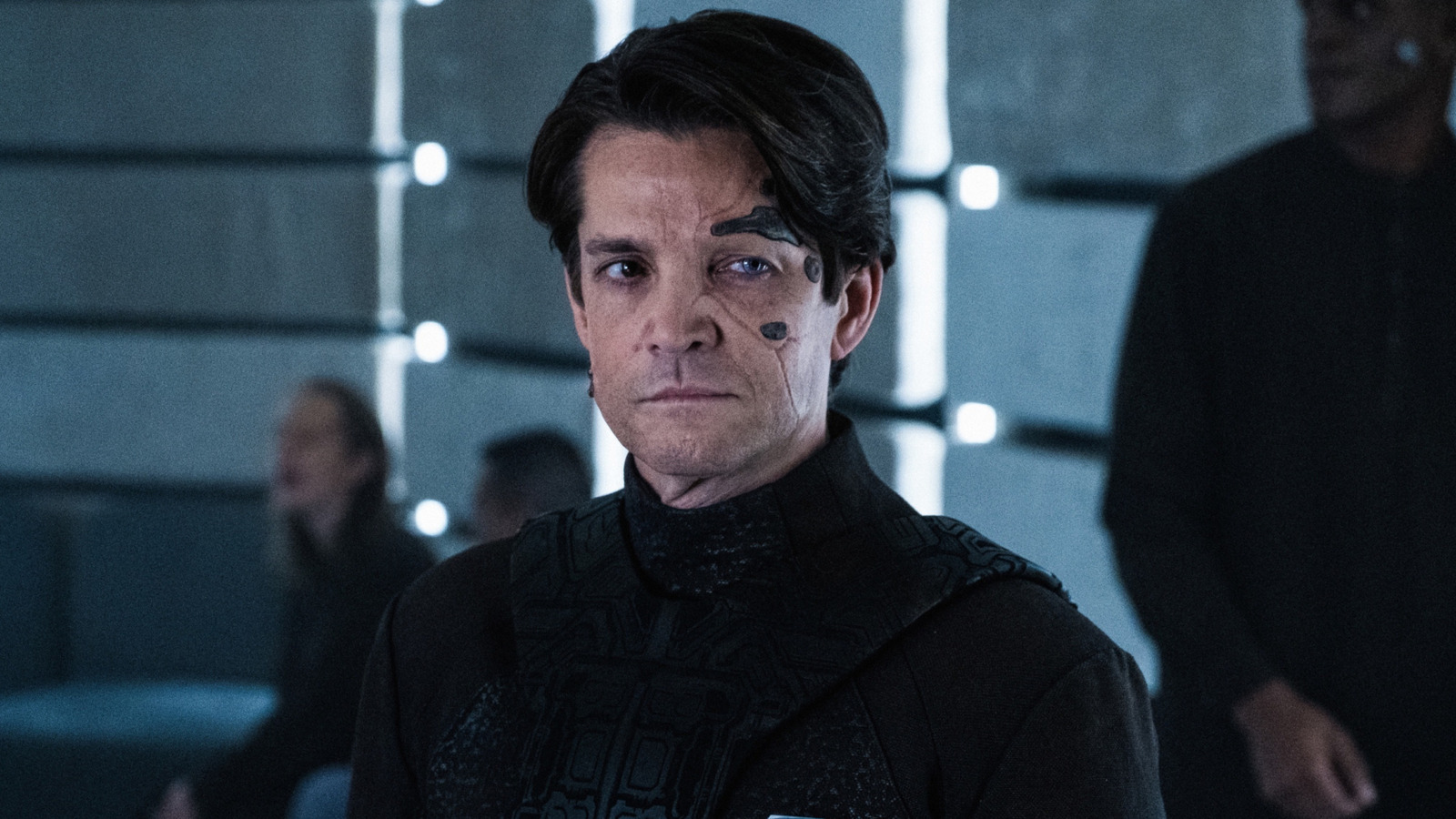
As he slowly begins to act more human, the Borg earns himself the name Hugh (Jonathan del Arco), and though he’s returned to the Borg Collective at the end of the episode, he returns in the Season 7 premiere, “Descent, Part II” after being referenced in the previous season’s finale. Hugh is now part of a group of de-assimilated Borg who have left the Borg Collective, and by the end, he takes his place as leader of a rebellion. Unfortunately, when he showed up again in Season 1 of “Star Trek: Picard,” he was nerfed to the extreme.
In “Picard,” we never find out if Hugh’s Borg rebellion had any real measure of success. The series glosses over what happened to his group of rebels and explains that he’s since become a borderline corporate executive, helping to run a Romulan project that aids in the de-assimilation of Borg drones. Maybe that’s a victory for him, it’s left unclear. After a few brief scenes across several episodes, he’s killed off, leaving Hugh’s saga one of many “Star Trek” storylines that never paid off.