
Share this @internewscast.com
Stephen King’s unparalleled impact on the horror genre is undeniable. His novels have been repeatedly transformed into films, with some, such as “The Shining,” becoming iconic landmarks in horror history. The prolific author’s tales persist in making their way to the screen, often revisiting stories that have already been adapted. In 2025, audiences were treated to four films: “The Running Man,” “The Long Walk,” “The Life of Chuck,” and “The Monkey,” alongside two series: HBO’s “It: Welcome to Derry” and MGM+’s “The Institute.”
King’s narratives span a vast array of eerie themes, encompassing dystopian landscapes, menacing machinery, ancient supernatural entities, and children with psychic abilities. Even for those who are not avid horror enthusiasts, movies like “The Life of Chuck” offer characters and themes with universal appeal that transcend traditional genre boundaries.
Beyond the numerous adaptations of his tales, Hollywood frequently draws inspiration from concepts rooted in King’s original works. While he may not have invented these ideas, King certainly popularized them, solidifying their presence in media and prompting continued exploration by the industry. This doesn’t even account for the remakes of his adaptations or the seemingly endless sequels, such as the persistent “Children of the Corn” series. While many ideas are linked to King, some remain particularly influential.
King’s debut novel, “Carrie,” tells the story of Carrie White, a teenage girl tormented by her classmates and oppressed by her fanatically religious mother, as she grapples with the onset of her menstrual cycle. Carrie possesses telekinesis—the ability to move objects with her mind—and as she navigates womanhood, she discovers both her inner strength and the lethal potential of her gift. The tale intertwines femininity and empowerment, with adolescent turmoil propelling Carrie’s catastrophic choices.
This theme has persisted in horror since the 1976 film adaptation of “Carrie.” Following its release, a wave of movies emerged, clearly inspired by Brian De Palma’s interpretation. The 1978 film “Jennifer” explores a bullied girl seeking vengeance with the aid of snakes, while “The Initiation of Sarah” from the same year shifts the setting to college, focusing on a young woman wielding telekinesis against a rival sorority. The 2000 cult favorite “Ginger Snaps” cleverly links a girl’s first menstrual cycle to her transformation into a werewolf.
A teen girl’s femininity will awaken supernatural powers
Beyond similar films and numerous adaptations of King’s book, the prom scene in “Carrie” remains a cinematic staple. The musical sitcom “Glee” features a memorable scene with prom queen Tina (Jenna Ushkowitz) being splashed with a red slushie, while the comedy “White Chicks” includes a nod to this iconic moment when Heather and Megan Vandergeld, clad in white, are drenched in red paint during a fashion show.
The concept continues to be prevalent in horror. Right after the 1976 screen version of “Carrie” was released, a slew of movies clearly inspired by Brian De Palma’s film came out. 1978’s “Jennifer” is also about a bullied teen girl getting revenge on her classmates, but instead of using telekinesis, she controls snakes, while the same year’s “The Initiation of Sarah” takes the narrative to college, where a young woman uses her telekinesis to get back at a rival sorority. Most notably, the 2000 cult classic “Ginger Snaps” features a girl starting her menstrual cycle right as she begins to turn into a werewolf.
Not only are there similar films and multiple adaptations of King’s book, but the prom scene in “Carrie” is continually replicated on screen today. The musical sitcom “Glee” features newly crowned prom queen Tina (Jenna Ushkowitz) getting doused in a red slushie, while “White Chicks” fans might recall, in a clear homage, Heather and Megan Vandergeld wearing white dresses and getting covered in red paint during a fashion show.
A disease will kill everyone (but some are immune)
The 1994 miniseries “The Stand” follows the survivors of a virulent pandemic that kills the majority of the population of the United States, and possibly the world. Those who survive appear to have some type of immunity, but it’s unclear how or why they do. There’s also a supernatural component to the narrative as the survivors congregate around two different leaders, Mother Abagail (Ruby Dee) and Randall Flagg (Jamey Sheridan), in what shapes up as a battle of good vs. evil.
In a post-COVID world, bioweapons and new viruses continue to be on the minds of the public, but even in 1994, the mammoth ratings and positive reviews for “The Stand” only solidified that audiences were interested in the topic back then. Just a year after the miniseries debuted, the Morgan Freeman-led film “Outbreak” was released, showing how the government might respond to the possibility of a deadly nationwide epidemic.
Movies and TV shows about eruptions of new diseases or bioweapons have only continued from there, including “The Happening,” “Carriers,” “Contagion,” and “12 Monkeys.” Even projects like “28 Days Later” and “The Walking Dead,” in which viruses turn humans into homicidal, flesh-eating monsters, are arguably part of this genre as well — but “The Stand” remains the modern gold standard.
A creepy clown is everyone’s worst nightmare
The “creepy clown” is a horror staple and a subgenre in its own right, and Stephen King’s “It” added perhaps the ultimate version of this archetype in Pennywise, a shapeshifting paranormal entity that frequently takes the shape of a clown. He terrorizes a group of kids in Derry, Maine, feeding off their fear, then returns again when they’re adults. What made Pennywise unique is that he isn’t just a clown — he can take any shape, including that of a loved one or a monster from one’s favorite horror movie.
The 1990 miniseries of “It” stars Tim Curry as Pennywise, a role that is not only one of his best (after “The Rocky Horror Picture Show”) but a horror icon. “The TV miniseries … [has] outlasted almost any other adaptation of King’s work,” James Smythe wrote for The Guardian. “And that’s because of Pennywise.” The character is scary in the books, but seeing him on screen made the difference and again — as King stories tend to do — set the standard for scary clowns to come, including Bill Skarsgard’s take on Pennywise in the 2017-2019 two-part film version of “It.”
Pennywise walked so that Art the Clown from “Terrifier” or the clown in “Camp Blood” could run. While Art certainly gives Pennywise a run for his money, without Pennywise, Art may not have been as effective. All these tales show how clowns can be used against people, especially when they don’t understand the sinister presence behind the makeup. Even creepy clowns who are not supernatural, like “Twisty” from “American Horror Story,” capitalize on how the public views clowns, thanks to “It.”
Children can turn violently on adults
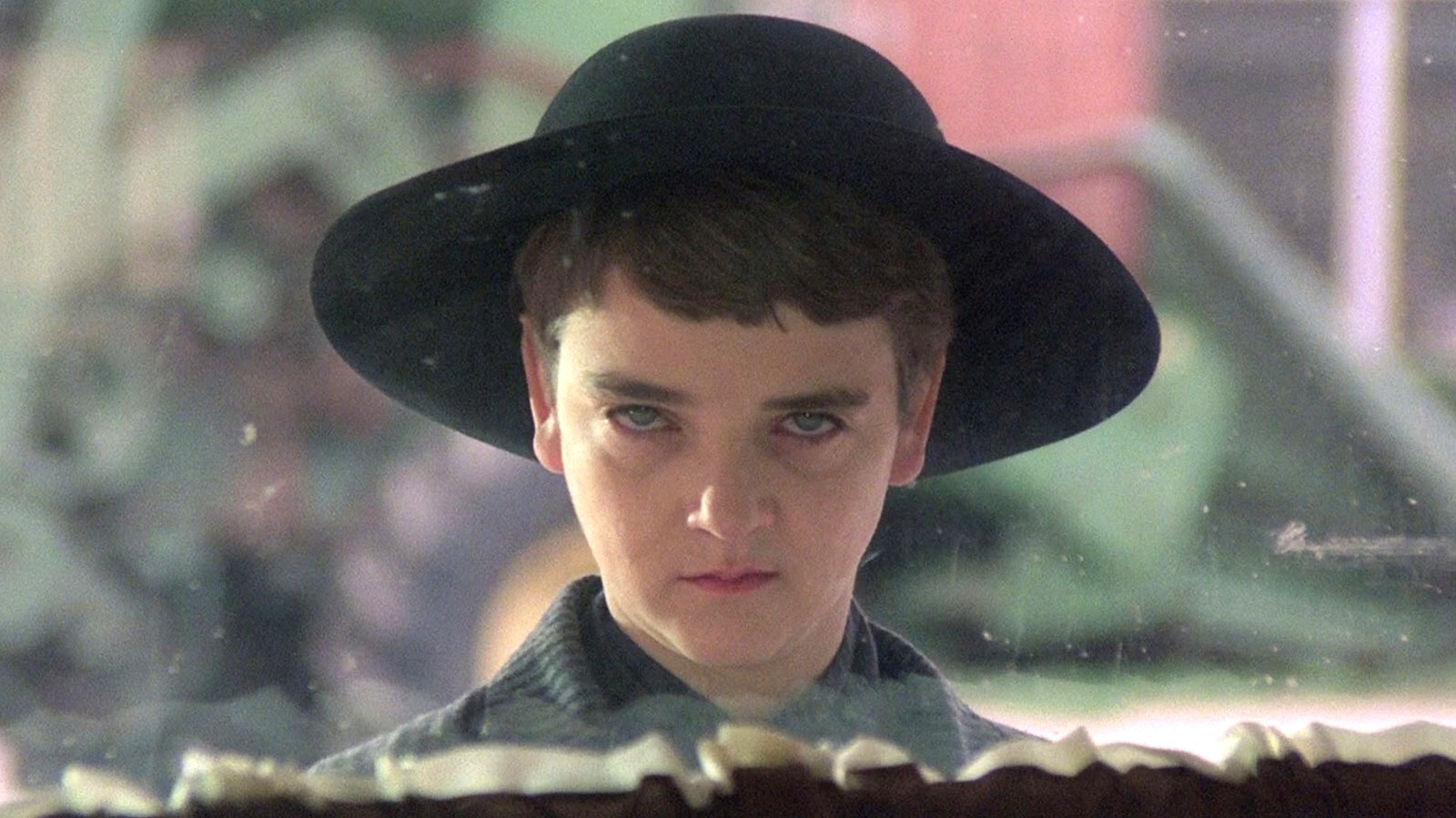
Evil children are a horror tentpole, whether as a result of their intrinsic nature or the work of something supernatural. Stephen King’s “Children of the Corn” features an entire town of children who kill all the adults to please an ancient being living in the nearby cornfields. While the 1984 film version is rather dated and considered one of the worst King adapations, Box Review argues that the movie “still delivers because its core horror isn’t tied to special effects; it’s tied to ideas.”
Children trying to make their own society continues to be a popular premise, as in the one-season Netflix series “The Society,” even if it isn’t rooted in them removing the adults from the equation. But something always goes wrong, mostly because children typically haven’t grown up enough to have the social and emotional skills needed to make adult decisions.
“Children of the Corn” has had several adaptations, including multiple sequels, but that hasn’t stopped Hollywood from continuing to implement the idea of children killing adults for a higher power. “Sinister” features children who come under the influence of Bughuul, an ancient deity who convinces children to dispose of their families and join him, while a sorceress destroys a family yet leads the eldest daughter into temptation in 2016’s “The Witch.” 1989’s “Beware! Children at Play” has children killing adults for sport, though it does seem to be rooted in some type of ceremony or belief.
Cars will kill us all
Columbia Pictures
Stephen King has penned a number of stories in which cars and machines in general try to wipe out their human masters. “Christine” is usually what comes to mind, in which a possessed car influences the teenager who’s restoring it, while 1986’s “Maximum Overdrive,” a story about machines of all kinds going on a killing spree after a comet makes them sentient, features big rigs holding humans hostage at a truck stop. Both handle the topic a bit differently, with the trucks in the latter notably more murderous from the start, but the common element is modes of transportation turning against us.
After “Christine,” killer cars continued to pop up in cinema. In 1986’s “The Wraith,” it came in the form of a spirit using a black Dodge M4S Turbo Interceptor to kill people. The 2003 movie “Black Cadillac” features a limo stalking a group of men, while the sci-fi horror film “Super Hybrid” is about a living car that finds victims by pretending to be a cab.
Director David Gordon Green, known for “Pineapple Express” and the recent “Halloween” trilogy, cited “Christine” as inspiration for the 2022 installment of the latter, “Halloween Ends.” There are certainly some similarities between Corey and Arnie, the characters in “Halloween Ends” and “Christine” respectively, who are both bullied young men going down dark paths. With self-driving cars becoming all the rage, the number of movies featuring killer automobiles is sure to grow.