
Share this @internewscast.com
Even the most dedicated enthusiasts of the Marvel Cinematic Universe may be taken aback by the sheer magnitude of its success. Since its inception in 2008, the MCU has churned out numerous films, collectively amassing over $30 billion at the global box office. This entertainment juggernaut shows no signs of slowing down.
Given the extensive slate of releases over the years, it was almost inevitable that the MCU would encounter a few underperformers. Although films in Marvel’s Phase 5 haven’t matched the triumphs of earlier installments, it doesn’t spell doom for the franchise. Titles like “Deadpool & Wolverine” have shattered expectations, proving that the superhero genre still has plenty of life left.
Even the MCU’s less successful films have managed to pull in hundreds of millions, with some turning a respectable profit. However, massive hits like “Avengers: Endgame” skew the perception of success, and escalating production costs make profitability increasingly challenging. In comparison, what the MCU considers a flop could be a blockbuster elsewhere.
“Ant-Man and the Wasp: Quantumania” was intended as a critical piece of the MCU’s next overarching narrative. In the film, Scott Lang (Paul Rudd) and his family venture into the Quantum Realm, encountering both a hidden society and the formidable villain Kang the Conqueror (Jonathan Majors). Although the film set the stage for Kang as the new Thanos-level threat, Marvel’s dismissal of Majors in late 2023 altered these plans.
Even before Majors’ departure, “Quantumania” faced hurdles due to lackluster box office performance. It grossed $214 million domestically, with nearly half of that revenue coming from its opening weekend. Globally, it earned over $476 million, ranking among the MCU’s least successful films. Negative word of mouth, reflected in its 46% Rotten Tomatoes score, cited a formulaic plot and subpar visual effects. With Kang sidelined for Victor Von Doom (Robert Downey Jr.) as the new major villain, “Quantumania” has little reason to draw fans back for a rewatch.
Ant-Man and the Wasp: Quatumania
Some MCU aficionados might be surprised to learn that some of the franchise’s earliest entries are among its weakest performers at the box office. Nostalgia often colors our view of Marvel’s Phase One films, but at the time, audiences were still warming up to the concept of an interconnected cinematic universe. Despite Thor’s significance in the comics, he hasn’t matched the allure of heroes like Spider-Man, which may explain why the first “Thor” film, foundational as it was, ranks low in franchise earnings.
Even before Majors exited the MCU, the Kang storyline was in trouble because of how poorly “Quantumania” performed at the box office. The movie earned $214 million domestically, but almost half of that money came from the film’s opening weekend. Globally, the movie made over $476 million, which still leaves it as one of the worst-performing movies in the MCU. Word of mouth seemingly hurt “Quantumania,” and that bears out in the movie’s reviews – “Quantumania” scored a paltry 46% on Rotten Tomatoes.” Critics took issue with the movie’s by-the-numbers plot and its lackluster digital effects. Because Kang has been sidelined for Victor Von Doom (Robert Downey Jr.) as the next big Marvel villain, there’s hardly a reason for fans to ever revisit “Quantumania.”
Thor
Some MCU fans might be shocked to discover that some of the oldest movies in the franchise are also some of its worst-performing at the box office. We’ve all got nostalgia goggles on when we look back at the Phase One Marvel movies, but at the time, moviegoers still weren’t 100% sold on Marvel’s interconnected film universe. In the world of Marvel comics, Thor has always played an important role, but he’s never quite reached the popularity of some other characters like Spider-Man. That might help explain why the first “Thor” movie, which was still helping to construct the MCU today, has one of the smallest box office takes in the entire franchise.
2011’s “Thor” earned $180 million domestically, and unlike “Ant-Man and the Wasp: Quantumania,” the opening weekend for “Thor” only accounts for a third of its total earnings. Clearly once people heard more about “Thor,” they became interested enough to head out to the theaters. Globally, “Thor” earned well over $400 million, which shows that even the underperformers in the MCU can still make a killing. “Thor” introduced moviegoers to one of the most storied characters from the comics, and its box office performance shows us that the MCU, massive as it is now, still had to go through a growth period.
Shang-Chi and the Legend of the Ten Rings
When people imagine the MCU’s box office flops, they usually jump right to the Phase 4 and Phase 5 movies that underperformed financially. “Shang-Chi and the Legend of the Ten Rings,” despite its many positive qualities, is one of the MCU’s 2021 releases that began a trend of underwhelming box office returns for the franchise. The second film of Marvel’s year grossed $432 million at the box office. In another franchise, that amount of money might make for a spectacular success, but for the MCU, it was a sign that things were taking a turn.
“Shang-Chi” is unique amongst the MCU’s underperformers because it earned absolutely spectacular reviews. Critics on Rotten Tomatoes gave the film a 92%, making it one of the best-reviewed movies in the franchise. Audience reviews were even more enthusiastic, and “Shang-Chi” earned a stunning 98%, a higher score than they gave to either “Avengers: Infinity War” or “Avengers: Endgame.” So if critics and general moviegoers enjoy the film so much, what went wrong with the box office?
In 2021, theaters were still reeling from the COVID-19 pandemic, and the MCU itself was in a strange place after “Endgame” wrapped up so much of the franchise’s overarching storylines. At the same time, Marvel was launching a slew of shows on Disney+, and people were starting to throw around terms like “superhero fatigue.” Despite being one of the best movies in the MCU, “Shang-Chi” debuted at a rough time for the box office.
Captain America: Brave New World
“Captain America: Brave New World” continued the general downward box office trend of MCU films that debuted after “Avengers: Endgame.” The 2025 movie made a little over $413 million at the global box office, making it the worst-performing “Captain America” outing since 2011’s “The First Avenger.” That return is especially disappointing because, thanks to lengthy reshoots, the already high budget for “Brave New World” ballooned to well over $350 million. The movie likely wasn’t a moneymaker for Marvel.
Aside from just being a financial disappointment, the movie also failed to excite MCU fans. Early reactions to “Brave New World” were all lukewarm at best. Many fans felt that the disparate plot threads in the movie would have worked better as a TV show. Others walked away confused about why the trailers for the movie showed Red-Hulk (Harrison Ford) in action when the movie itself treats Red-Hulk’s arrival as a climactic surprise. In the end, “Brave New World” didn’t create a solid foundation for Sam Wilson (Anthony Mackie) to lead the MCU as the new Captain America. It ended up being another post-“Endgame” MCU misfire.
Eternals
“Eternals” is arguably one of the most ambitious films in the entire MCU. The 2021 movie debuted after “Avengers: Endgame” and introduced fans to an entirely new team of superheroes who apparently have been hiding in the background of the MCU from the very beginning. The Eternals are a group of 10 godlike beings created by Celestials and sent to Earth to look over the growth of humanity. Marvel got Oscar winner Chloe Zhao to direct the film, and on top of that, “Eternals” also has a star-studded cast that includes Angelina Jolie, Kit Harington, Kumail Nanjiani, and many more.
That cast, impressive as it may be, is actually part of the movie’s big problem. Even with a lengthy 156-minute runtime, “Eternals” struggles to give all 10 of its main characters satisfying story arcs. The movie often feels rushed and messy, and the backflips it has to do to fit into the MCU’s larger continuity doesn’t do it any favors. That’s a big reason why “Eternals” has just a 47% approval rating among critics on Rotten Tomatoes.
The film’s lackluster critical reception is reflected in its box office performance. Domestically, the movie made $164 million, and with the global box office included, its total earnings barely managed to break the $400 million mark. Unfortunately, the movie cost hundreds of millions to make, and it went over budget, all of which helps explain why Marvel seemingly hasn’t been in a rush to make “Eternals 2.”
Black Widow
The “Black Widow” movie was a long time in coming, but when it finally arrived, there were quite a few different factors working against it. “Black Widow” came in 2021, after “Avengers: Endgame,” so the momentum of the Infinity Saga didn’t help promote the film. “Black Widow” also had to be somewhat awkwardly positioned as a prequel, since the titular character played by Scarlett Johansson died during the events of “Endgame.”
On top of those in-universe factors, “Black Widow” also faced some real-world issues, too. The movie debuted during the height of the COVID-19 pandemic, so its box office numbers were virtually guaranteed to be underwhelming. “Black Widow” ultimately made $183 million domestically and $379 million total at the global box office. Those aren’t small numbers by any means, but for the MCU, they’re pretty disappointing.
“Black Widow” faced one more financial problem after its release. Johansson ended up suing Disney for the way the company handled the film’s theatrical versus streaming release. Disney eventually settled with the actress under undisclosed terms, but the lawsuit almost certainly added significantly to the overall cost of the film, making its already underwhelming performance even worse.
Captain America: The First Avenger
Captain America (Chris Evans) became the heart of the Avengers, and the emotional payoff of his overarching MCU story was the closing note for “Avengers: Endgame.” When the MCU was first getting off the ground, however, people weren’t as sold on Cap as they eventually would be. In 2011, “The First Avenger,” a rare Marvel period piece, kicked off Captain America’s story — but it’s actually one of the lowest grossing movies in MCU history.
The film’s global box office earnings came to $370 million, with roughly $176 million of that total coming from theaters in the United States. Disney spent around $216 million making the movie, but its box office performance obviously didn’t dissuade the company from its superhero investment.
“The First Avenger” found itself in a similar position as the original “Thor” film. It was introducing moviegoers to a brand new character, and it was helping build the foundation of the MCU. There wasn’t yet an ongoing story pulling people into theaters, and the World War II backdrop potentially turned off Marvel fans who’d been hooked by the contemporary setting of “Iron Man.” Now that the MCU is a global mega-success, the box office numbers for “The First Avenger” are just a minor franchise curiosity.
Thunderbolts*
What happens when you take a group of relatively minor characters and package them into a new super team? “Thunderbolts*” is a surprisingly good Marvel movie, but the 2025 film didn’t experience the box office success a team of heroes might expect. Globally, “Thunderbolts*” made $380 million, which isn’t a small sum, but was likely less than Disney wanted. The movie came after a string of box office disappointments, so Marvel had cut down on the film’s budget during production. That still wasn’t enough to save “Thunderbolts*” financially. Reportedly, the film cost about $180 million to make, with another $100 million going toward marketing. With that budget in mind, “Thunderbolts*” is a bitter pill for Marvel to swallow.
The box office numbers for “Thunderbolts*” are especially disappointing because the movie itself is pretty great. Critics on Rotten Tomatoes gave it an 88%, and audiences went even further, giving it a 93%. Looking at the reviews, it’s easy to argue that “Thunderbolts*” is one of the best MCU movies since “Avengers: Endgame.” The movie might have been following relatively minor characters from less-successful MCU shows and movies, but its lack of financial success is still a troubling sign for the MCU. It may even be an indication that superhero fatigue might be a real barrier for future movies, even high-quality ones, to overcome.
The Incredible Hulk
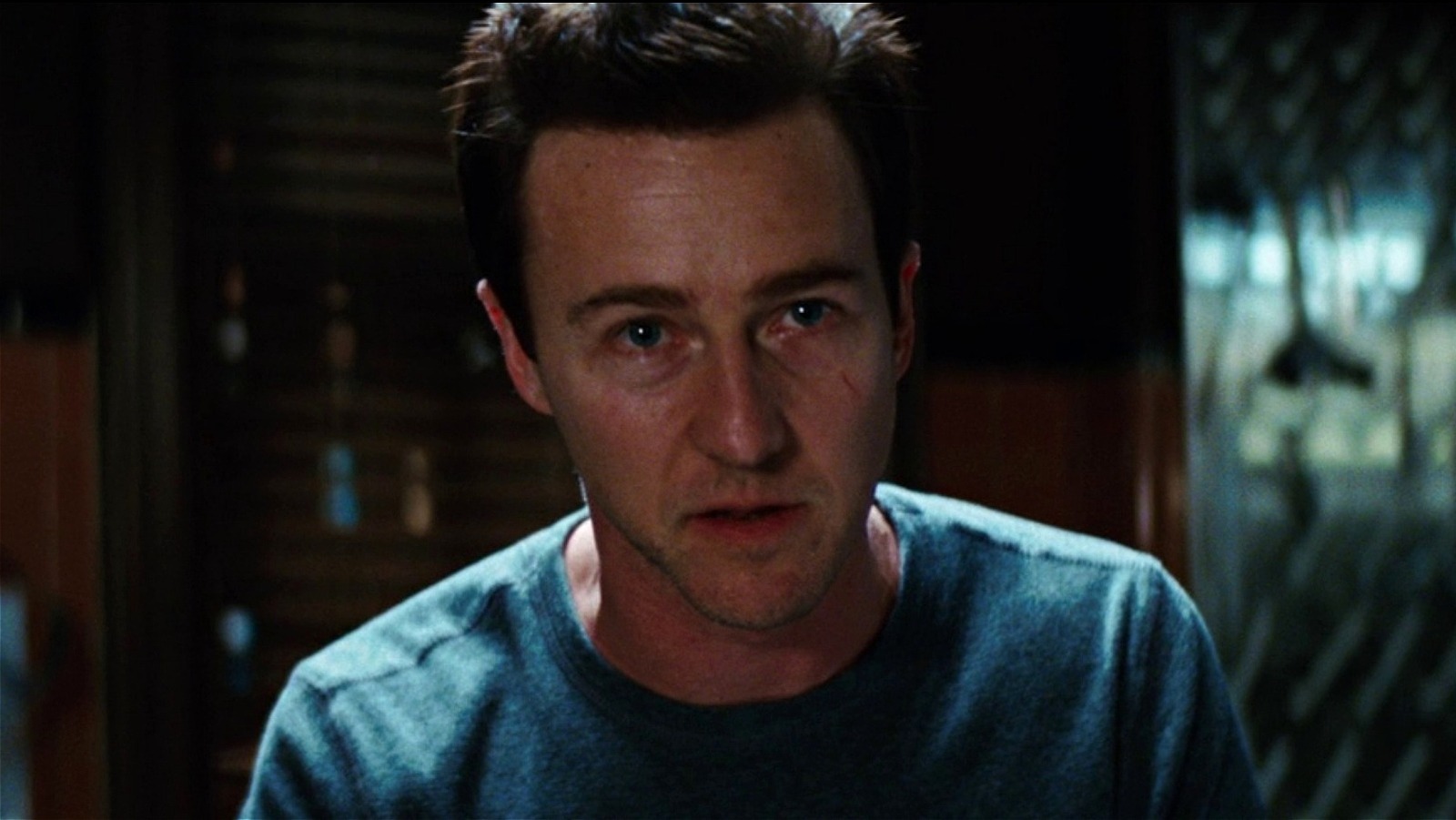
On the opposite end of the MCU spectrum from “Thunderbolts*,” we have 2008’s “The Incredible Hulk.” That movie starred Edward Norton as Bruce Banner, and though it was tentatively connected to 2003’s “Hulk,” it primarily served as a new starting point for the character. The fresh start meant audiences had no pre-existing buy-in for the movie, and because the movie debuted the same year as “Iron Man,” there wasn’t an overarching MCU structure supporting it either. It’s also worth noting that “The Incredible Hulk” didn’t especially impress the people who saw it. It got mixed reviews from critics and general moviegoers alike, scoring a 68% and 69% with each on Rotten Tomatoes.
By the end of its theatrical run, “The Incredible Hulk” had earned $264 million at the global box office. That’s the second-worst box office return for an MCU movie. The movie itself had a production budget hovering around $140 million, so it wasn’t a big moneymaker for Marvel. Unlike Iron Man, who got a sequel before 2012’s “Avengers,” fans wouldn’t see the Hulk again until Mark Ruffalo was cast to replace Norton in the big team-up movie. Fans also haven’t gotten another standalone movie about the Hulk in the MCU, but looking at the box office numbers for “The Incredible Hulk,” it’s hard to blame Marvel for not taking that risk.
The Marvels
Marvel Studios
After “Avengers: Endgame,” Marvel made a big push to promote new heroes not just on the big screen but also on Disney+ TV shows. When “The Marvels” debuted in November 2023, the movie sent a clear signal that Marvel’s dual approach wasn’t really working. “The Marvels” is kind of a sequel to 2019’s “Captain Marvel,” but it’s also tied into the events of the “WandaVision” and “Ms. Marvel” series on Disney+. The movie follows Captain Marvel (Brie Larson), Kamala Khan (Iman Vellani), and a grown-up Monica Rambeau (Teyonah Parris) as they figure out their interconnected powers and combat a new extraterrestrial threat.
Despite featuring three different heroes, “The Marvels” failed to make an impact at the box office. It became the lowest-grossing MCU movie of all time, after earning just $206 million globally. The movie’s domestic performance was particularly poor, and it made just $84.5 million in the United States. There’s been plenty already written about why “The Marvels” bombed at the box office, but its connection to the rest of the MCU played a big role. To be truly caught up on all the lore heading into “The Marvels,” fans needed to watch all the previous MCU movies and two seasons of television. That proved to be a little too much homework, even for comic book fans accustomed to the interconnected universe that Marvel had built.