
Share this @internewscast.com
RATING: 5 / 10
Netflix
My initial encounter with director William Oldroyd’s work was during the 2023 Sundance Film Festival, where his film adaptation of Ottessa Moshfegh’s novel “Eileen” debuted. While Looper also reviewed it, I remain uncertain about whether “Eileen” qualifies as a good or bad movie. The best way to describe it is “twisted”—both due to its mind-bending twist and the unsettling directions the story takes thereafter. The friend I watched it with was deeply unsettled by the ending, which complicated my ability to objectively assess the film. The cinematography was commendable, and the performances by Thomasin Mackenzie and Anne Hathaway were strong. The film certainly elicited a reaction, but whether it truly works as a narrative remains unclear to me.
- You will NOT predict how it ends
- Some of the acting is good …
Oldroyd co-runs the six-episode Netflix miniseries “His & Hers” with “ER” producer Dee Johnson, based on Alice Feeney’s novel. With Oldroyd involved as a writer and/or director on most episodes, it’s evident he excels at crafting unexpected plot twists. Like “Eileen,” the conclusion of “His & Hers” leaves me questioning its effectiveness, but the shocking resolution to the central murder mystery is unforgettable. Although the twist is subtly hinted at from the first episode, it remains largely unpredictable.
- … but not all of it
- Much of the show relies on obvious dialogue and characters acting stupid
- Once you’re past the audaciousness, it might feel irresponsible?
While the conclusion of “His & Hers” intriguingly toes the line between success and failure, much of the series languishes in mediocrity. Initially, it seemed there might be little to discuss in my review: the show is watchable yet hindered by ordinary flaws that prevent it from rising above average. Even after finishing the series, spoiler concerns limit what can be directly addressed, but there’s plenty to discuss in broader terms.
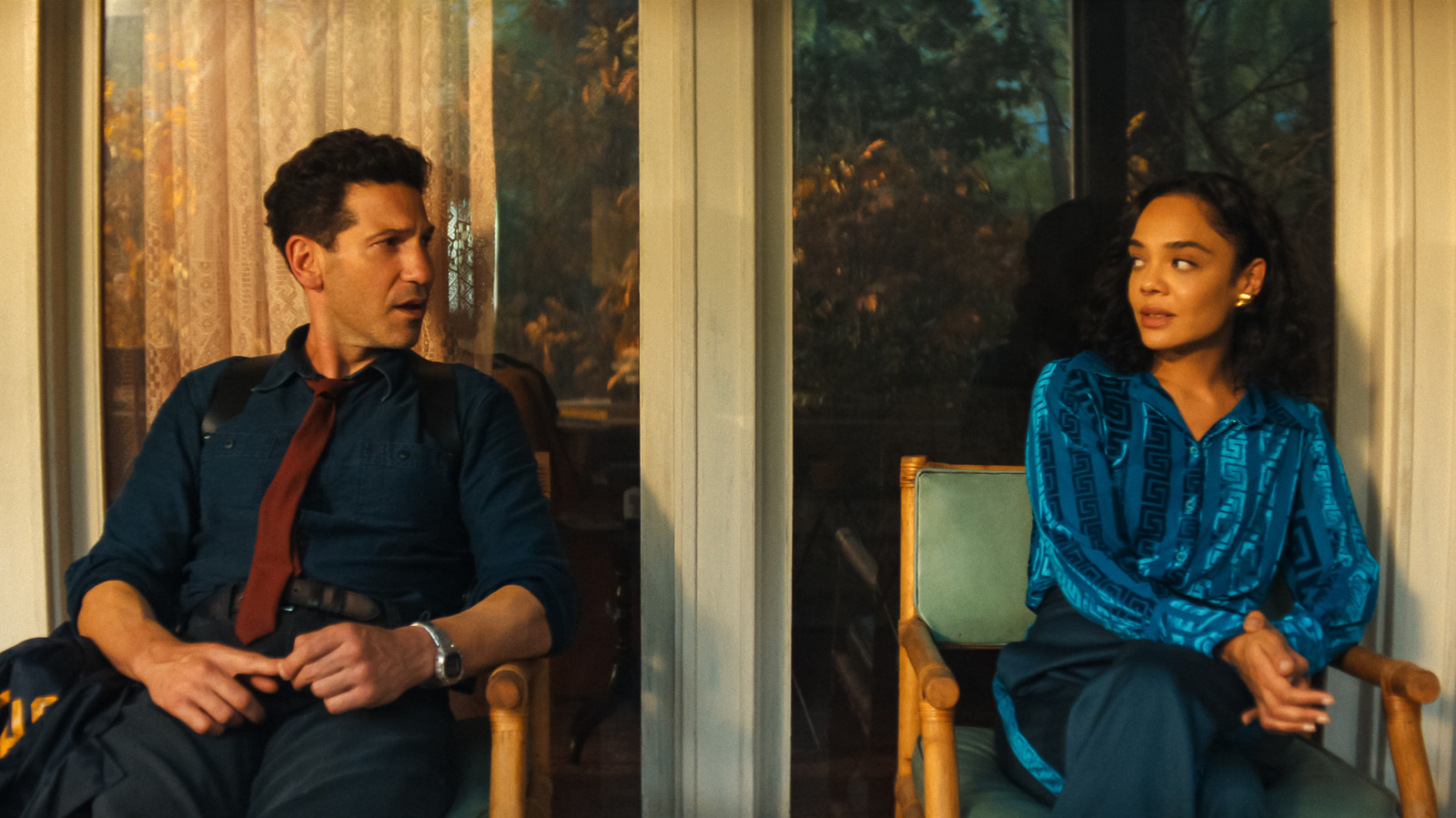
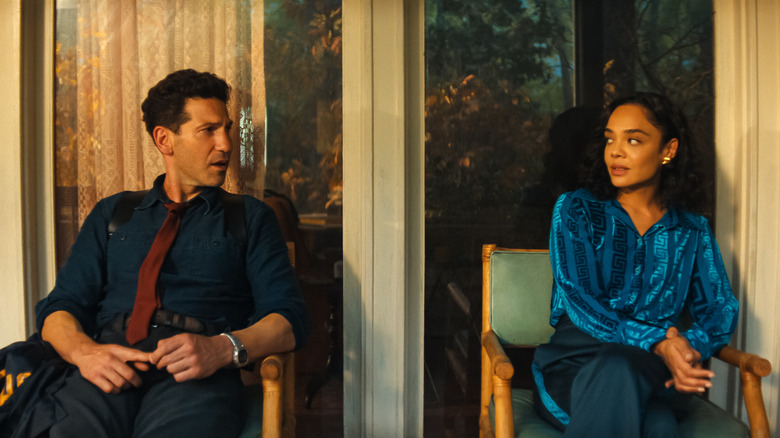
The story centers on Anna Andrews (Tessa Thompson), who’s had a challenging year. After separating from her husband, police detective Jack Harper (Jon Bernthal), due to a family tragedy, she took an extended mental health hiatus from her news anchor role, ultimately losing her position to her temporary replacement, Lexy (Rebecca Rittenhouse). However, a murder in her hometown of Dahlonega, Georgia, prompts Anna to dive into investigative journalism. Coincidentally, Jack is also officially investigating the same case, and suspicion hangs over both exes.
The audience is aware that Anna or Jack is unlikely to be the murderer, yet that doesn’t automatically make them sympathetic. Both protagonists are intentionally unlikable, frequently making spiteful or foolish decisions. Thompson and Bernthal’s performances render them compellingly flawed to some extent, and Anna’s personal issues—especially her ties to the victim, Rachel (Jamie Tisdale)—shed light on her character’s troubled nature. However, the script’s tendency to include overtly explanatory dialogue limits the psychological depth of the characters.
Where the ending of “His & Hers” straddles the line between good and bad in an interesting fashion, most of the show up until that point falls in the much less exciting middle ground of mere mediocrity. Early on in the series, I wasn’t sure I’d even have much to talk about in my review: it’s watchable, with fairly mundane flaws and frustrations holding it back from being anything more than that. After finishing the show … I’m still limited in what I can talk about, given spoiler sensitivities, but there’s a lot I can talk around.
Multiple sides to every story
Netflix
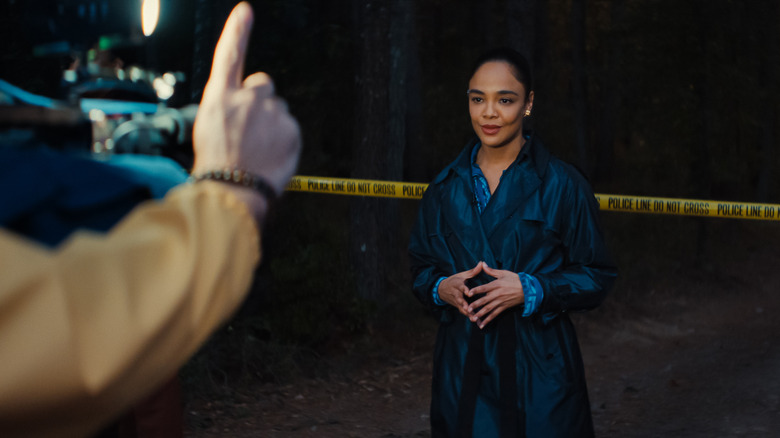
Anna Andrews (Tessa Thompson) has had a rough year. She separated from her husband, police detective Jack Harper (Jon Bernthal), following a family tragedy, and she’s taken such a long mental health break from her job as a news anchor that her temporary replacement Lexy (Rebecca Rittenhouse) is now a permanent one. However, a woman’s murder in her hometown of Dahlonega, Georgia motivates Anna to do some investigative reporting. Jack happens to be officially investigating the same murder — and both exes have reason to be suspicious of one another.
The audience knows the murderer probably can’t be Anna or Jack, but that doesn’t mean they’ll exactly be rooting for either of them. Both of the viewpoint protagonists are deliberately unlikable, prone to making spiteful, manipulative, or just downright stupid decisions. Thompson and Bernthal’s performances can make them interestingly unlikable, to a point, and Anna’s array of personal baggage — including her personal connections to the murder victim, Rachel (Jamie Tisdale) — explains a lot about why she ended up the way she is. However, the scripts’ tendencies toward obvious signpost-y dialogue, of the sort designed to spell things out to viewers only half-paying attention, put a limit on how psychologically convincing the characters can be.
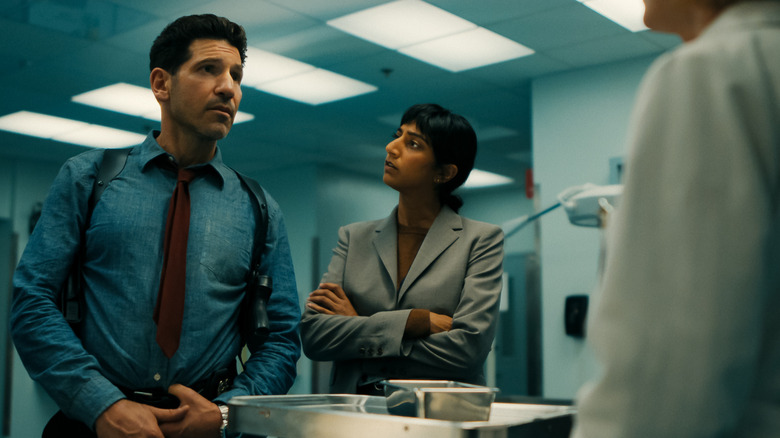
I never found Anna and Jack’s relationship troubles particularly interesting, though they take up a lot of time in the show. Jack’s dunderheaded attempts at trying to look less suspicious kept taking me out of the drama; they’d be more at home in a cringe comedy. The supporting cast is a mixed bag. Jack’s assistant Priya (Sunita Mani) ends up the most compelling presence largely by virtue of being the character with the most sense and professional competence. The worst in show dishonor goes to Chris Bauer as Rachel’s pizza mogul husband Clyde; I’m not sure if bad acting or bad writing is more to blame, but not a single line of his sounded like an actual human being.
But what is His & Hers actually about?
Netflix
As its mystery evolves, “His & Hers” touches on a number of serious subjects, including grief, domestic violence, marital infidelity, racial issues, caring for a parent with dementia, high school bullying, sexual assault, justifications for revenge, and the nature of truth. I can’t go too deep into how it addresses any of these issues for fear of spoilers, but then the show isn’t particularly deep about most of them either. Some topics are just red herrings, while others the show treats as important but doesn’t offer much in the way of meaningful insight.
It’s not until the final episode where it really becomes clear what this story has actually been about — and the sensationalist way it handles certain issues brings me back to my confused experience with “Eileen.” There are parts of that final episode that had my eyes rolling — one scene is literally a gag from “The Naked Gun” reboot done seriously — and others that made my jaw drop in their audacity. Is it “good” TV? I don’t really think so. Is it worth watching, despite that, for the big surprise ending? Perhaps, if you can handle the sexual violence material leading up to said surprise, and aren’t too bothered by some of the weirder potential implications of said ending.
One last minor observation I didn’t know where else to put in this review: in one scene, Jack asks his sister (Marin Ireland) to put “Sesame Street” on for her daughter Meg (Ellie Rose Sawyer). “That ain’t even on anymore, Einstein,” Zoe replies. Fans knows that “Sesame Street” was never actually taken off the air, despite headlines of a potential cancelation — and the new season launched on Netflix a few months ago. A mistake, or an awkwardly written cross-promotion?
“His & Hers” hits Netflix on January 8.
If you or anyone you know is dealing with domestic abuse or has been a victim of sexual assault, contact the relevant resources below: