Share this @internewscast.com
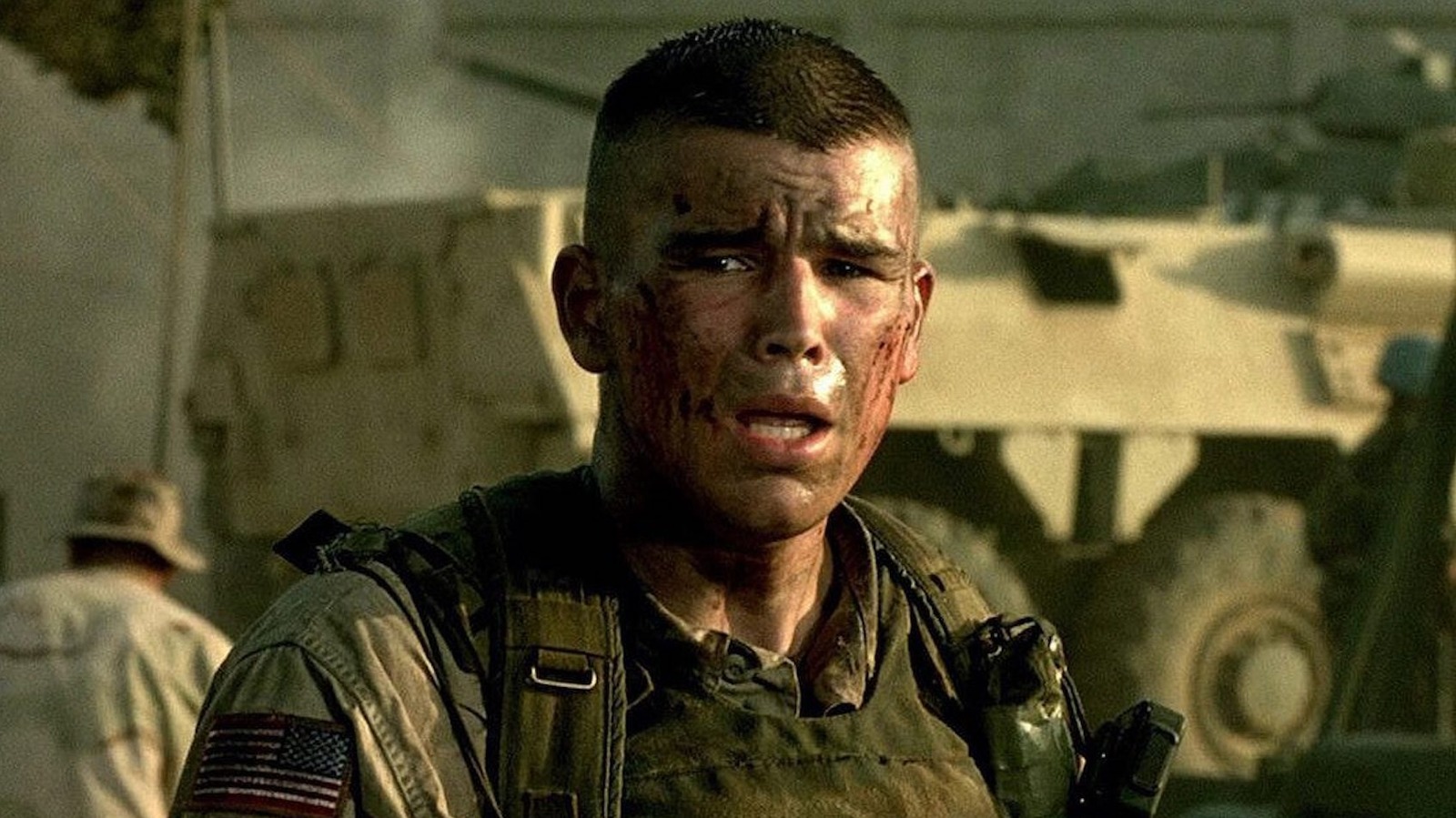
When renowned film directors reveal their favorite movies, it often becomes headline news. Quentin Tarantino, despite having directed only nine films, is considered one of the most influential filmmakers of his era and is always keen to share his cinematic preferences. Recently, Tarantino named his top film of the 21st century, selecting the 2001 war epic “Black Hawk Down” as his number one choice.

Columbia Pictures
On a recent episode of “The Bret Easton Ellis Podcast” (as reported by The Express), Tarantino recounted his evolving appreciation for “Black Hawk Down.” Initially, while he found the movie compelling, its intensity kept it from resonating deeply with him. However, after revisiting the film, his perception changed dramatically. “I think it’s a masterwork,” Tarantino stated. He praised the film for capturing a sense of purpose and visual grandeur reminiscent of “Apocalypse Now,” a feat he believes the movie accomplishes with aplomb.
Tarantino further commented that the intensity, which once seemed overwhelming, now stands as one of the film’s most impressive features, largely due to Ridley Scott’s direction. “Watching it again recently, I was engaged throughout the entire runtime,” he shared. “It didn’t let go of me, and I hadn’t felt that connection in a long time. The direction is beyond extraordinary.” While “Black Hawk Down” ranks 50th on our list of the greatest war films, for Tarantino, it holds the top spot for this century.
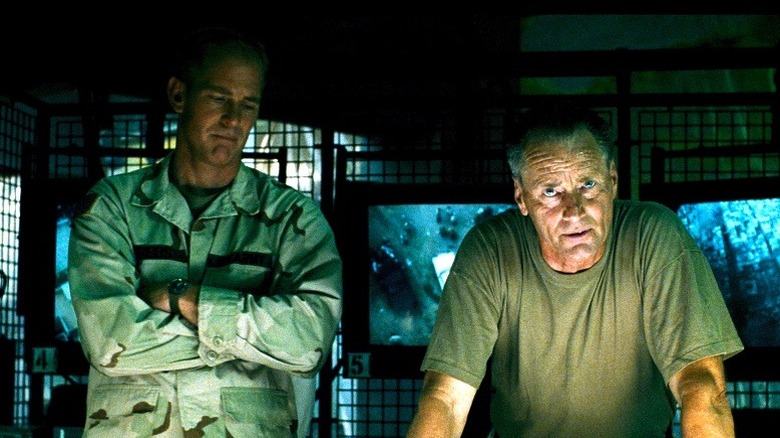
It’s customary for U.S. presidents to receive private screenings of new films, given their demanding schedules. In 2001, Ridley Scott presented “Black Hawk Down” to White House staff, though then-President George W. Bush was absent. Instead, Vice President Dick Cheney and senior military officials attended the screening. The film, portraying the 1993 military mission in Mogadishu, Somalia, omitted several aspects of the true events, which made Scott anxious about the screening’s reception.
Reflecting on the event in a 2019 interview with Deadline, Scott recalled minimal feedback from the audience, receiving only a brief “good film” comment. He highlighted the political backdrop of the operation, noting that President Clinton had just assumed office and subsequently withdrew U.S. troops. This decision left the military feeling conflicted about the mission’s abrupt end. “They had a reason to be there, and they wanted to finish that job,” Scott explained.
Ridley Scott screened the film for the U.S. President
Columbia Pictures
Scott expressed his hopes that the film accurately portrayed the situation and its moral complexities. “I want to believe that the special forces’ involvement was justified,” he remarked. “I hope that perspective was accurately conveyed.”
“I didn’t have much of an exchange with them, rather a ‘good film’ comment and that’s about it,” Scott told Deadline in 2019. “At the time of the actual events in Mogadishu, Clinton had just come in weeks before that, and he removed the American army.” That change in orders led to conflicting feelings about the operation among the military, many of whom didn’t want to abandon the mission, according to Scott: “They had a reason to be there, and they wanted to finish that job.”
Scott said he was on edge while screening the film, hoping that he’d told the story in a way that was both true to life and morally correct. “I want to believe that the special forces’ reason for being in there was for the right reasons,” he said. “I hope that was right.”
Black Hawk Down isn’t the only modern war movie on Tarantino’s list
Warner Bros. Pictures
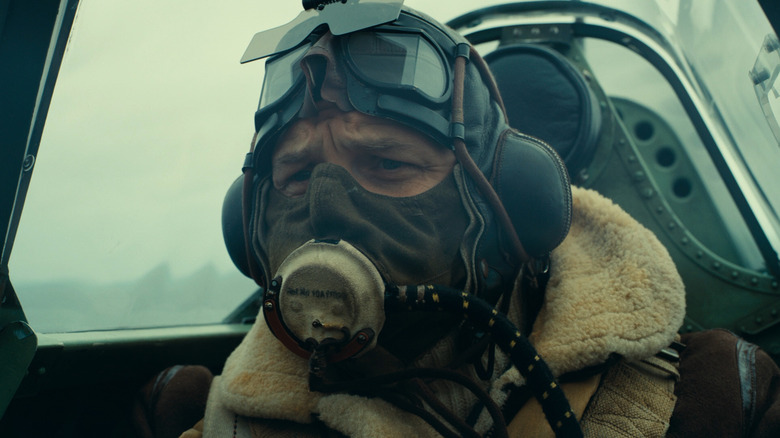
While “Black Hawk Down” topped Quentin Tarantino’s list of his favorite films of the last 25 years, the rest of the list was varied and eclectic, with family favorite “Toy Story 3,” the dark drama “There Will Be Blood,” and action spectacles like “Mad Max: Fury Road” all receiving attention. But “Black Hawk Down” wasn’t the only war movie on his list, and the other came in at the No. 4 spot — the 2017 Christopher Nolan WWII epic, “Dunkirk.”
“The first time I saw it … I just dealt with the spectacle of it all,” Tarantino said on “The Rewatchables” podcast (via IndieWire). “It wasn’t until the third time that I could see past the spectacle and into the people the story is about. I finally could see through the trees a little bit.”
Like most of Christopher Nolan’s movies, the film uses a little bit of narrative trickery. This time, he tells three loosely related narratives during the infamous Battle of Dunkirk, which come together in unique and sometimes surprising ways. “The style is an immersive experience, but by the third or fourth viewing, you get past the style, and you realize the magician’s tricks,” Tarantino explained. “In the case of ‘Dunkirk,’ it rewards Nolan’s efforts to see it more … Nothing doesn’t work.”