
Share this @internewscast.com
Over the last forty years, numerous fantasy films have achieved great success, with “The Lord of the Rings” series standing out as a prime example. However, it’s often the monumental flops that leave a lasting impact on the genre, steering studios and producers away from failed formulas. Although this cautious approach might save considerable sums, it sometimes stifles the creativity of the brightest directors and writers in the industry.
Take “The Black Cauldron,” which veered Disney away from PG-rated hits, or “Labyrinth,” which confined Jim Henson to more child-friendly projects. Meanwhile, the flop of “Stardust” temporarily killed the romantic fantasy genre, and “Legend” nearly ended the fantasy action sub-genre while driving Tom Cruise to become more hands-on with his film projects. Each of these films left a significant mark on the fantasy film landscape and the broader world of cinema, creating stories that remain topics of discussion today. Here are five fantasy box office bombs that, for better or worse, reshaped their genre.
Disney had high hopes for “The Black Cauldron,” envisioning it as the dawn of a new era. Unlike the studio’s usual family-friendly tales, this film drew from Lloyd Alexander’s “The Chronicles of Prydain” and was rated PG—quite the departure. Unfortunately, it grossed just $21 million against a $41 million budget, failing to lure the teenage audience Disney targeted. Consequently, this box office failure stunted the growth of mature-themed, big-budget animated features for nearly a decade, marking it as Disney’s least profitable theatrical release.
The film fell victim to executive interference when Michael Eisner and Jeffrey Katzenberg joined Disney during production, bringing new priorities that clashed with the established direction. The tension between traditional and modern animation styles only added to the turmoil. After test screenings revealed upset children, Katzenberg demanded 15 minutes be cut from the movie, but these efforts were ultimately futile.
The Black Cauldron
Following the disappointment of “The Black Cauldron,” Disney retreated to safer, family-friendly projects, banking on re-releases of past hits and new adaptations like “The Great Mouse Detective” and “Oliver and Company,” both based on well-known novels. “Mouse Detective” earned $25 million globally, nearly doubling its budget and helping chart a new course for the studio. It was the success of “The Little Mermaid” in 1989, however, that truly revitalized Disney, launching an animation renaissance filled with accolades.
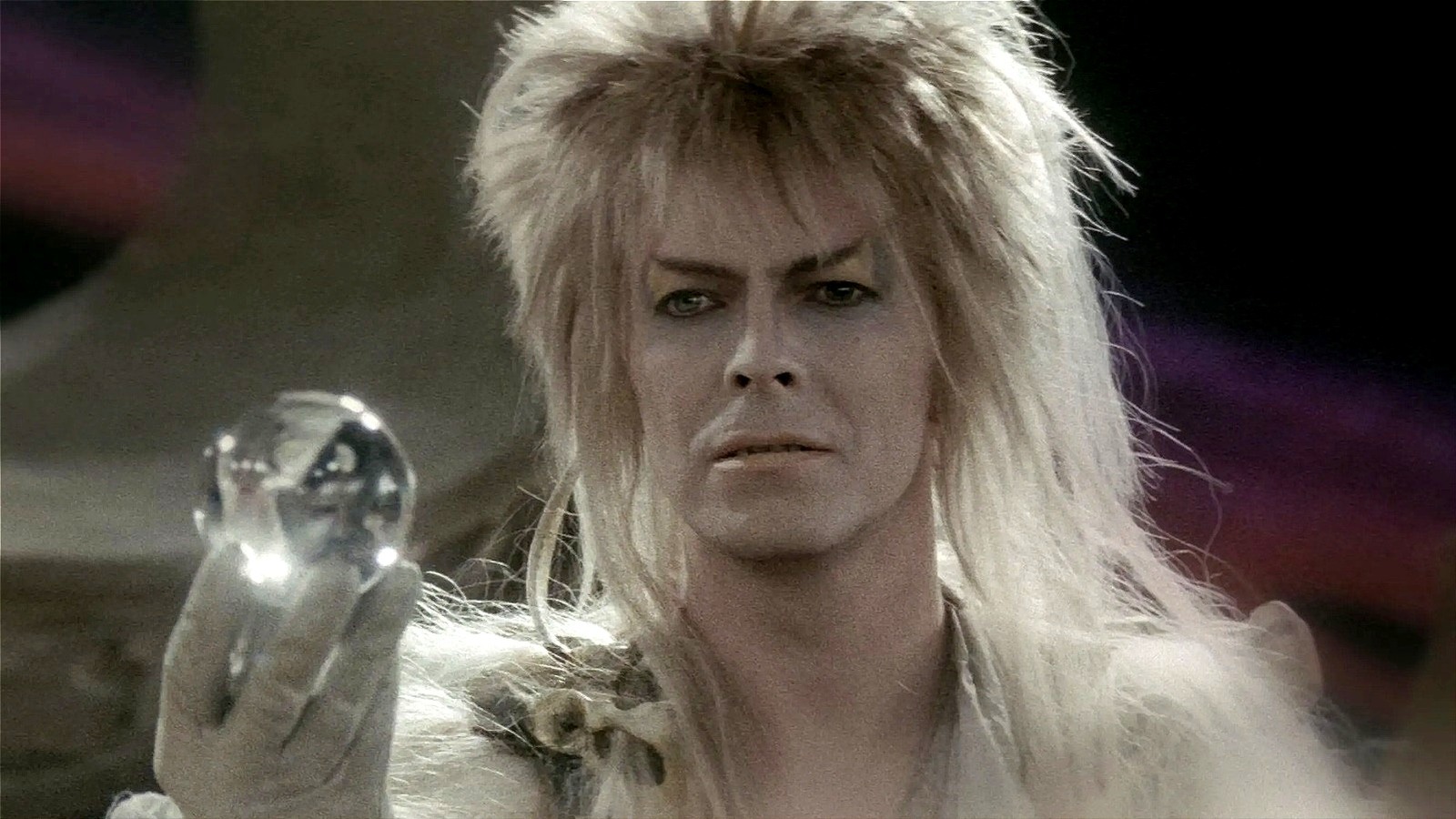
Today, “Labyrinth” is celebrated as a charming coming-of-age story and a cult classic. It explores themes of self-discovery, the importance of words, and empathy, all while featuring a memorable turn by David Bowie as the brooding goblin king. Notably, it built an entire magical world with minimal CGI. Despite its current status, the film’s initial failure marked the end of Jim Henson’s directorial ambitions. While he dabbled in TV projects like “The Storyteller,” Henson largely returned to creating Muppet-focused content for the remainder of his career.
In the wake of the failure of “The Black Cauldron,” Disney would scurry back to the safety of familiar family-friendly fare, relying on big-screen re-releases of previous blockbusters and putting out “The Great Mouse Detective” and “Oliver and Company,” both adaptations of classic public domain novels. “Mouse Detective” drew $25 million worldwide, nearly doubling its budget and setting the studio’s course for the future. It was 1989’s “The Little Mermaid” that would really do the trick, putting Disney back on top and ushering in an Oscar-studded animation renaissance.
Labyrinth
Modern audiences see “Labyrinth” as a poignant but fun coming of age tale, and a huge cult classic. A movie that tells an important story about self-actualization, watching your words, caring for others — and avoiding the attentions of a pouty goblin king (David Bowie) who would do anything to chain you to his side. It’s a fantasy movie that created an entire universe without using more than a drop of CGI, too. But for Jim Henson, its failure represented the end of his attempt at directing films. While he would experiment with a few television projects like “The Storyteller,” Henson would generally be confined to creating Muppet-centric things for the rest of his brief life.
Not only would the world be deprived of his big screen directing talents, the death of “Labyrinth” meant fewer live-action flicks based around and marketed to teenage girls. Fare like “Sabrina the Teenage Witch” would become television staples or direct-to-cable offerings, but it would take a while for major studios to gamble another franchise on a young female character.
In the end, Brian Henson, son of Jim, blames critical response to “Labyrinth” for killing its box office potential. “I think he felt he had done a really nice piece and brought all of his strengths together, only to have it then not perform in the theaters was tough for him. And I blame the critics because the audience would have loved it, and they just didn’t go. I think he would be thrilled. I think in his last days, that was, in his mind, his one, unsuccessful big venture that he had done in his life. And now, it is the most valuable and high performing piece that he ever did,” he told ComicBook.com.
Legend
Ridley Scott may know how to send chills down the spines of his viewers, but audiences gave “Legend” a surprisingly frosty reception. Nowadays it might be looked upon as one of the best and scariest dark fantasy movies of all time, but 80s’ audiences were less than enthused. The piece captured Tom Cruise just after he had reached leading man status; “All the Right Moves” and “Risky Business” had marked him as a hot young star on the move, but the flick bombed, seemingly putting the kibosh on the fantasy genre entirely and jeopardizing his career.
Two years later, “The Princess Bride” would be released, and its moderate success would encourage studios to keep funding similar fantasy films. Meanwhile, Cruise’s career would be saved by “Top Gun” — directed by Ridley’s brother, Tony Scott — in 1986.
“Legend” also reshaped the way Tom Cruise approaches his Hollywood career to this day. He told Rolling Stone that he resented the way Scott treated him as just another tool in his artistic kit. “I’ll never want to do another picture like that again,” he said. To wit: on “Top Gun” he asked to work on the script until it felt like a worthwhile hit. “I think they [“Top Gun’s producers] were kind of taken aback at first, [but] after coming off ‘Legend,’ I just wanted to make sure that everything was gonna go the way we talked about it.” For better or worse, “Legend” reshaped the way Cruise approached other fantasy films, like “Interview With The Vampire” and “The Mummy,” and that’s left a lasting mark on the industry.
Ladyhawke
“Ladyhawke” was part of an unfortunate losing streak for director Richard Donner. While he had “The Goonies,” “Scrooged,” and “Radio Flyer” ahead of him, “Ladyhawke” would be his last attempt at directing a dramatic fantasy romance. It — along with the failure of “Legend” — would stymie production on dramatic fantasy films for awhile as well. Less serious takes would of course be welcome in the wake of the release of the riotously funny “The Princess Bride” and “Mannequin.” But dramatic fantasy wouldn’t see a reversal of fortune until “Field of Dreams” was released at the tail end of the 1980s.
The casting is quite interesting; Michelle Pfeiffer was fresh off of the success of “Scarface” and the failure of “Grease 2”; Rutger Hauer played a very different kind of medieval warrior in the same year, as the rogue Martin in “Flesh + Blood”; and Matthew Broderick had months before “Ferris Bueller’s Day Off” would change his life. They would all revisit the fantasy genre in one way or another, but never in projects that are quite like “Ladyhawke.” Is it any wonder that it’s one of the most underrated fantasy movies of all time?
Stardust
Paramount Pictures
“Stardust” emerged in the wake of the mega-success of Peter Jackson’s “Lord of the Rings” trilogy, the “Twilight” saga, and the “Harry Potter” series. Studios were excited to greenlight any sort of fantasy project, from the ribald to the sweet. “Stardust” was lighthearted fare; definitely less like Middle-Earth and more romantically “as you wish” in nature. When it died at the box office, lighthearted takes on the fantasy genre were once again considered verboten, with deadly serious series like “The Hunger Games” and other popular dystopian fare rising in popularity in its stead.
Director Matthew Vaughn noted that the film was awkwardly marketed by Paramount Pictures, leading to its downfall. “When I made the movie and they sent me the marketing materials, it was literally turned into ‘Lord of the Rings.’ I was like ‘I’ve made Princess Bride’ and their answer to me was ‘Princess Bride tanked.’ and I went ‘no, but it was massive on DVD because it was badly marketed.’ And they’re like ‘doesn’t matter, we’re doing this.’” he told Flickering Myth.
Vaughn noted that this mismatch in tones also affected “Stardust.” Its eventual success on DVD then mirrored the rising popularity of “The Princess Bride” on VHS, proving that time truly is a flat circle.