
Share this @internewscast.com
The “Transformers” film series stands out as an unusual phenomenon, not merely because of the 11 actors who were almost part of its cast. Though these films are built on a foundation of Hasbro’s long-standing legends, they chart their own course, often disregarding continuity and fan expectations. They embrace chaotic edits and shifting aspect ratios, yet, despite these quirks, they have become box-office giants. However, their focus on human characters hasn’t exactly won over audiences or created dedicated fanbases.
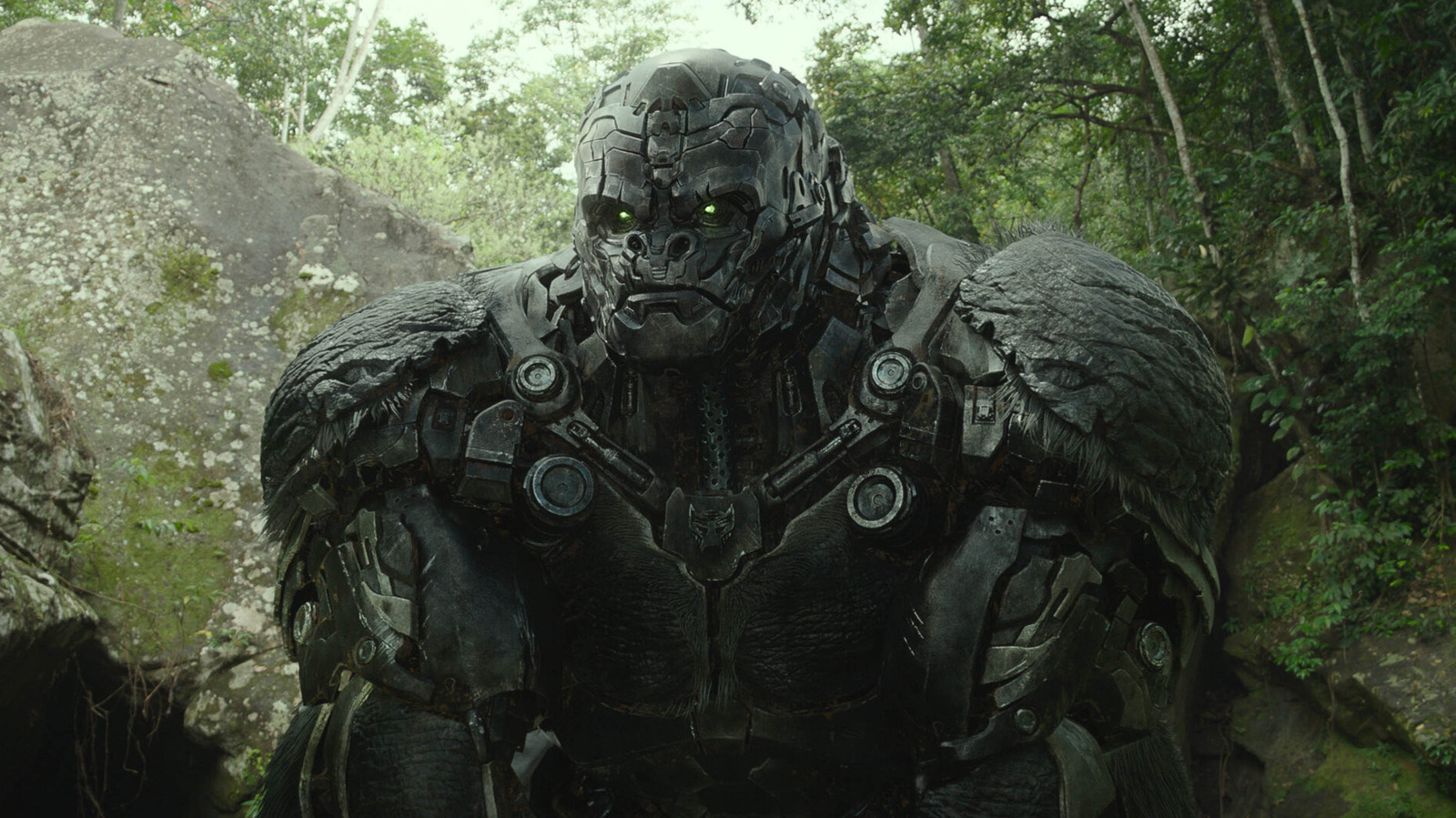
By 2023, “Transformers: Rise of the Beasts” showcased that the artistic challenges inherent to these films persist, failing to live up to the standards set by Michael Bay’s earlier works. The saga, at least in terms of live-action films, seems to be permanently marred. Even with the commendable attempt of 2018’s “Bumblebee,” the series struggles to shake off its negative reputation and recurring flaws associated with the “Transformers” brand.
There are several reasons why the live-action branch of this franchise appears irreparably damaged. A lack of consistent quality is one major factor that has undermined its success. The complex and dense lore woven into the “Transformers” films doesn’t offer much in terms of engaging emotional arcs for the robotic characters. Die-hard fans of the series are quick to delve into the ways this live-action franchise has lost its momentum. Despite the unique and chaotic nature of the “Transformers” movies, it seems the brand has suffered irreparable damage in the live-action domain.
The 2007 “Transformers” film introduced an intriguing concept to engage contemporary audiences by intertwining these robots with human history. For instance, a Decepticon was depicted as having destroyed the Beagle 2 Mars Rover, and the construction of the Hoover Dam was attributed to concealing the villainous Megatron. These intriguing historical twists proved popular, prompting sequels to develop their own alternate-history narratives, linking Transformers to pivotal events in human history.
In “Transformers: Dark of the Moon,” the narrative proposed that the Space Race of the mid-20th century was driven by the discovery of Transformers on the Moon. What started as a charming way to integrate Optimus Prime and his comrades into the modern zeitgeist eventually descended into an overwhelming complexity. By 2017’s “Transformers: The Last Knight,” the series introduced a secret society that suggested Transformers had a hand in significant historical events, ranging from Harriet Tubman’s Underground Railroad to Adolf Hitler’s demise.
The impenetrable lore
This increasing complexity resulted in lore so dense that casual viewers struggled to follow without having seen previous installments. Despite this intricate backstory, it rarely influenced the major climactic scenes, leaving audiences puzzled about the focus on such elaborate details. While the live-action “Transformers” films continued to deliver bombastic action sequences, they were ultimately hampered by these sprawling, lore-heavy narratives.
For example, “Transformers: Dark of the Moon” establishes that the mid-20th-century Space Race was all about uncovering crashed-landed Transformers on the Moon. What was once a cutesy way of making Optimus Prime and company relevant to newcomers eventually spiraled out of control to impenetrable results. 2017’s “Transformers: The Last Knight” even introduced a secret society that revealed how all of human history, from Harriet Tubman’s Underground Railroad to the death of Adolf Hitler, involved Transformers.
All of this madness resulted in an increasingly complicated and convoluted lore that general audiences couldn’t just hop into if they missed a movie. Plus, all this mythos didn’t end up affecting the big climactic moments of titles like “The Last Knight,” which just made it extra confusing why so much screen time was spent on this material. Despite remaining ridiculous action films with severe screenwriting issues, the live-action “Transformers” movies were eventually tripped up by massive lore-based problems.
Disposable human characters
The first Michael Bay “Transformers” feature established an M.O. for these titles: Human characters were always front and center in the narrative. Teenager Sam Witwicky (Shia LaBeouf) was the first of countless flesh-and-blood Earthlings who were the central focus of the “Transformers” adventures, rather than the titular robots. Extensive screen time was dedicated to characters like Witwicky’s kooky parents or T.J. Miller’s cameo as a mechanic, while robots like Arcee and Jolt languished in the background as bit players. It was an odd decision that seemed to be another way of making the Transformers world palatable to a broader audience.
Bizarrely, though, this emphasis on human characters above all others didn’t mean these figures necessarily got optimal treatment in the various “Transformers” movies. Seemingly pivotal characters like Mikaela Banes (Megan Fox) and Tessa Yeager (Nicola Peltz) would just suddenly vanish from the saga despite previously being established as major players. The “Transformers” films loved human characters, but also didn’t love keeping them on-screen for multiple installments. Any crumbs of character arcs for franchise mainstays, meanwhile, would go nowhere.
In this respect, moviegoers got the worst of both worlds. They got too many humans in their robot action films, while the humans that did show up were one-dimensional and could vanish at a moment’s notice. Compare this to sagas like “The Lord of the Rings,” where audiences fell in love and bonded with key characters over multiple films. In contrast, it was impossible to get people invested in the central “Transformers” players for the long haul.
The stakes got hard to grasp
Every “Transformers” movie, from the worst to the best, is full of gigantic action sequences. This is baked into the DNA of these projects that will forever live in the shadow of explosion maestro Michael Bay. Initially, these installments culminated in big action sequences where a single major city, like Los Angeles or Chicago, became a battleground for Autobot and Decepticon brawls. As the desire to constantly up the stakes refused to simmer, these “Transformers” installments eventually delivered storylines and adversaries that were just impossible to get invested in.
Post-“Dark of the Moon,” especially, every “Transformers” movie has the exact same problem of going so big in their respective finales that it’s hard to latch onto anything that’s happening. “The Last Knight” especially succumbed to this problem, with its ending hinging on Earth actually being a hibernating Unicron. Contending with a planet-sized threat was just too enormous to either take seriously or believe that Mark Wahlberg and some robots could actually defeat. Without recognizable landmarks or a more contained backdrop for all the action to transpire in, everything becomes a CG mush.
Even “Rise of the Beasts” suffered from this issue when it brought back Unicron to inspire unengaging tension, while its finale took place in a drably colored crater in Peru. With the “Transformers” films incessantly amping up the scope, eventually, they became impossible to grasp or get invested in. Once that happened, audiences easily tuned out these noisy adventures.
Not taking the Transformers seriously as characters
A byproduct of the “Transformers” films constantly emphasizing the human characters above everyone else was that the Transformers themselves were often just background props. If figures like Ironhide or The Fallen were lucky, they could deliver exposition to human protagonists or get one slow-mo action beat. Otherwise, only Optimus Prime or Bumblebee ever got significant screen time among the “Transformers” robots. Fan-favorite characters like Arcee or the Dinobots were barely around, let alone exuding discernible personalities.
This wasn’t just frustrating for long-time “Transformers” fans. It also gave audiences nobody to latch onto in the middle of summer blockbuster chaos. There was never any personality or nuance to the towering CG creatures that the “Transformers” movies supposedly revolved around. Even after so many movies, these robots remained either barely defined or easily replaceable. Regarding the latter problem, just look at how easily characters like Ratchet were ditched after “Dark of the Moon.”
The apathy the “Transformers” movies felt towards their central mechanical characters proved inevitably infectious. If the people behind these features didn’t care about these aliens, why should viewers? Over time, this flaw proved fatal to the film franchise, especially given the many other modern movies (like “The Wild Robot”) with superior, more emotionally rich robotic characters. With the “Transformers” movies treating the robots as an afterthought, moviegoers quickly also developed indifference to these characters and their cosmic struggles.
Lack of quality caught up to this franchise
Paramount Pictures
The “Transformers” movies have never been acclaimed. “Transformers: Revenge of the Fallen” especially is a classic example of a movie that was a box office hit despite terrible reviews. Right from the start, these features were lambasted for disorienting editing, poor characters, and jarring tonal shifts. Still, that didn’t stop the initial three “Transformers” movies from becoming massively lucrative endeavors. Plus, the original “Transformers” title from 2007 did get extremely positive buzz from audiences. Today, it’s even held up as significantly more competent than its follow-up’s.
Residual goodwill from the original “Transformers” and the novelty of seeing increasingly massive Michael Bay spectacles could only take this franchise so far. Eventually, the poor word-of-mouth caught up with the franchise with “Transformers: The Last Knight.” A decade after the initial “Transformers,” the artistic shortcomings of these movies had finally become unavoidable. Plus, “Last Knight” opened in a summer with vastly superior blockbuster options like “Guardians of the Galaxy Vol. 2,” “War for the Planet of the Apes,” and “Wonder Woman.”
The “Transformers” franchise took a box office dip with “Rise of the Beasts,” indicating that a six-year absence from the big screen hadn’t rekindled the passion audiences once felt for these movies. These films once had enough novelty (plus the then-fresh positivity associated with the original “Transformers”) to overcome bad reviews. Now, though, the live-action side of this saga is tainted by perceptions of artistic inadequacy impossible to shake off.