According to a recent study, the impact of climate change on Australia is expected to drive a sharp rise in heatwave-related deaths. By 2100, nearly 6,000 Australians could succumb to extreme heat each year.
This projected figure marks a dramatic increase, reaching 24 times the current mortality rate.
Between 2016 and 2019, approximately 250 Australians died annually due to severe heat. However, ongoing warming trends across the continent suggest this number could soar to 5,913 deaths per year by the century’s end.
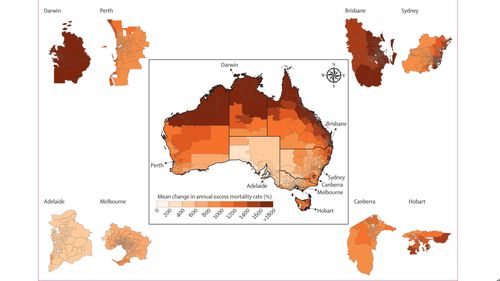
The Northern Territory, in particular, is bracing for a staggering 4,412 percent rise in heatwave fatalities.
Even regions like the West Coast of South Australia, which traditionally experience less heat-related impact, are not immune, with a 356 percent increase in deaths anticipated.
To understand the geographical distribution of this escalating threat, researchers meticulously examined climate data from over 2,200 Australian communities.
The findings indicate that by the decade 2090â99, the Northern Territory will face the highest annual excess mortality rate at 33.9 deaths per 100,000 population.Â
Queensland follows with 18.4 deaths, while New South Wales is projected to suffer 12.8 deaths per 100,000 residents.
Lead researcher Professor Shandy Li said the projections underscore the urgent need for integrated mitigation and locally tailored adaptation strategies to address climate-related health inequities.Â
Heatwaves are defined as prolonged periods of excessively hot weather and are known to cause a sharp rise in illnesses and deaths related to cardiovascular, respiratory and renal conditions.
The study highlights that the most vulnerable Australians will bear the heaviest burden.Â
Co-lead author Professor Yuming Guo noted that northern and inland regions were especially at risk. These areas often have higher Indigenous populations and frequently suffer from inadequate access to cooling and medical resources.
“Northern and inland regions, where Indigenous populations account for a larger share of residents compared with other regions and access to cooling and medical resources is inadequate, are especially vulnerable to the effects of heatwaves,” Professor Guo said.Â
“Without co-ordinated action, climate change will substantially exacerbate the health impacts of extreme heat and strain public health resilience across Australia,” he said.
NEVER MISS A STORY: Get your breaking news and exclusive stories first by following us across all platforms.