
Share this @internewscast.com
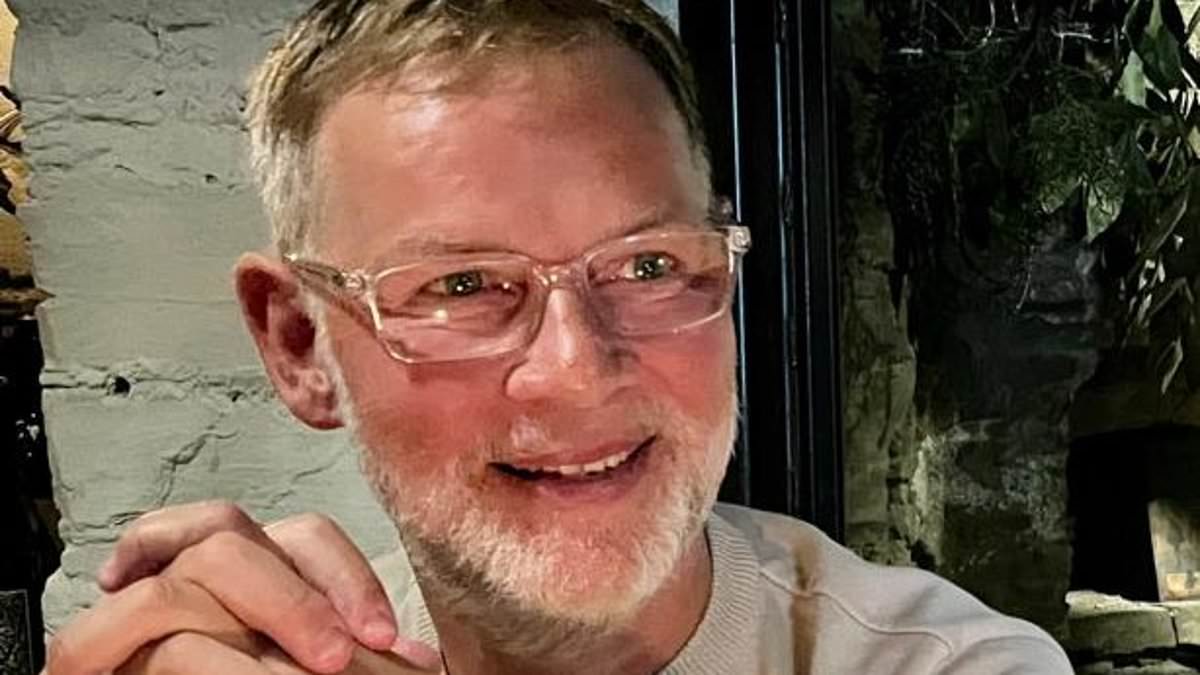
Matt Riddleston, a senior cancer nurse, was well-acquainted with the indicators of serious tumors. Despite this, he was unprepared for the personal revelation that he had developed the disease himself.
At 59, Mr. Riddleston learned he had stage four prostate cancer following symptoms of fatigue, urinary troubles, and back pain, which he initially attributed to minor injuries from cycling.
The father-of-three, who lives in Chelmsford, Essex with his wife Kate, 55, admitted that the diagnosis came as a huge shock.
He remarked, ‘Nurses, healthcare professionals, we often think we’re resistant to the illnesses we see in our patients, so cancer wasn’t on my mind at first.’
In early 2022, Mr. Riddleston, father to three daughters—Maya, 25, Lyla, 23, and Rosa, 18—began experiencing consistent fatigue, which he blamed on the demands of working through the Covid-19 pandemic.
Mr Riddleston, who has worked as a cancer nurse for 32 years, had also been experiencing back pain while cycling.
However, after having ‘more classic symptoms of prostate cancer’, such as urinary issues, he went to see his GP in April 2022.
A medical examination revealed a ‘hard, irregular prostate,’ leading to a PSA (prostate-specific antigen) blood test, as advised by the NHS, where elevated levels could suggest a prostate issue.

Matt Riddleston has worked as a cancer nurse for 32 years
In May 2022, he was diagnosed with prostate cancer following a biopsy.
Subsequent scans and a referral to The Royal Marsden Hospital in London confirmed his diagnosis with stage four metastatic prostate cancer in early July 2022.
With his lengthy career as a cancer nurse, Mr Riddleston said he ‘knows too much’ which is often ‘not helpful’.
He said: ‘The healthcare professionals that look after me are amazing, and I don’t need to, but I sit there and make suggestions,’ he said.
‘It gives me an element of control and they humour me along the way, which I’m very grateful for.
‘The thing is, you never are in control with cancer and that’s one of the most frightening aspects for me – it’s panic stations really.
‘You’re just waiting for it to become more active and rear its ugly head.
‘Some days are better than others, some are worse.

He is taking on a cycling challenge with his best friend

An avid cyclist, he experienced back pain during excursions on his bike
‘You’re living with that unwanted guest, that unwanted passenger and you’re stuck with it.
‘I kind of think of myself as Matt the nurse and Matt the patient – I haven’t fully reconciled myself to Matt the patient just yet.’
Mr Riddleston received his PSA result while at work, where a colleague noted he suddenly went ‘ashen’.
He said: ‘My PSA level was very elevated so at that point, I knew things weren’t going to be very good.
‘I just felt like vomiting all over my computer, it was a really visceral, violent reaction.’
When he was diagnosed, Mr Riddleston started androgen deprivation therapy (ADT), a hormone treatment which reduces testosterone levels to prevent prostate cancer cell growth.
He then underwent six cycles of chemotherapy followed by daily radiotherapy treatment from March to April in 2023, and is now continuing ADT treatment while his cancer is monitored.
Mr Riddleston added that he feels he is ‘forever waiting’ for a test which shows the disease is progressing, saying this is a matter of ‘when not if’.

The father-of-three was shocked to find out that he has stage four prostate cancer

He is using his love of the open road to raise vital funds for prostate cancer charities
He has continued working throughout, although he now does not look after prostate cancer patients after feeling this was ‘too close to home’.
‘I can be quite compartmentalised in my job and you have to be mindful that you don’t project your own feelings and emotions into it,’ he said.
‘But obviously, I do feel I have a greater understanding of what it’s like to live with a life-limiting condition.
‘I’ve never walked in those shoes, but now I’m walking in them everyday.’
At present, Mr Riddleston is ‘relatively well’ and his PSA level is low, but he is ‘forever waiting’ for a blood test which may indicate the disease is progressing.
‘There are other lines of treatment to explore when I progress – and it’s when not if,’ he said.
On Sunday September 7, he will be taking part in Sir Chris Hoy’s Tour De 4 cycling challenge in Glasgow, accompanied by his life-long friend David Abbott, 59.
They are fundraising for The Royal Marsden Cancer Charity with the challenge, raising more than £2,000 so far, and he and David will tackle the red route—a 56-mile ride with an elevation of 3,772 ft.
‘Those of us with stage four cancer, we don’t all look ravaged and unhealthy – we’re still capable, able, we still want to contribute, so there’s a lot in it for me,’ he said.