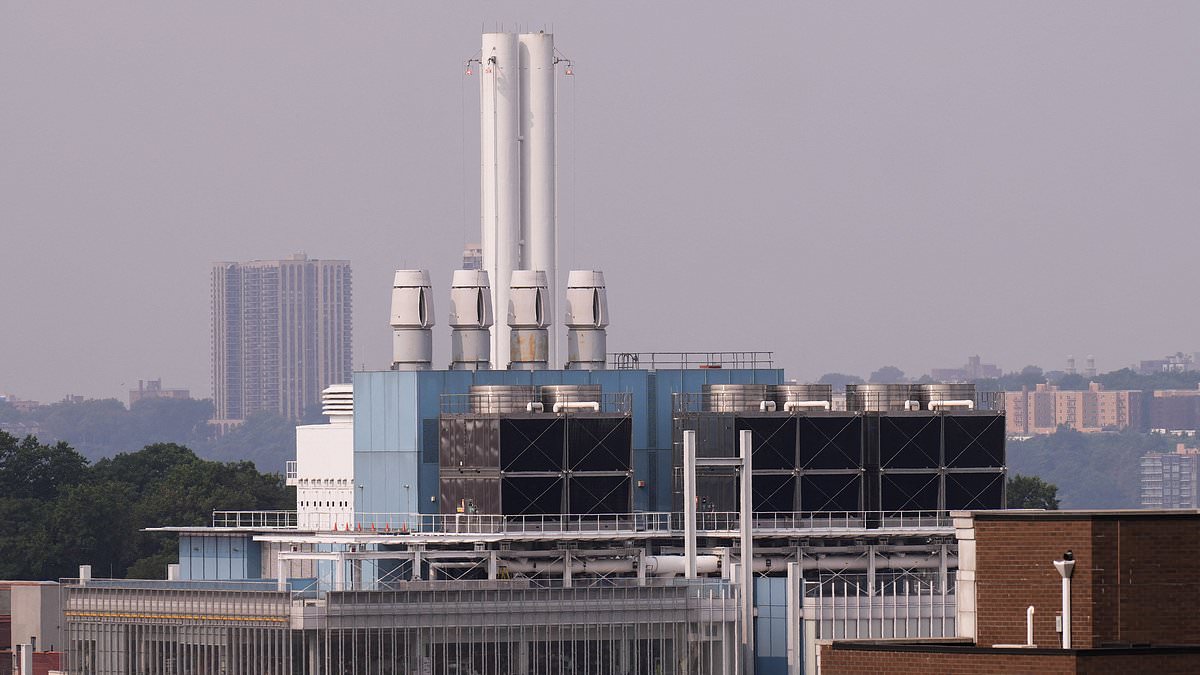

Health officials across the United States are increasingly concerned about the rising incidence of a dangerous lung disease linked to air conditioners and water vapor. This surge comes amid escalating temperatures, prompting a closer look at Legionnaires’ disease.
Legionnaires’ disease, a serious type of pneumonia, is transmitted through contaminated water vapor. The illness, which claims the lives of approximately one in every ten affected individuals, is caused by bacteria that flourish in warm and damp environments.
In North Carolina, an alarm has been sounded following the recording of 310 cases last year. This figure represents a significant 54 percent increase compared to the previous year. Just a few months into 2026, the state has already reported 48 new infections.
Meanwhile, in South Texas, Ector County officials have raised alerts after identifying 12 cases and two fatalities from late December to early January. The situation underscores the gravity of the bacteria’s impact in the region.
In Baltimore, Maryland, concerns have escalated further as politicians allege that a recent outbreak of the bacteria occurred within a federal facility detaining ICE detainees. This claim has added to the urgency surrounding the issue as health authorities continue to monitor and address the threat posed by Legionnaires’ disease.
And in Baltimore, Maryland, politicians have alleged the bacteria caused an outbreak this month at a federal building housing ICE detainees.
Nationwide, infections have soared nearly 1,000 percent over two decades, rising from 1,100 cases in 2000 to more than 8,000 today.
Health experts warn that warmer temperatures are allowing the bacteria to thrive in damp locations — including air conditioning units, hot tubs, water fountains and misting devices — raising the risk that it could cause an infection.

Legionnaires’ disease is spread via water vapor. The above shows two people trying to cool off in water vapor while in New York City in July last year
Dr Erica Wilson, a medical director at the North Carolina Department of Health, warned in a statement: ‘We don’t entirely know why cases are increasing, but suspect that it has to do with weather and increased warm temperatures, since Legionella bacteria like to grow in warm, moist environments.
‘It can be [a] very serious illness that can cause death, especially for folks that are particularly vulnerable.’
No further details on the cases in North Carolina have been released, including whether any patients were hospitalized or died from the infection, how they were infected or a potential source of the bacteria.
The location of the patients was also not revealed, although in 2025 an outbreak was recorded in Gaston County, outside Charlotte, that sickened 17 patients.
To avoid a Legionnaires’ infection, health officials urged people to clean and disinfect any water systems at home — including air conditioners, spray devices and others.
Advice included flushing faucets or shower heads that haven’t been used for three days or more, to deep clean hot tubs regularly and drain standing water from hoses.
Those with humidifiers and CPAP machines were urged to clean and replace filters regularly.
People over 50 years old, current or former smokers or those with lung conditions are most at risk from the disease.

Legionnaires’ disease is caused by the Legionella bacteria that thrives in moist and wet environments between 77 and 113 degrees Fahrenheit (25 to 45C).
The bacteria may become airborne in steam or vapor and someone can become infected if they breathe in droplets.
Infected patients initially suffer from a headache, muscle aches, and fever that may be 104 Fahrenheit (40 Celsius) or higher.
But within three days, they may experience a cough, shortness of breath, chest pain, nausea, vomiting and diarrhea, and confusion or other mental changes.
In serious cases, patients can develop severe pneumonia, and the bacteria can spread to the blood, causing the potentially fatal complication sepsis. The bacteria can also infect the heart.
Patients die from the disease due to lung failure, septic shock, a sudden severe drop in blood flow to vital organs, or acute kidney failure, when these organs stop filtering waste from the blood.
Doctors treat the disease using antibiotics, but say these are most effective in the early stages before the disease has spread in the body. Patients are often hospitalized.
In milder cases, patients may also suffer from Pontiac fever, a condition causing fever, chills, headache and muscle aches that occurs when the bacteria do not infect the lungs. This condition goes away on its own without treatment and causes no further problems, doctors say.

Legionnaires’ disease is caused by the Legionella bacteria, pictured, that thrives in warm and damp environments (stock image)
The warning over Legionnaires’ comes after officials in Colorado warned of an outbreak of the disease in a hotel.
Three patients were sickened with the disease after visiting the Ritz-Carlton, Bachelor Gulch, between July and December last year, officials in Eagle County, outside Denver, reported.


