
Share this @internewscast.com
Today’s fast-paced lifestyle poses significant challenges, as our bodies are not inherently designed to cope with it. Evolution shaped us for a world abundant in movement and nature, with stress being a fleeting experience, unlike the constant demands of contemporary life.
Recent findings by evolutionary anthropologists indicate that our way of living has advanced more rapidly than our biological makeup can adapt to.
This disconnect might clarify the rising instances of chronic stress and health issues, revealing a fundamental mismatch between our innate desire for natural environments and the modern habitats we occupy.
Research led by Colin Shaw of the University of Zurich and Daniel Longman from Loughborough University suggests that our biological systems are still geared towards handling the physical and mental challenges of a hunter-gatherer existence.
As reported by Science Daily, this lifestyle entailed frequent physical activity, short bursts of exertion, and regular immersion in nature.
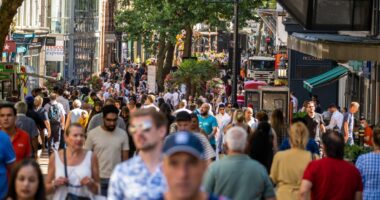
Over the course of hundreds of thousands of years, humans evolved to thrive in open landscapes. Yet, it’s only in the last few centuries that we’ve been immersed in an industrialized setting characterized by constant noise, pollution, microplastics, pesticides, artificial lighting, processed foods, relentless sensory overload, and extended periods of inactivity.
Check out our science newsletter – men vs women (flatulence edition), why a German collected litres of urine, and a snake longer than a bus
Our bodies respond to workplace pressure in the same way they would if we encountered a lion in the savannah. The lion usually retreats, but the stresses of modern life persistently linger, reports the Daily Star.
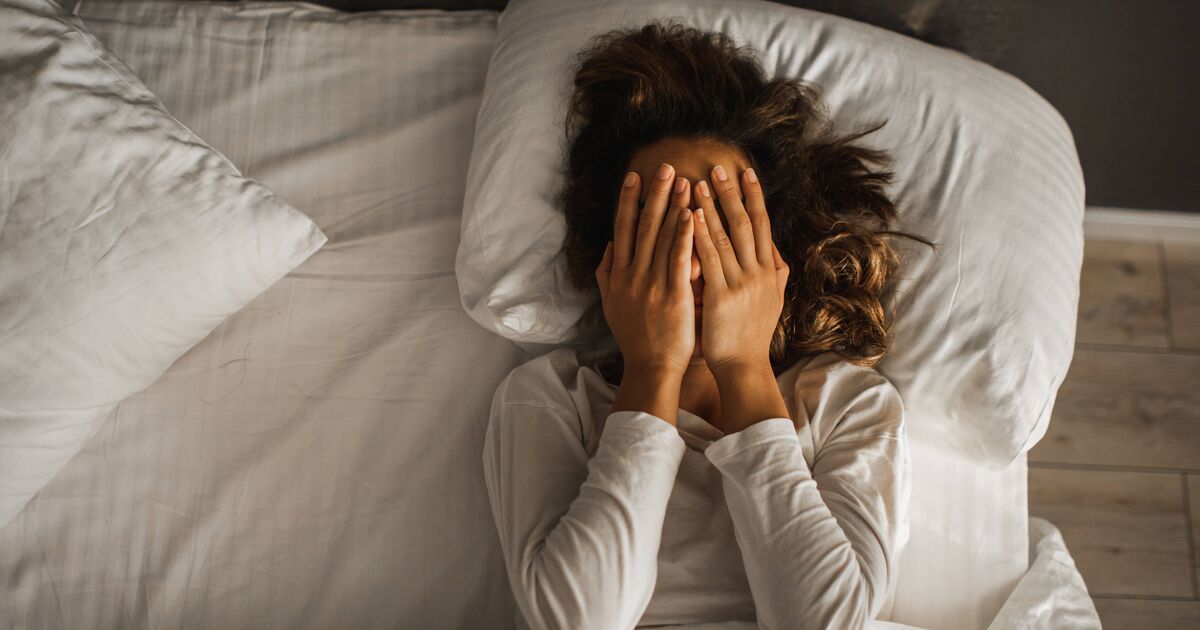
Shaw and Longman argue that the same emergency mechanisms that protected our ancestors are now activated by workplace confrontations, rush-hour traffic, social media attacks and the relentless buzz of city living.
The issue isn’t simply the stress reaction – it’s the absence of a recovery period. In nature, the threat subsides.
In 2025, the ‘danger’ is constant: screens glowing at midnight, congestion at daybreak, notifications throughout the day.
As the researchers describe it, our bodies respond as if we’re encountering “lion after lion” – intense physiological reactions with minimal opportunity to recuperate.
The authors suggest that industrialised existence may be eroding human evolutionary fitness and our capacity to survive and reproduce. They highlight two warning signs:
Reproduction: Birth rates are declining in numerous countries, and there has been an ongoing, well-documented decline in sperm count and mobility since the mid-20th century. Environmental factors are believed to be responsible.
Health: Inflammatory and autoimmune disorders have increased dramatically, indicating our immune systems are battling an environment they weren’t designed for.
Shaw observes: “We’ve engineered staggering wealth, comfort and medical care – yet some of those very achievements may be quietly needling our immune, cognitive, physical and reproductive functions.”
Both experts advocate for intelligent adjustments that align our surroundings more closely with our biological needs. These include:
Treat nature like public health infrastructure. Protect, restore and expand access to green spaces that mirror ancestral landscapes — places where heart rate, blood pressure and immune markers actually calm down.
Rebuild cities for human physiology. More daylight, less glare at night. Cleaner air. Quieter streets. Walkable neighbourhoods. Spaces that invite movement rather than mandate sitting.
Cut harmful exposures. Smarter controls on pollutants and chemicals, and serious action on microplastics and pesticide residues.
What you can do today (no sabre-tooth required)
- Chase daylight, tame the glow: Get natural light early; dim screens and bright bulbs at night to help your body clock.
- Move like you mean it: Swap long sits for “movement snacks” — brisk walks, stairs, stretches, mini bodyweight bursts.
- Go green, often: Even 15 minutes among trees or by water can steady nerves.
- Turn down the noise: Use quiet routes, shut windows at rush hour, try earplugs or noise-cancelling when needed.
- Eat closer to the source: Fewer ultra-processed foods; more whole, minimally processed options.
- Prune the pings: Batch notifications and social media time to give your nervous system real recovery.