Share this @internewscast.com

Whether you’re experiencing your first cold of the season or your fourth, many Australians these days are waking up with a sniffle, sore throat, or just feeling unusually tired.
From June to August, Australia experiences its peak flu season. This period also sees high rates of COVID-19 along with other respiratory viruses like respiratory syncytial virus and adenovirus making the rounds.
There are times when it’s obvious you need to stay in bed: high fever, body aches, and a foggy mind are clear indicators.
If diagnosed with the flu or COVID-19, isolation and rest become essential for recovery.

But what if your symptoms are mild? Is it reason enough to call in sick, or should you push through and work? And what if you’re facing pressure to keep working?

Here’s what to consider.

Are you likely to spread it?

While it may seem like a good idea to continue working, especially when your symptoms are mild, going to work when infectious with a respiratory virus risks infecting your co-workers.
If you are in a client-facing role, such as a teacher or a salesperson, you may also infect others, like students or customers.
The risks may be even greater for those working with vulnerable communities, such as in aged care work, where the consequences can be severe.
From an organisational perspective, you are likely less productive when you are not feeling well.

So, whenever possible, avoid going into work when you’re feeling unwell.

Should I work from home?

The COVID-19 pandemic normalised working from home.
Since then, more people work from home when they’re unwell, rather than taking sick leave.

Some employees join Zoom or Teams meetings out of guilt, not wanting to let their co-workers down.

Others — and in particular, some men — feel the need to maintain their performance at work, even if it’s at the expense of their health.

A downside of powering through is that workers may prolong their illness by not looking after themselves.

Can you take leave when you need it?

Employees in Australia can take either paid or unpaid time off when they are unwell.
Most full-time employees get 10 days of paid sick leave per year, while part-time employees get the equivalent pro rata.
Employers can ask for reasonable evidence from employees to show they are unwell, such as asking for a medical certificate from a pharmacy or GP, or a statutory declaration.
The type of evidence required may differ from organisation to organisation, with some awards and enterprise agreements specifying the type of evidence needed.
While taking a sick day helps many workers recuperate, a significant proportion of workers engaged in non-standard work arrangements do not receive these benefits.

There are, for example, 2.6 million casual employees who don’t have access to paid sick leave.
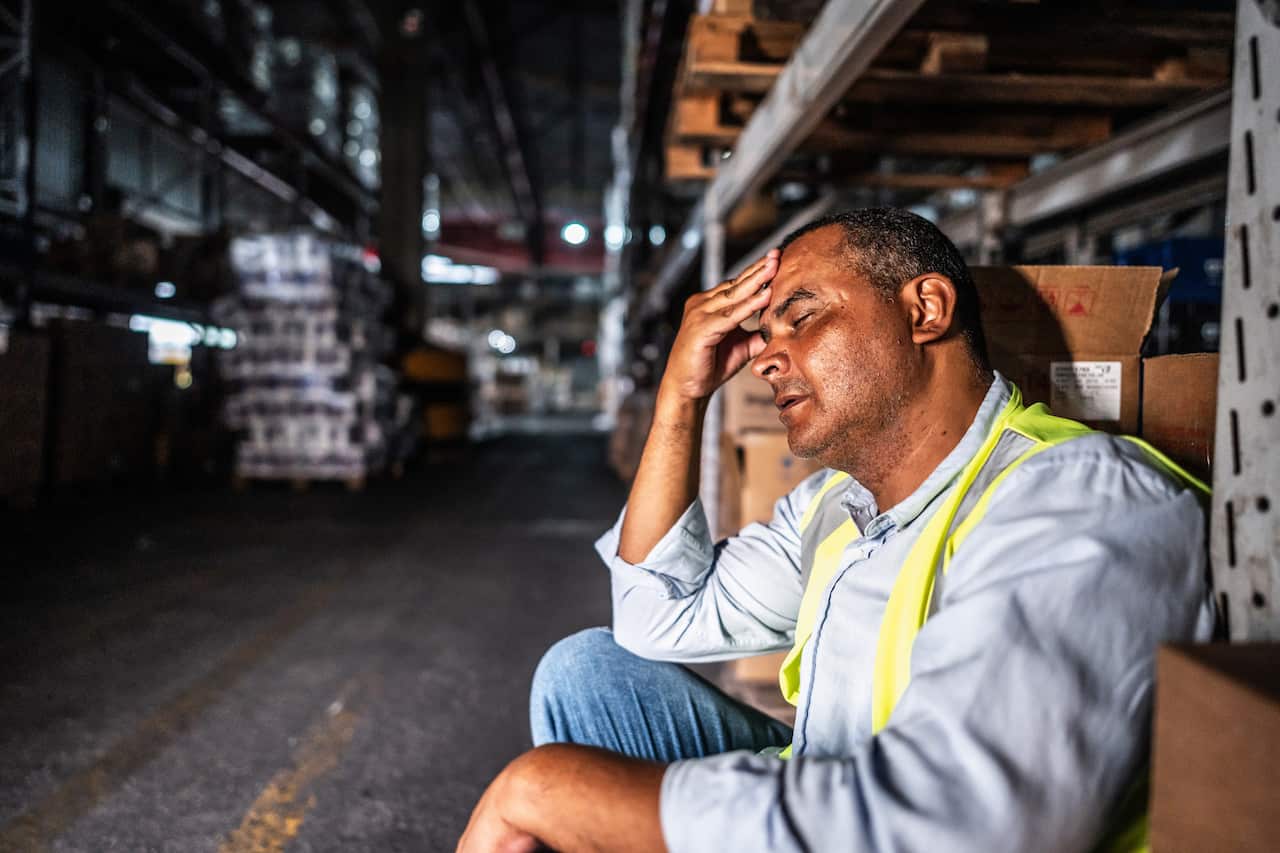
A worker in a warehouse, with his eyes closed and a hand to his forehead.

Many workers, such as those in casual employment or self-employed roles, often lack the luxury of choosing whether to take a sick day. Source: Getty / FG Trade

Similarly, most self-employed people, such as tradies and gig workers, do not have any paid leave entitlements.

Although these workers can still take unpaid leave, they are sacrificing income when they call in sick.
Research from the Australian Council of Trade Unions has found more than half of insecure workers don’t take time off when injured or sick.

So a significant proportion of workers in Australia simply cannot afford to call in sick.

Why pushing through isn’t the answer

‘Presenteeism’ is the phenomenon of people reporting for work even when they are unwell or not fully functioning, affecting their health and productivity.

Pinpointing exact numbers is challenging because most organizations don’t systematically track this, but estimates suggest that 30 to 90 percent of employees work while sick at least once annually.

People work while sick for different reasons. Some choose to because they love their job or enjoy the social side of work — this is called voluntary presenteeism.
But many don’t have a real choice, facing financial pressure or job insecurity.
That’s involuntary presenteeism, and it’s a much bigger problem.

Research has found industry norms may be shaping the prevalence of ‘involuntary presenteeism’, with workers in the health and education sectors more likely to feel obligated to work when sick due to ‘at work’ caring responsibilities.


What can organisations do about it?

Leaders set the tone, especially around health and wellbeing.
When they role-model healthy behaviour and support time off, it gives others permission to do the same.
Supportive leaders can help reduce presenteeism, while pressure from demanding leaders can make it worse. Your co-workers matter too.
When teams step up and share the load, it creates a culture where people feel safe to take leave.
A supportive environment makes wellbeing a shared responsibility.
But for some workers, leave isn’t an option. Fixing this requires policy change across industries and society more broadly, not just inside the workplace.

Share this @internewscast.com
You May Also Like

Indigenous Victory: High Court Overturns NT’s Controversial Remote Rent Framework

The High Court has found a government rental scheme affecting remote communities…

Hamas Transfers Remains of Alleged Last Gaza Hostage: A Significant Development in Middle East Tensions

Key Points Israel received a body that Hamas says belongs to one…
Emergency roadworks leave commuters stranded in major Sydney tunnel for hours

Unexpected Sydney Tunnel Closure: Commuters Face Hours of Delays Amid Emergency Roadwork Chaos

Emergency roadworks have caused significant delays for commuters trapped inside a major…
Ghislane Maxwell will represent herself in court.

Ghislaine Maxwell Launches Ambitious Legal Strategy to Secure Early Release

Ghislaine Maxwell, once a close associate of Jeffrey Epstein and now a…
'Nothing is the same': Family grieve for teen killed at Sydney show

Heartbreak at Sydney Show: Family Mourns Teen’s Tragic Loss

The family of a young father-to-be, who tragically lost his life at…
A struggling NSW town is devastated that its Christmas tree was destroyed by arsonists less than a fortnight away from the holiday.

Heartbreak in Rural Community: Arsonists Torch Beloved Christmas Tree, Town Mourns Loss

A small town in rural New South Wales is grappling with heartbreak…
Car theft charges against Bruce Lehrmann have been downgraded.

Bruce Lehrmann Faces Reduced Charges in Tasmanian Vehicle Incident

Car theft charges have been downgraded in a case against Bruce Lehrmann,…
FBI makes arrest over pipe bombs placed in DC on eve of January 6 riot

FBI Arrests Suspect Linked to Pipe Bombs Found in DC Before January 6th Unrest

The FBI has taken a significant step forward in its nearly five-year…
Lauren Tesolin-Mastrosa.

Controversial ‘Daddy Dom’ Book by Sydney Author Under Investigation for Alleged Child Abuse Content

A controversial book penned by a marketing executive from a Christian charity…

Australians’ Evolving Expectations: The Decline in Rental Property Conditions

As temperatures rise, so do many Australians’ energy bills. The high cost…
Victorian father Les Crampton dies in house fire

Tragic House Fire Claims Lives of Beloved Father and Family Dog

A father-of-two and his pet dog have been killed in a devastating…
Epstein Island

Exclusive: Never-Before-Seen Images of Jeffrey Epstein’s Mysterious Private Island Uncovered

Warning: This article contains potentially distressing content for some readers. Pictures of…